What is a Typical South Indian Lunch? The Complete Guide to the Sadya
 Aug, 7 2026
Interactive Sadya Planner
Select Your Menu
Check the dishes you want to include in your Sadya. The visual representation on the banana leaf will update automatically.
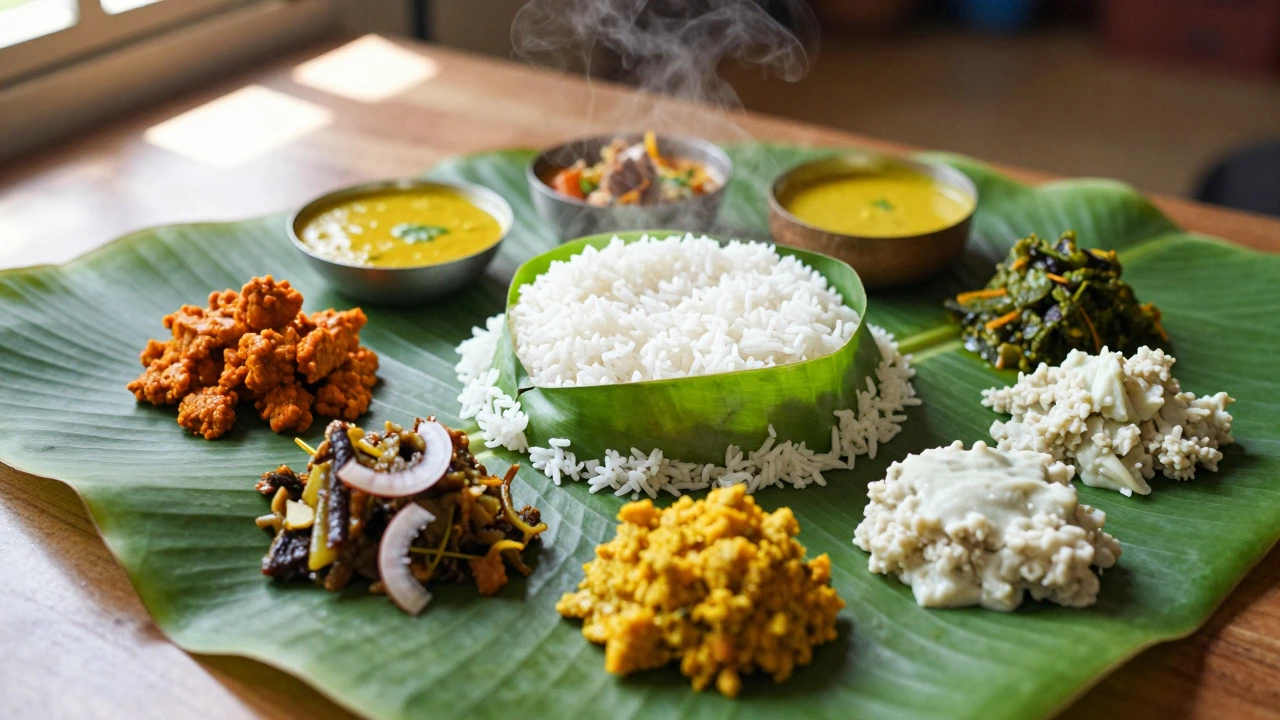
Imagine sitting on the floor, cross-legged, with a large green banana leaf spread out before you. There is no silverware, no plates, and no forks. Instead, you have your right hand and a colorful array of steaming rice, curries, and chutneys arranged in a precise order. This is not just a meal; it is a ritual. It is the Sadya, the traditional South Indian lunch that defines hospitality and culinary heritage across states like Kerala, Tamil Nadu, Karnataka, and Andhra Pradesh.
If you are traveling through South India, understanding this meal is essential. It is more than food; it is a cultural experience that connects you to centuries of tradition. Whether you are visiting a temple in Madurai or staying with a host family in Kochi, the Sadya will likely be at the center of your day. But what exactly goes into this feast, and how do you eat it?
The Heart of the Meal: Rice and the Banana Leaf
Every Sadya starts with two non-negotiable elements: rice and the banana leaf. The rice is usually short-grain, often a local variety like Ponni or Jeerakasala, which has a distinct aroma and texture. It is cooked until fluffy but slightly sticky, making it perfect for mixing with gravies using your fingers.
The banana leaf serves as the plate. It is not just eco-friendly; it adds a subtle, earthy fragrance to the food. When the hot curry touches the warm leaf, it releases oils that enhance the flavor. You will notice the leaf is folded at one end to create a pocket. This is where the rice is placed. The rest of the dishes are arranged around the rice in a specific sequence, ensuring that every bite combines different flavors.
| Benefit | Explanation |
|---|---|
| Aroma Enhancement | Heat from the food activates aromatic compounds in the leaf, improving taste. |
| Eco-Friendly | Biodegradable and compostable, leaving zero plastic waste. |
| Health Benefits | Banana leaves contain antioxidants and may aid digestion when used correctly. |
| Temperature Control | The leaf insulates the food, keeping it warm longer than ceramic plates. |
The Essential Components of a Sadya Menu
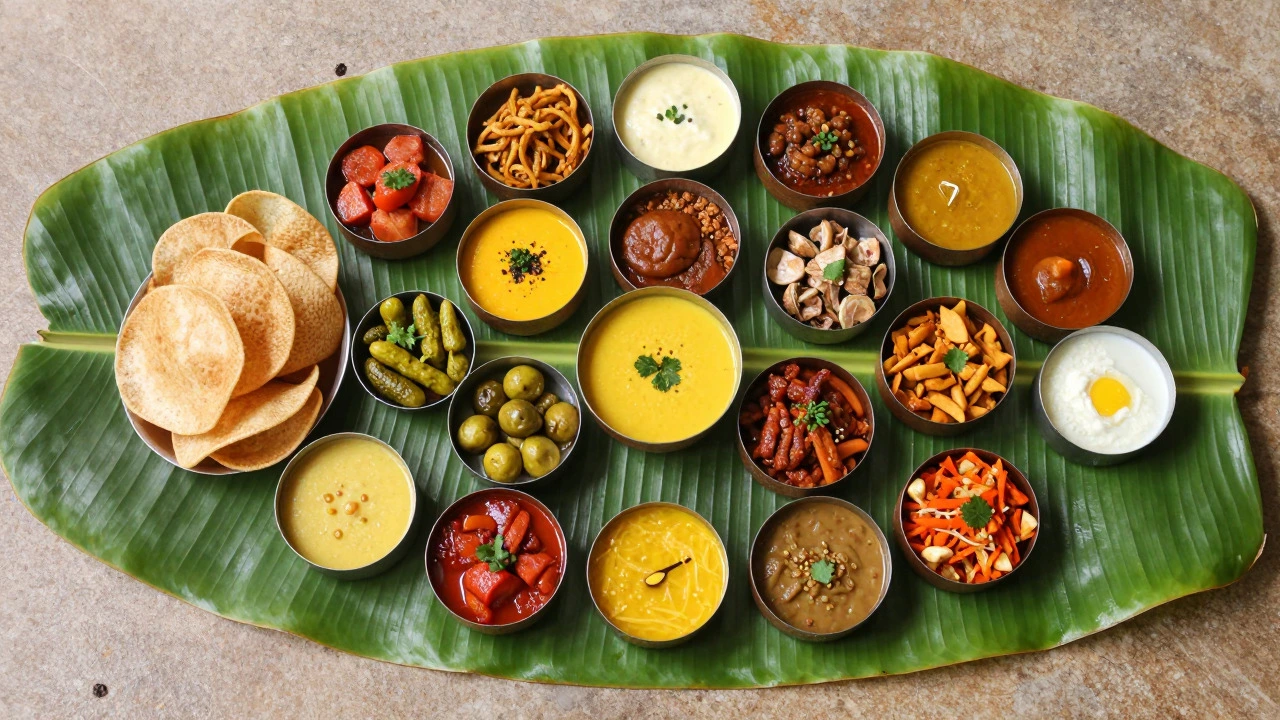
A typical Sadya is strictly vegetarian, especially during festivals like Onam in Kerala or Pongal in Tamil Nadu. The menu is designed to balance the six tastes of Ayurveda: sweet, sour, salty, bitter, pungent, and astringent. Here is what you can expect to find on your leaf:
- Sambar: A lentil-based stew made with tamarind, vegetables, and a special spice blend called sambar powder. It is tangy, spicy, and deeply comforting.
- Rasam: A thin, peppery soup made with tomatoes, tamarind, and cumin. It is served towards the end of the meal to aid digestion.
- Kootu/Curry: Vegetable stews cooked with coconut and spices. Common ingredients include drumsticks, ash gourd, and pumpkin.
- Poriyal/Sambar: Stir-fried vegetables with grated coconut. This adds crunch and freshness to the meal.
- Avial: A signature Kerala dish made with mixed vegetables, coconut, and yogurt. It is mild and creamy.
- Thoran: Finely chopped vegetables stir-fried with coconut and mustard seeds. Beans and cabbage are common choices.
- Appalam (Papadum): Crispy lentil wafers that provide a crunchy contrast to the soft rice and curries.
- Pachadi: A yogurt-based side dish, often flavored with cucumber, mango, or raw banana. It cools down the palate.
- Payasam: A sweet dessert made with milk, sugar, jaggery, or coconut milk, thickened with rice, vermicelli, or lentils. It signals the end of the meal.
In some regions, you might also find Erissery, a thick dal preparation with pumpkin and coconut, or Olan, a mild vegetable stew with ash gourd and cowpeas. These dishes vary by state, but the core principle remains the same: balance and harmony.
How to Eat a Sadya: The Etiquette
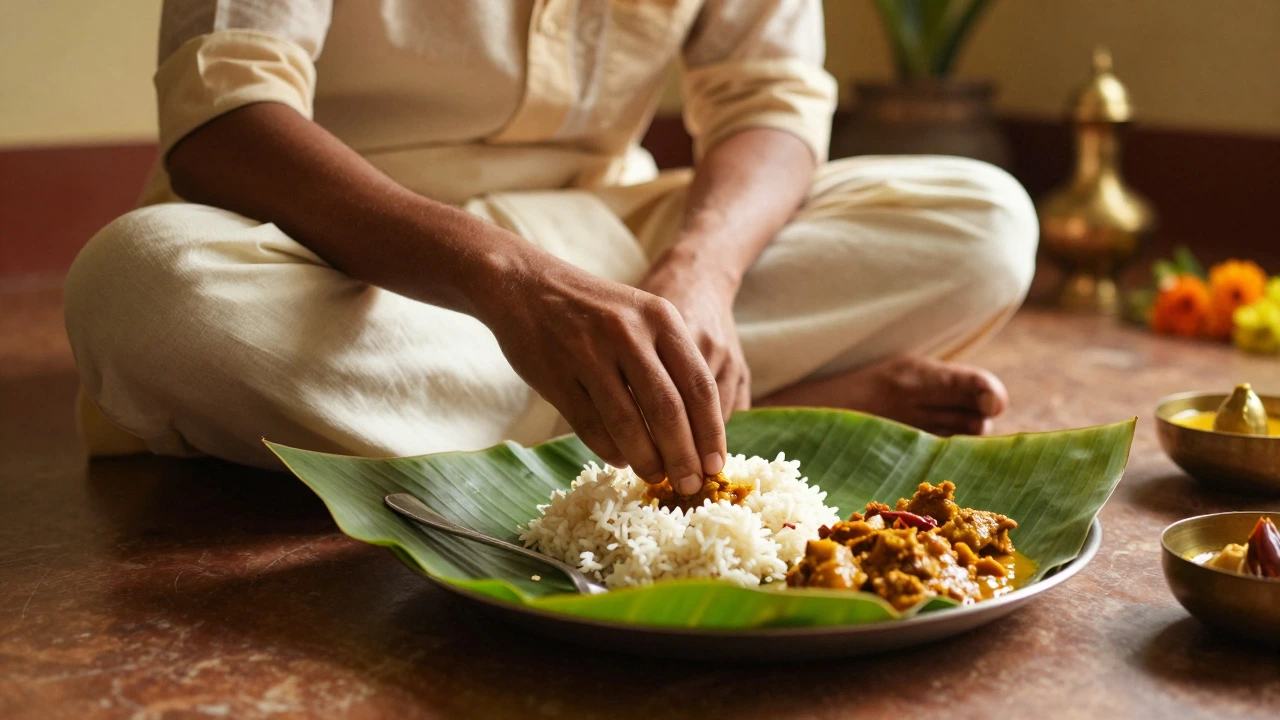
Eating with your hands is not just acceptable; it is expected. Your fingers act as utensils, allowing you to mix the rice and curries thoroughly. This method helps you feel the temperature and texture of the food, enhancing the eating experience. However, there are rules to follow.
First, always use your right hand. The left hand is traditionally reserved for hygiene purposes. Second, wash your hands thoroughly before and after the meal. Third, take small portions of rice and mix them with the curries on the side of the leaf, not directly on top of the main pile. This keeps the rice neat and allows you to control the flavor intensity.
Start with the lighter, milder dishes like poriyal and thoran. Move on to the spicier items like sambar and rasam. Finish with the payasam. Do not rush. A Sadya is meant to be enjoyed slowly, savoring each combination. If you are unsure about a dish, ask your host. They will be happy to explain the ingredients and flavors.
Regional Variations: Kerala vs. Tamil Nadu vs. Karnataka
While the concept of a banana leaf meal is shared across South India, the execution varies significantly by region. Understanding these differences will help you navigate menus and appreciate local specialties.
| Region | Key Dishes | Flavor Profile | Special Notes |
|---|---|---|---|
| Kerala | Avial, Olan, Sambar, Payasam | Mild, coconut-heavy, balanced | Onam Sadya is the most famous version, with up to 26 dishes. |
| Tamil Nadu | Curd Rice, Rasam, Kootu, Sweet Pongal | Tangy, spicy, tamarind-forward | Focus on digestive aids like rasam and curd rice at the end. |
| Karnataka | Huli, Gojju, Kosambari, Holige | Spicy, tangy, peanut/chana dal based | Use of jaggery in savory dishes is common. Holige (sweet flatbread) may replace payasam. |
| Andhra Pradesh | Gutti Vankaya, Pappu, Pachadi | Very spicy, chili-heavy | Known for intense heat. Accompanied by generous amounts of rice to cool the palate. |
In Kerala, the emphasis is on coconut and mild spices. In Tamil Nadu, tamarind and pepper play a bigger role. Karnataka introduces peanuts and chana dal into its curries, while Andhra Pradesh brings the heat with red chilies. Each region reflects its agricultural bounty and historical influences.
Festival Sadya vs. Everyday Lunch
Not all banana leaf meals are created equal. An everyday lunch might consist of rice, sambar, one vegetable dish, and curd. It is simple, nutritious, and quick to prepare. A festival Sadya, however, is a grand affair. During Onam in Kerala, families spend days preparing dozens of dishes. The menu expands to include rare vegetables, elaborate sweets, and multiple varieties of pickles and papads.
Even the presentation changes. For festivals, the banana leaf is polished to a shine, and the arrangement of dishes follows strict traditional patterns. The number of dishes is often odd, symbolizing auspiciousness. In contrast, an everyday meal is practical and focused on sustenance. As a traveler, you might encounter both. Don't be surprised if a roadside restaurant serves a simplified version, while a hotel offers a full festive spread.
Navigating Non-Vegetarian Options
While the classic Sadya is vegetarian, many South Indian households include meat in their daily lunches. Coastal areas in Kerala and Tamil Nadu feature fish curries, crab masala, and prawn roasts. Inland regions might serve chicken or mutton stews. If you are a meat-eater, look for terms like "Meen Curry" (fish curry) or "Kozhi Varuval" (chicken fry) on the menu.
However, be aware that in many temples and traditional settings, the lunch served is strictly vegetarian due to religious beliefs. Always check with your host or the restaurant staff if you prefer non-vegetarian options. Some places offer a "non-veg Sadya" during special occasions, but it is less common than the vegetarian version.
Where to Experience an Authentic Sadya
To truly understand the Sadya, you need to go beyond tourist traps. Look for local eateries known as "messes" or "canteens." In Kerala, try Hotel Saravana Bhavan or smaller local joints in Thrissur and Alappuzha. In Tamil Nadu, visit the famous Madurai restaurants near the Meenakshi Temple, where they serve massive portions of idli, dosa, and rice meals. In Karnataka, Bengaluru has numerous spots offering authentic Udupi-style meals.
During festivals, consider staying with a homestay. Many hosts invite guests to join their family Sadya. This is the best way to learn the etiquette, taste homemade dishes, and connect with locals. Even outside festivals, many hotels offer "Sadya counters" where you can pay a fixed price for a full meal. Just ensure you arrive early, as these spots fill up quickly.
Common Mistakes Travelers Make
First-time visitors often make a few errors when eating a Sadya. One common mistake is using too much water to rinse the leaf. While rinsing is necessary to clean your fingers, excessive water can dilute the flavors and make the meal messy. Another error is mixing all the curries together at once. Take small bites, mixing only what you can eat in one mouthful. This allows you to appreciate each dish individually.
Also, don't forget to thank your host. In South Indian culture, expressing gratitude after a meal is important. A simple "Thank you" or learning the local phrase for thanks (like "Nanni" in Kannada or "Enakkum Nandri" in Tamil) goes a long way. Finally, dress modestly if you are dining in a home or temple setting. Comfortable clothing that covers your shoulders and knees is appreciated.
Health and Digestion Tips
The Sadya is designed to be healthy, but it can be heavy if you are not used to it. The combination of rice, lentils, and vegetables provides a complete protein profile and plenty of fiber. To aid digestion, drink warm water or herbal tea after the meal. Avoid cold drinks immediately after eating, as they can slow down digestion according to Ayurvedic principles.
If you have dietary restrictions, communicate them clearly. Most South Indian dishes can be modified. For example, you can ask for less oil or fewer spices. However, keep in mind that coconut and dairy are staples, so finding completely nut-free or lactose-free options might require extra effort. Always carry any necessary medications, especially if you are sensitive to spicy foods.
Is Sadya always vegetarian?
Traditionally, yes, especially during festivals and in temple settings. However, many households include fish, chicken, or mutton in their daily lunches. Coastal regions are more likely to serve seafood. Always check with your host or restaurant if you prefer non-vegetarian options.
Can I eat Sadya if I am not used to eating with my hands?
Yes, but it is highly recommended to try. Using your hands enhances the flavor and texture experience. If you are uncomfortable, you can ask for spoons, though this is less common in traditional settings. Practice taking small portions and mixing gently.
What is the difference between Sambar and Rasam?
Sambar is a thicker, lentil-based stew with vegetables and tamarind. Rasam is a thinner, soup-like dish made with tomatoes, tamarind, and spices like pepper and cumin. Rasam is often served at the end of the meal to aid digestion, while Sambar is a main component throughout.
Where is the best place to try an authentic Sadya?
For the most authentic experience, visit Kerala during the Onam festival or Tamil Nadu during Pongal. Local messes, temple prasadam centers, and homestays offer genuine versions. In cities, look for established restaurants specializing in regional cuisine, such as Hotel Saravana Bhavan or local Udupi canteens.
Is it rude to refuse certain dishes?
Not at all. Hosts are usually accommodating. Simply indicate which dishes you would like and which you would skip. It is better to try small amounts of everything than to overeat on one item. Politeness and gratitude are key.