Understanding India's Diverse Culture: A Guide to its Traditions and Heritage
 Apr, 21 2026
India Regional Culture Explorer
India is a land of contradictions. Click on a region or a specific cultural element below to discover the distinct characteristics that define the North and South of the country.
Indo-Aryan Heartlands
Persian echoes, wheat fields, and the plains of the Ganges.
Dravidian Roots
Tropical coasts, rice paddies, and ancient ancestral traditions.
Common Threads
Shared spiritual values and the magic of cinematic obsession.
Select a region above to start exploring
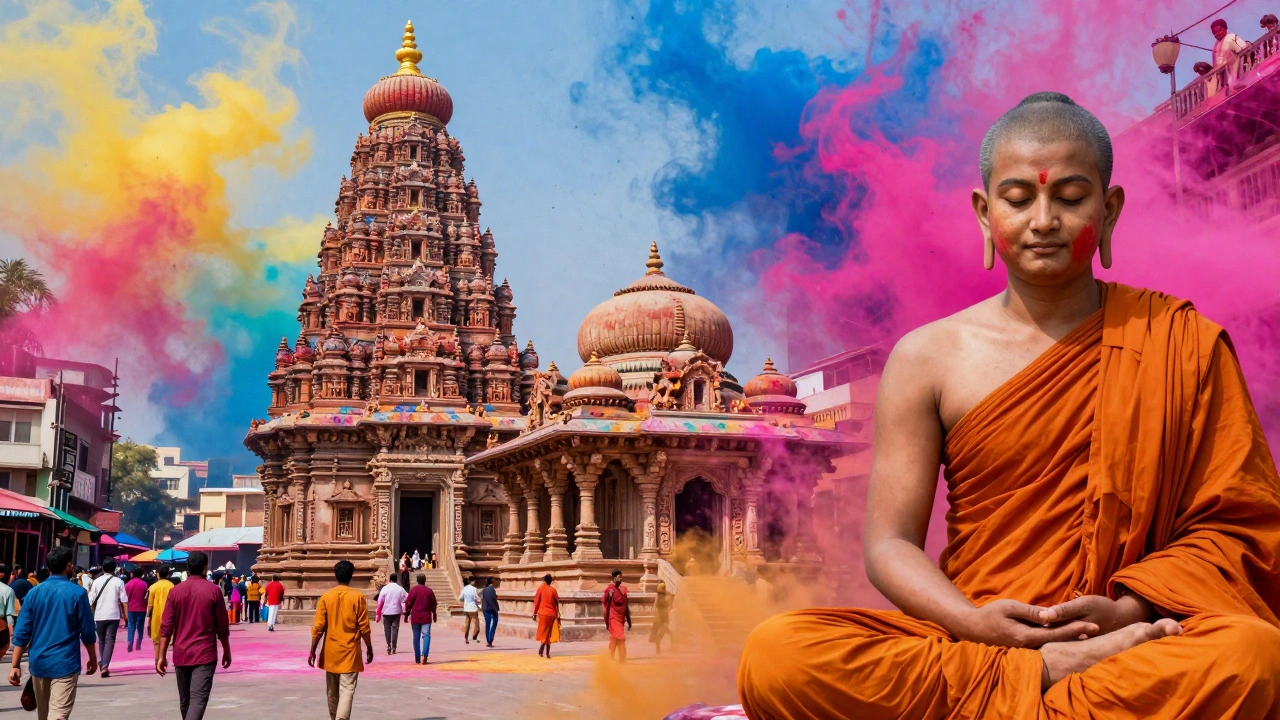
Discover the kaleidoscope of Indian traditions
Quick Highlights of Indian Culture
- Religious Pluralism: The birthplace of Hinduism, Buddhism, Jainism, and Sikhism, with a significant Islamic influence.
- Linguistic Variety: Over 121 major languages and thousands of dialects.
- Social Structure: A historical blend of caste systems and community-based kinship.
- Artistic Expression: A rich history of classical dance, intricate textiles, and diverse cinema.
The Spiritual Foundation: Hinduism and Beyond
For many, the most visible part of the country's identity is Hinduism. Since it's the faith of about 80% of the population, its influence is everywhere. You'll see it in the colorful festivals, the incense-filled air of the cities, and the way people start their day with a prayer. But Hinduism isn't just one set of rules; it's a broad umbrella. In the north, you might find a focus on the epic tales of the Ramayana, while in the south, the worship of deities like Murugan is more prominent. Then there is Islam, which has shaped India's architecture and music for centuries. The influence of the Mughal Empire left behind wonders like the Taj Mahal and introduced the rich, creamy cuisines we now associate with North India. Similarly, Sikhism, founded in the Punjab region, emphasizes equality and service, most notably seen in the 'langars' (community kitchens) where anyone, regardless of faith, can eat for free. Do you ever wonder why India feels so spiritually charged? It's because religion isn't just a Sunday activity here; it's woven into the fabric of daily life. Whether it's a small shrine in a corporate office or a massive river festival in Varanasi, the connection to the divine is constant.North vs. South: A Cultural Divide
If you travel from Delhi to Chennai, you'll feel like you've visited two different countries. The "mostly" in the culture changes depending on where you stand. In the North, the culture is heavily influenced by Central Asian and Persian echoes. The food is wheat-based, the music often features the sitar, and the clothing includes the salwar kameez. This region is the heart of the political power and the historical crossroads of invading empires. Contrast that with the South, where Dravidian culture dominates. Here, rice is the staple, and the architecture of the temples is vastly different-featuring towering, colorful gateways called Gopurams. The languages, like Tamil and Kannada, are distinct from the Indo-Aryan languages of the north. While the North might feel more chaotic and fast-paced, the South often feels more rooted in ancestral traditions and academic rigor.| Feature | North India | South India |
|---|---|---|
| Staple Food | Wheat / Roti / Paratha | Rice / Dosa / Idli |
| Primary Language Group | Indo-Aryan (Hindi, Punjabi) | Dravidian (Tamil, Telugu, Malayalam) |
| Temple Style | Nagara (Curved spires) | Dravidian (Pyramidal Gopurams) |
| Clothing Influence | Persian/Central Asian | Ancient indigenous styles |
The Social Fabric: Family and Community
One of the most defining traits of cultural tourism India is witnessing the depth of family bonds. The concept of the 'joint family'-where grandparents, parents, and children all live under one roof-is still very common, especially in rural areas. This creates a social safety net that is rare in Western cultures. Respect for elders isn't just a suggestion; it's a core value. You'll often see younger people touching the feet of their elders to seek blessings, a gesture that signifies humility and gratitude. Community identity also plays a huge role. Whether it's through regional pride or religious affiliations, people find a sense of belonging in their groups. This is why festivals are so loud and vibrant. When a community celebrates Holi, the festival of colors, it isn't just a party; it's a collective release of joy and a way to bridge social gaps for a day. If you visit during these times, don't be surprised if strangers invite you into their homes for a meal-hospitality (Atithi Devo Bhava, meaning 'The guest is God') is a point of pride for almost every Indian household.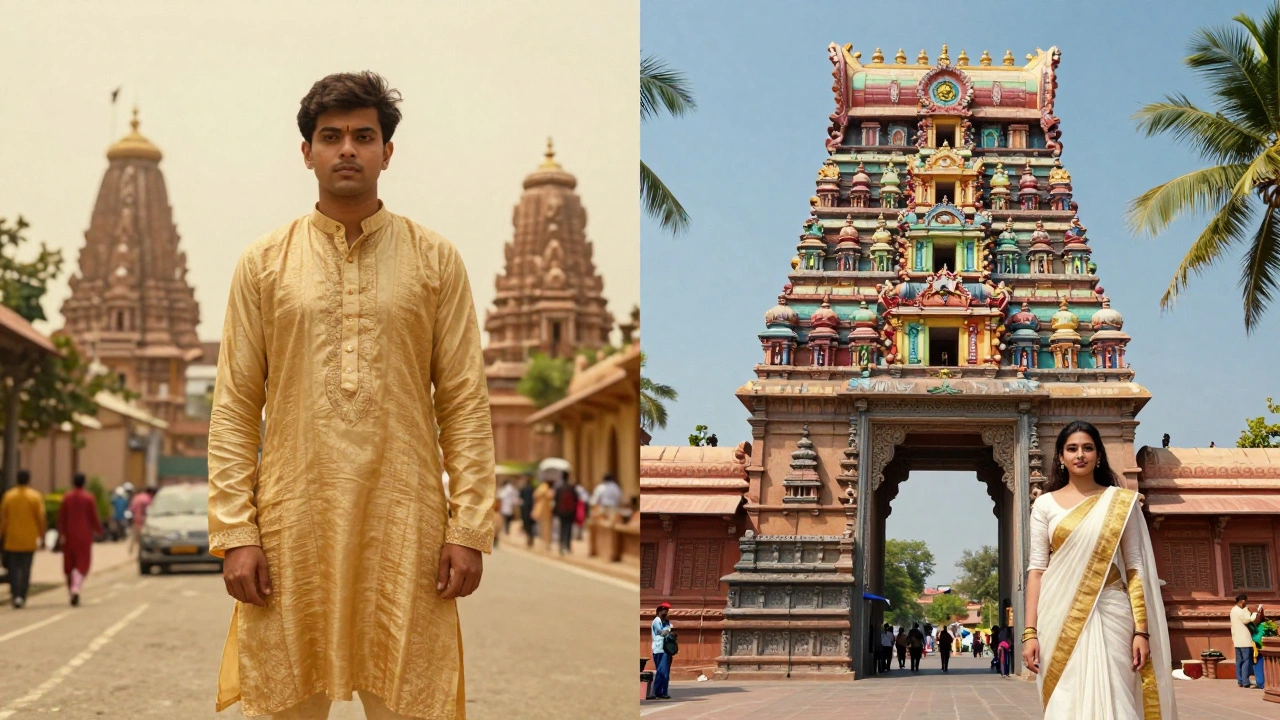
Art, Music, and the Cinematic Obsession
Indian culture expresses itself through movement and sound. Classical dances like Bharatanatyam from Tamil Nadu or Kathak from the North aren't just performances; they are storytelling tools used to convey spiritual narratives. The precision of the footwork and the meaning behind the hand gestures (mudras) can tell an entire story without a single word being spoken. Then there's the modern phenomenon: Bollywood. Based in Mumbai, this film industry is more than just entertainment; it's a cultural export that influences fashion, music, and marriage traditions across the globe. For many Indians, cinema is a unifying force that transcends the language barriers between the North and South. The high-energy dance numbers and emotional dramas reflect the general Indian approach to life: lean into the emotion and celebrate the victory.Navigating the Modern Shift
Is India still "mostly" traditional? Yes, but it's shifting. In cities like Bangalore or Hyderabad, you'll find a generation of tech professionals who are as comfortable discussing AI and cloud computing as they are celebrating Diwali. This "New India" is blending global trends with local roots. You'll see young people wearing sneakers with traditional kurtas or using apps to book a priest for a puja. This evolution has created a unique tension. There's a constant push and pull between the desire for modernization and the need to preserve heritage. This is why you'll see massive shopping malls standing right next to 500-year-old shrines. For a traveler, this is the most interesting part. The culture isn't a static museum piece; it's a living, breathing thing that changes every time you move to a new city.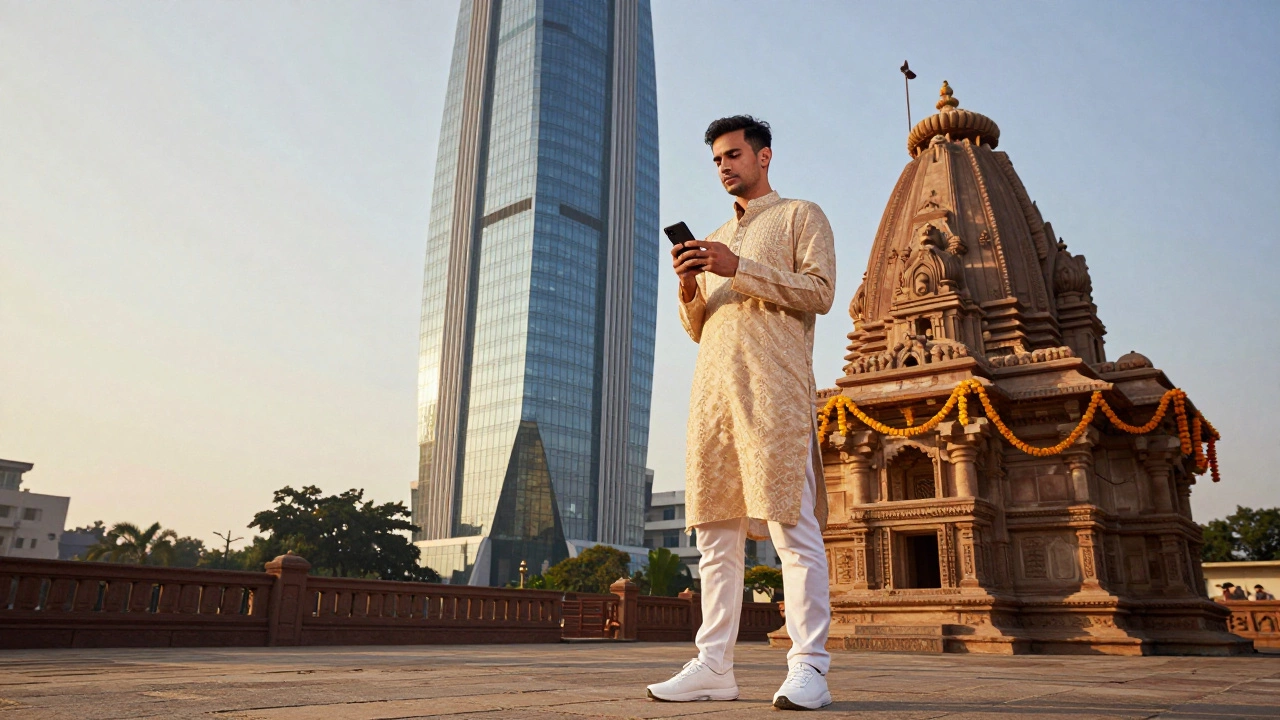
Tips for Respectful Cultural Exploration
If you're diving into this cultural soup, a few ground rules will help you avoid awkward moments. First, dress modestly. In rural areas and temples, covering your shoulders and legs is a sign of respect. Second, remember that the left hand is traditionally considered unclean in many parts of India, so use your right hand for eating or giving gifts. Also, be prepared for a different sense of time. The "Indian Stretchable Time" is a real thing. Whether it's a train departure or a meeting, things might happen a bit later than planned. Instead of getting frustrated, take it as an invitation to slow down and observe your surroundings. The more you let go of your rigid expectations, the more the true culture of the country opens up to you.What is the primary religion in India?
Hinduism is the most widely practiced religion, followed by Islam, Christianity, and Sikhism. While Hinduism is the majority, India is a secular country where multiple faiths have deeply influenced the overall culture, architecture, and laws.
Do all Indians speak the same language?
No. While Hindi is the official language of the Union and is spoken by a huge portion of the population (mostly in the North), there are 21 other officially recognized languages. In the South, languages like Tamil and Telugu are dominant. English is widely used as a common bridge language for business and education.
What are the most important cultural festivals?
Diwali (the festival of lights) and Holi (the festival of colors) are the most famous nationwide. However, regional festivals like Pongal in Tamil Nadu, Onam in Kerala, and Durga Puja in West Bengal are equally significant to the local populations.
How should I dress when visiting temples?
It is best to dress conservatively. For both men and women, covering the shoulders and knees is generally required. In some highly traditional temples, specific attire like a dhoti or saree may be requested. Always remove your shoes before entering a temple or someone's home.
Is Indian culture the same everywhere in the country?
Definitely not. India's culture varies wildly by region. The food, language, clothing, and even the style of architecture change significantly as you move from the Himalayan North to the tropical South or the desert West of Rajasthan.
What to do next
If you're feeling overwhelmed by the scale of it all, start with a specific region. If you love history and grand architecture, head to the Golden Triangle (Delhi, Agra, and Jaipur). If you're looking for spiritual peace and nature, the backwaters of Kerala or the mountains of Rishikesh are great starting points. Once you experience one region, you'll realize that the true answer to "what culture is mostly in India" is simply: all of them at once.