The Three Types of Mountaineering: Climbing, Trekking, and Alpine Ascents
 May, 22 2026
Mountains don't care about your resume. They only care if you can move up them. But not all mountains are climbed the same way. If you’ve ever looked at photos of Everest base camp, a technical rock face in the Alps, or a snowy ridge in the Himalayas, you might have wondered why some people carry huge tents while others just wear backpacks. The difference isn’t just gear-it’s the discipline.
Most people use the word "mountaineering" as a catch-all for anything involving high altitude. But in the industry, we break it down into three distinct types: Trekking, Alpine Climbing, and Expedition Mountaineering. Each requires different skills, different budgets, and completely different mental preparation. Knowing which one fits your goals is the first step to staying alive and enjoying the view.
Trekking: Walking on High Ground
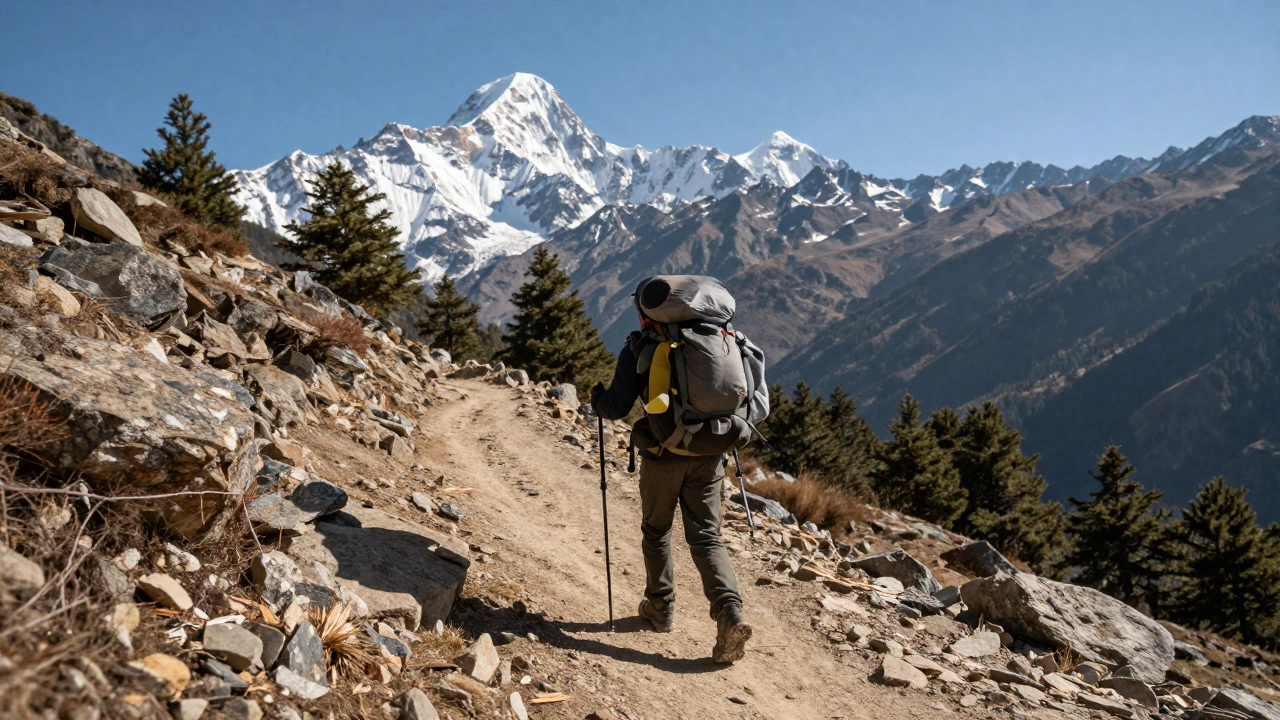
Let’s start with the most accessible type. Trekking is essentially hiking, but harder. You’re walking on trails that might be rocky, steep, or covered in snow, but you aren’t using ropes, ice axes, or crampons to pull yourself up vertical walls. Think of it as endurance walking.
In places like India, Nepal, and Peru, trekking is the gateway to the mountains. You’ll see thousands of people doing treks like the Annapurna Circuit or the Inca Trail. These routes test your cardiovascular health and your ability to handle altitude sickness, but they don’t require you to know how to tie a figure-eight knot or belay a partner.
The key here is self-sufficiency over days. You carry everything you need-tent, stove, food-in a pack. The challenge comes from distance and elevation gain, not technical difficulty. If you can walk ten miles a day for two weeks straight while sleeping in a tent at 14,000 feet, you’re a trekker. It’s less about conquering the mountain and more about enduring the journey through it.
- Skill Level: Low to Moderate (fitness required, no technical skills)
- Gear: Hiking boots, backpack, warm layers, trekking poles
- Time Commitment: Days to weeks
- Cost: Low to Medium ($500 - $3,000 depending on location)
Alpine Climbing: The Technical Ascent
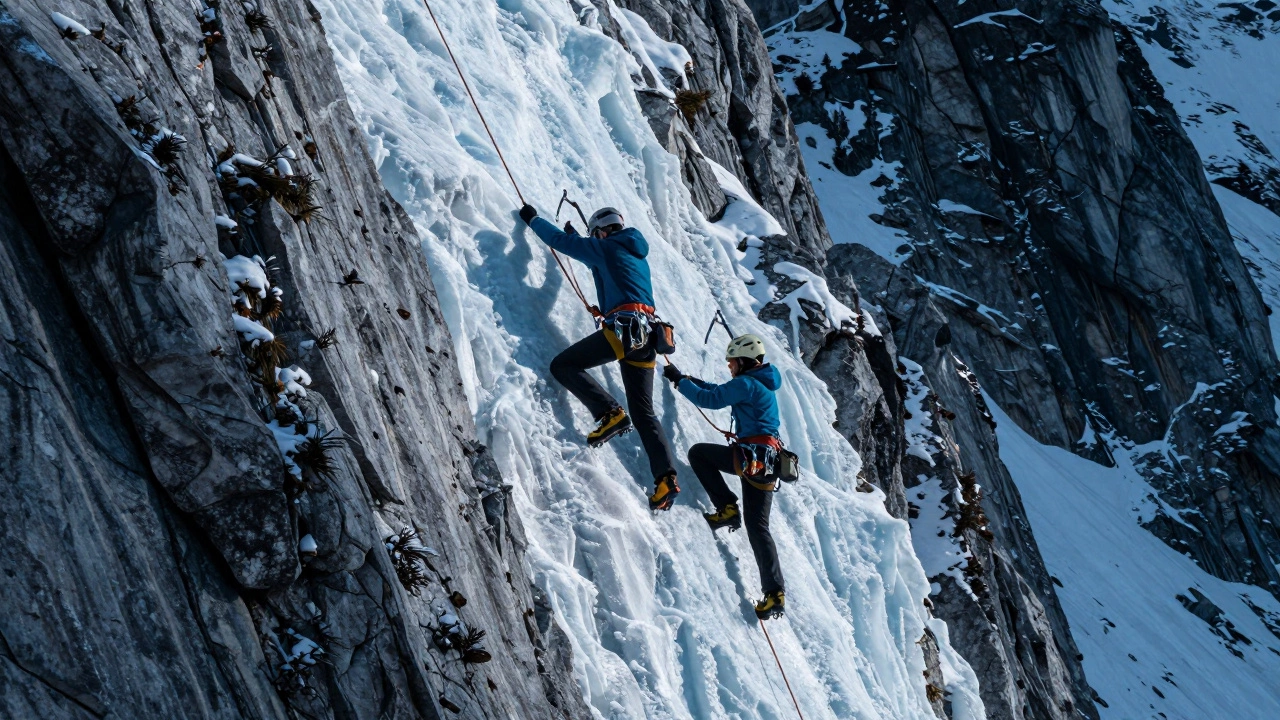
Now we get into the real work. Alpine climbing is what most people picture when they think of "climbing." This is where you leave the trail and start moving up faces made of rock, ice, or both. You’re using ropes, harnesses, helmets, and technical tools like ice axes and crampons.
The defining feature of alpine climbing is speed and lightness. Unlike big-wall climbing in Yosemite where you might spend weeks stationary on a route, alpine climbers aim to go up and come down quickly to avoid weather changes. This is often called "alpine style." You carry your own gear, pitch your own ropes, and rely on your partner. There are no fixed lines set by Sherpas or support crews.
This type of mountaineering demands proficiency in multiple disciplines. One minute you’re scrambling over loose rock, the next you’re cutting steps into a frozen waterfall. It’s physically exhausting and mentally demanding because every mistake has immediate consequences. A slip doesn’t mean a bruised knee; it means a fall. That’s why training in glacier travel, crevasse rescue, and basic rope management is non-negotiable.
- Skill Level: High (technical climbing, rope work, navigation)
- Gear: Harness, helmet, ropes, ice axe, crampons, climbing shoes
- Time Commitment: Hours to days per peak
- Cost: Medium to High ($2,000 - $10,000+ including guides and permits)
Expedition Mountaineering: The Big Wall Approach
If alpine climbing is a sprint, expedition mountaineering is a marathon run in a blizzard. This category covers the giants: Everest, K2, Denali, and Aconcagua. These mountains are so tall and so dangerous that you can’t just show up and climb them. You need an army behind you.
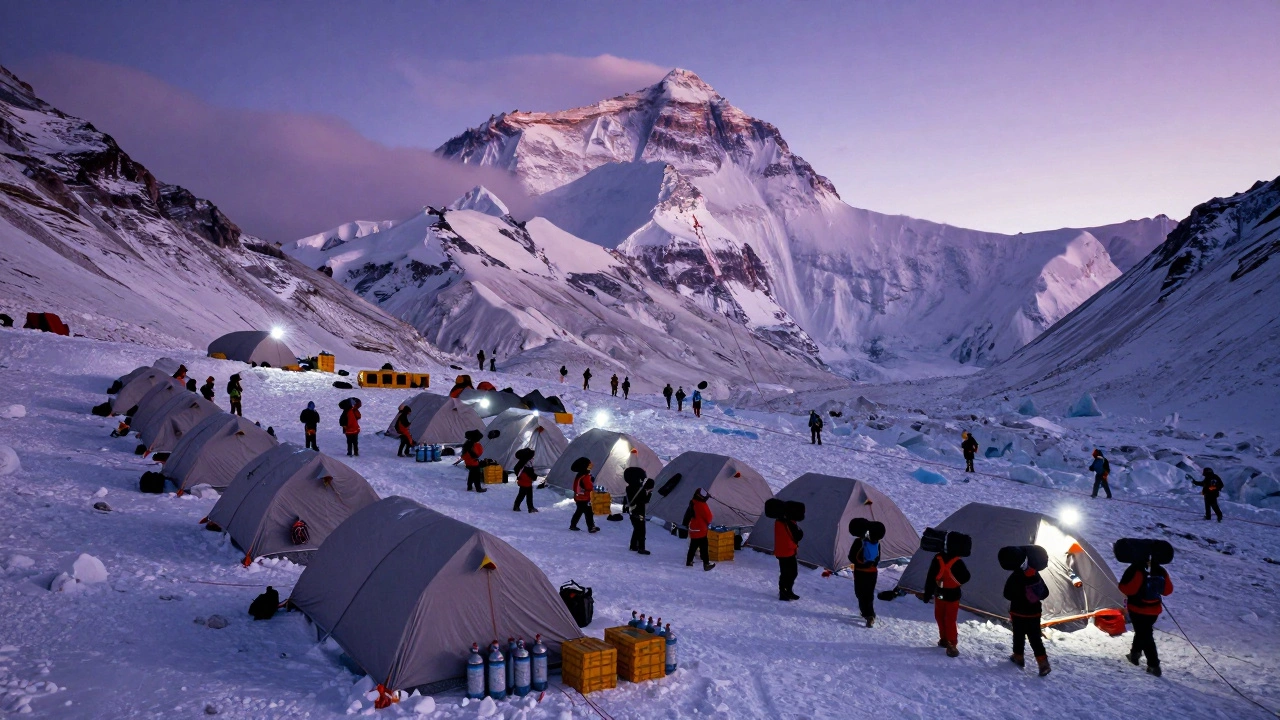
Expeditions involve setting up a series of camps (Base Camp, Camp 1, Camp 2, etc.) and slowly acclimatizing your body to thin air. This process takes weeks. You rotate between camps to let your body produce more red blood cells. Without this, you risk High Altitude Pulmonary Edema (HAPE) or Cerebral Edema (HACE), which can kill you in hours.
The logistics are massive. Porters carry tons of oxygen bottles, fuel, and food. Fixed ropes are installed along the route so climbers don’t have to place their own protection. Many climbers hire Sherpas or local guides to lead the final push. This type of mountaineering is less about technical skill on ice and more about survival, patience, and managing resources in extreme environments. It’s expensive, grueling, and statistically risky, but for many, it’s the ultimate goal.
- Skill Level: Expert (altitude experience, leadership, endurance)
- Gear: Full expedition kit, supplemental oxygen systems, satellite communication
- Time Commitment: Weeks to months
- Cost: Very High ($30,000 - $100,000+)
Comparing the Three Disciplines
To help you decide where you fit, let’s look at these three types side-by-side. The differences in cost, time, and skill requirements are stark.
| Feature | Trekking | Alpine Climbing | Expedition Mountaineering |
|---|---|---|---|
| Primary Skill | Endurance & Fitness | Technical Climbing | Acclimatization & Logistics |
| Equipment Needed | Hiking Boots, Backpack | Ropes, Ice Axe, Crampons | Oxygen Systems, Heavy Tents |
| Typical Duration | 3-14 Days | 1-5 Days | 4-8 Weeks |
| Average Cost | $500 - $3,000 | $2,000 - $10,000 | $30,000+ |
| Risk Level | Low (Altitude Sickness) | High (Falls, Avalanches) | Very High (Weather, Isolation) |
Which Type Should You Choose?
Your choice depends on your current fitness, budget, and appetite for risk. If you’re new to the outdoors, start with trekking. It builds the aerobic base you’ll need for anything harder. Join a group trek in the Indian Himalayas or the Andes. Learn to sleep in a tent, eat simple meals, and deal with cold nights.
If you already hike regularly and want more challenge, move to alpine climbing. Take a course in rock climbing and winter skills. Learn to use an ice axe properly. Practice falling safely. This stage is where you build the technical competence to protect yourself and others.
Expedition mountaineering is not for beginners. It’s not even for intermediate climbers. You should only consider this after years of alpine experience, successful summits of 6,000-meter peaks, and a deep understanding of high-altitude physiology. Don’t let Instagram fool you. Those summit photos represent years of preparation, not just a vacation.
Common Pitfalls to Avoid
One mistake I see often is skipping the basics. People try to jump straight to technical climbs without mastering fitness or navigation. Another is underestimating altitude. Even experienced athletes can suffer from altitude sickness if they ascend too quickly. Always follow the golden rule: "Climb high, sleep low."
Also, don’t ignore the mental game. Mountains expose your weaknesses. Fear, fatigue, and frustration will hit you hard. Learning to manage these emotions is as important as learning to tie knots. Talk to your team. Listen to your guides. Know when to turn back. The mountain will still be there tomorrow.
Next Steps for Your Journey
If you’re ready to start, pick one type and stick with it for a year. For trekking, aim to complete three multi-day hikes. For alpine climbing, join a guided winter ascent of a nearby peak. For expeditions, begin saving money and building your resume with smaller objectives.
Connect with local clubs. Find mentors who have done what you want to do. Read books on mountaineering history and technique. Watch documentaries to understand the culture. The community is welcoming if you show respect and humility.
Remember, mountaineering isn’t about conquering nature. It’s about respecting it enough to learn its rules. Whether you’re trekking a gentle ridge or fighting for your life on a frozen wall, the mountain teaches you who you are. Choose your path wisely, prepare thoroughly, and enjoy the climb.
What is the easiest type of mountaineering?
Trekking is the easiest type of mountaineering. It requires good physical fitness but no technical climbing skills. You walk on established trails rather than scaling vertical faces. Popular beginner destinations include the Annapurna Sanctuary in Nepal or the Valley of Flowers in India.
Do I need a guide for alpine climbing?
Yes, especially if you are new to technical climbing. A certified guide can teach you rope management, ice axe techniques, and safety protocols. They also help with route-finding and decision-making in complex terrain. Never attempt alpine climbing alone without proper training.
How much does an Everest expedition cost?
A standard commercial expedition to Mount Everest costs between $35,000 and $60,000. Luxury services can exceed $100,000. This covers permits, lodging, food, oxygen, and guide support. Additional costs include personal gear, insurance, and flights to Base Camp.
What is the difference between hiking and trekking?
Hiking is usually a day trip on well-maintained trails. Trekking involves multi-day journeys in remote areas, often requiring camping and carrying all your supplies. Trekking is more physically demanding and exposes you to higher altitudes and variable weather conditions.
Can I do expedition mountaineering without prior experience?
No. Expedition mountaineering requires extensive prior experience in alpine climbing, high-altitude trekking, and cold-weather survival. Most reputable operators require proof of previous summit attempts on 6,000-meter peaks. Attempting an 8,000-meter peak without this background is extremely dangerous and often prohibited by guides.
What gear is essential for alpine climbing?
Essential gear includes a climbing harness, helmet, dynamic rope, ice axe, crampons, and appropriate clothing layers. You also need a backpack, headlamp, and navigation tools like a map and compass. Technical knowledge of how to use this gear is more important than owning it.