Real Examples of Man-Made Tourism Products in Indian Cultural Tourism
 Mar, 31 2026
Heritage Tourism Analyst
Input Site Details
How to Use This Tool
Based on the distinction between natural and man-made products, enter the parameters of a site to understand:
- Whether it qualifies as a Man-Made Product.
- Relative Preservation Difficulty.
- Potential Revenue Generation.
Did you know? Unlike natural valleys, man-made monuments like the Qutub Minar cannot regenerate themselves if damaged.
You walk out of the Delhi Metro and stare at the iron skeleton of the Qutub Minar towering above your head. Now imagine standing on a pristine beach in Goa where nothing touches the sand except your feet. That contrast defines the biggest split in travel today: natural versus man-made. When people ask for an example of a man-made tourism product, they often mean any attraction created by human hands to generate visitor interest. In the context of India, this isn't just about buildings; it includes entire transport experiences, curated museum spaces, and restored monuments designed specifically for viewing and revenue.
This distinction matters because man-made products require different management strategies. A natural valley can regenerate after a fire, but the Great Wall of China cannot rebuild itself if destroyed. By focusing on Indian cultural tourism, we can see exactly how these products function economically and historically. You don't just buy a ticket to see stone; you buy the history, the architecture, and the service layer wrapped around it.
Quick Takeaways
- The Taj Mahal: The quintessential example combining art, engineering, and mass appeal.
- Heritage Railways: Trains themselves act as the primary attraction, not just transport.
- Living Monuments: Active sites like Mysore Palace blend tourism with daily administrative functions.
- Preservation Costs: Maintaining these structures requires significant funding compared to natural sites.
Defining What Makes a Product "Man-Made"
To classify something correctly, you need to understand the intent behind its creation. If nature built a cave system, it is a natural attraction. If humans carved statues into those caves to tell a story, it becomes a man-made product. The key factor is architectural intervention.
In tourism theory, a "product" is anything sold to a traveler for consumption. When the main draw is constructed by people, it fits the category. Consider the Sun Temple at Konark in Odisha. While the land was there naturally, the massive chariot-shaped complex represents human labor, planning, and artistic design intended for worship and later, sightseeing. This contrasts sharply with a wildlife sanctuary where the value lies entirely in unspoiled ecosystems.
A true man-made tourism product also usually includes supporting infrastructure. You might think of a fortress like Chittorgarh, but remember the parking lots, audio guides, souvenir shops, and security checkpoints surrounding it. These elements transform a ruin into a consumable experience. Without these services, it is just old masonry. With them, it becomes a tourism asset generating tax revenue and employment.
The Golden Standard: The Taj Mahal
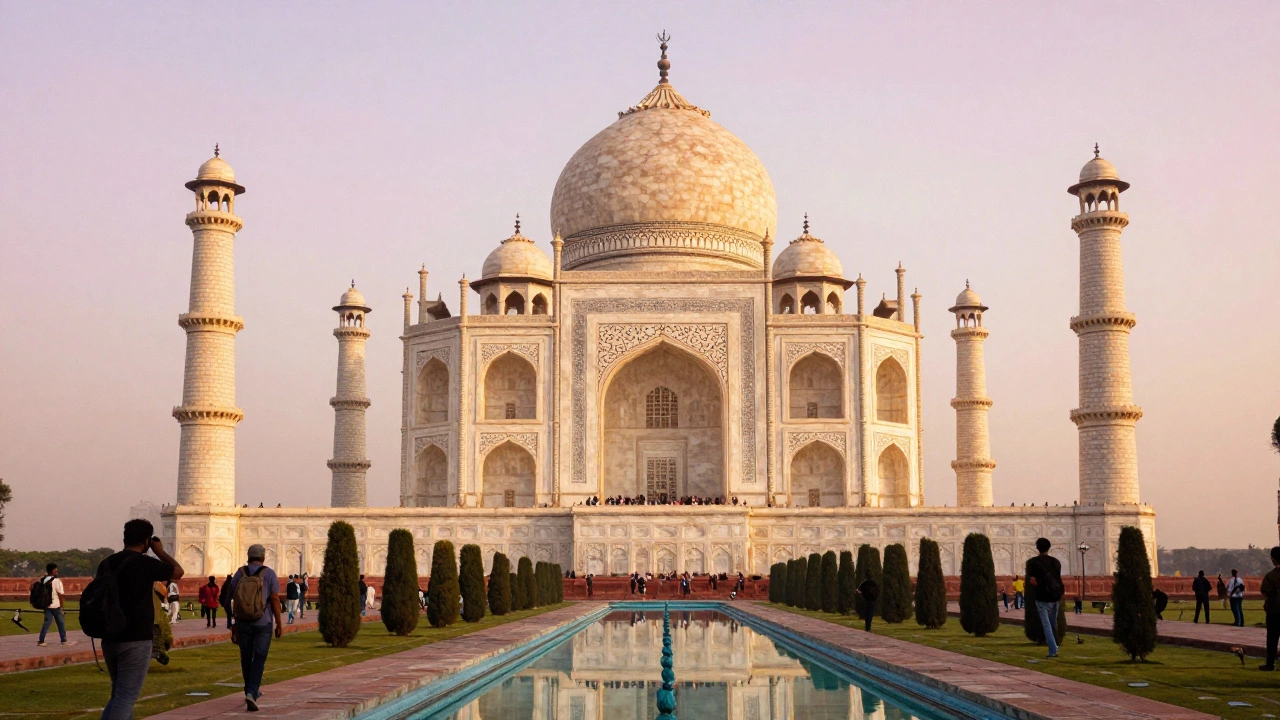
If you need one definitive answer to the question of what constitutes a man-made tourism product, the Taj Mahal is it. Located in Agra, this white marble mausoleum commissioned by Shah Jahan in 1632 represents the peak of Mughal architecture. It wasn't built primarily for tourists when it opened; it was a monument of grief and power.
Over centuries, its function shifted. Today, it is a UNESCO World Heritage Site and the most visited destination in India. Why does it fit our definition perfectly? It is entirely artificial. Every block of Makrana marble, every semi-precious stone inlay, and every garden layout was engineered by human hands. Unlike the beaches of Kerala which exist regardless of visitor presence, the Taj Mahal relies entirely on conservation to survive.
The Taj Mahal complex includes the main tomb, a mosque, a guest house, and gardens arranged in symmetrical patterns typical of Persian design. Visitors pay entry fees specifically designated for preservation and site maintenance. In 2025, pricing tiers separated Indian citizens from foreign travelers, a common practice for high-value heritage assets. The economic model here is clear: the beauty generates revenue, and the revenue funds the fight against pollution and weathering.
Heritage Railways as Travel Experiences
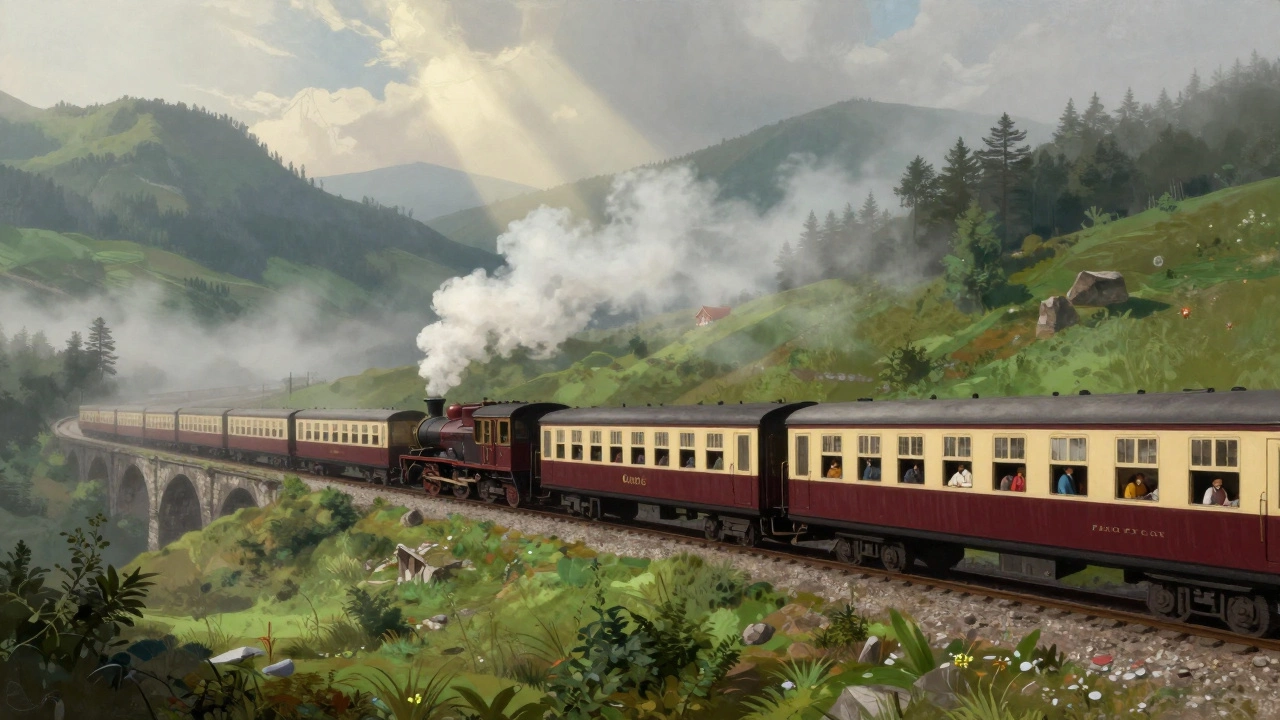
Sometimes the structure itself is the journey. In many Western contexts, trains are merely transport. In India, certain rail routes are marketed specifically as tourist products. The Pacific Express or the Golden Chariot offer luxury train journeys where the train is the hotel, restaurant, and theater venue combined.
These locomotives are restored vintage engines coupled with carriages that mimic early 20th-century aesthetics. Passengers book packages solely to experience the nostalgia, dining, and stops at curated stops along the way. This distinguishes it from standard commute. The railway corporation treats the train as a hotel facility with room rates rather than mileage fares.
Beyond the luxury circuit, historic sections like the Darjeeling Himalayan Railway hold status as World Heritage properties. This narrow-gauge railway was the first mountain rail line in Asia. It remains operational, carrying passengers up steep gradients using steam or modern electric power housed in historic shells. Here, the "product" is the ride through history while traversing scenic landscapes. You cannot replicate this with a bus; the engineering marvel of the incline is part of the attraction.
Museums and Reconstructed Sites
We must also consider static collections. A national museum transforms artifacts into accessible stories. The National Museum in New Delhi houses sculptures, coins, and manuscripts from across the subcontinent. However, the display cases, lighting, and spatial design turn these objects into a cohesive product.
Some sites go further by reconstructing history for educational purposes. At Hampi in Karnataka, the ruins are extensive, but the government has also invested in interpretive centers and pathways. Another angle is theme parks dedicated to history, such as the Bio Dome in some locations or recreated villages. However, authentic examples rely on preserving original fabric. A fully synthetic recreation, while fun, sits slightly outside strict heritage definitions but still falls under man-made tourism broadly.
The Railway Museum in New Delhi serves a dual purpose. It displays static exhibits of vintage engines while offering paid rides on heritage steam trains. This active engagement makes the museum more dynamic. It shows how a static collection evolves into a recreational activity, expanding the definition of a tourism product beyond mere observation.
Economic Implications of Man-Made Assets
Why do governments care so much about keeping these old structures open? The economic math is straightforward. Natural sites often have minimal operating costs once the land is set aside. Man-made sites have high overhead. You have to roof leakages, reinforce cracking walls, hire archaeologists, and manage crowd control.
In 2024 and moving into 2026, India has ramped up initiatives like the Swadesh Darshan Scheme. This program specifically targets building infrastructure around heritage projects. It acknowledges that the monument alone isn't enough; you need roads, hotels, and sanitation nearby to make it viable. If the local economy doesn't benefit, vandalism rises and maintenance stalls.
Tax revenue collected from entry tickets often flows back into state tourism boards. For example, revenue generated in Rajasthan from palace stays supports community development funds. This circular economy ensures that the product sustains itself. It turns preservation into a profitable enterprise rather than a charity case.
Natural vs. Man-Made: A Direct Comparison
Understanding the difference helps travelers plan better trips and policymakers prioritize budgets.
| Feature | Man-Made Product | Natural Attraction |
|---|---|---|
| Creation Source | Human Engineering/Labor | Geological/Ecological Processes |
| Maintenance Cost | High (Restoration required) | Variable (Conservation varies) |
| Lifespan | Determined by Material Durability | Determined by Ecosystem Health |
| Examples | Taj Mahal, Gateway of India | Himalayas, Corbett Park |
| Vulnerability | Pollution, Vandalism, Decay | Climate Change, Fire, Poaching |
The table above highlights why managing the Taj Mahal feels different than managing Ranthambore National Park. One needs chemists cleaning marble; the other needs rangers protecting tigers. Both are vital tourism sectors, yet their core operations differ fundamentally.
Preserving the Future in 2026
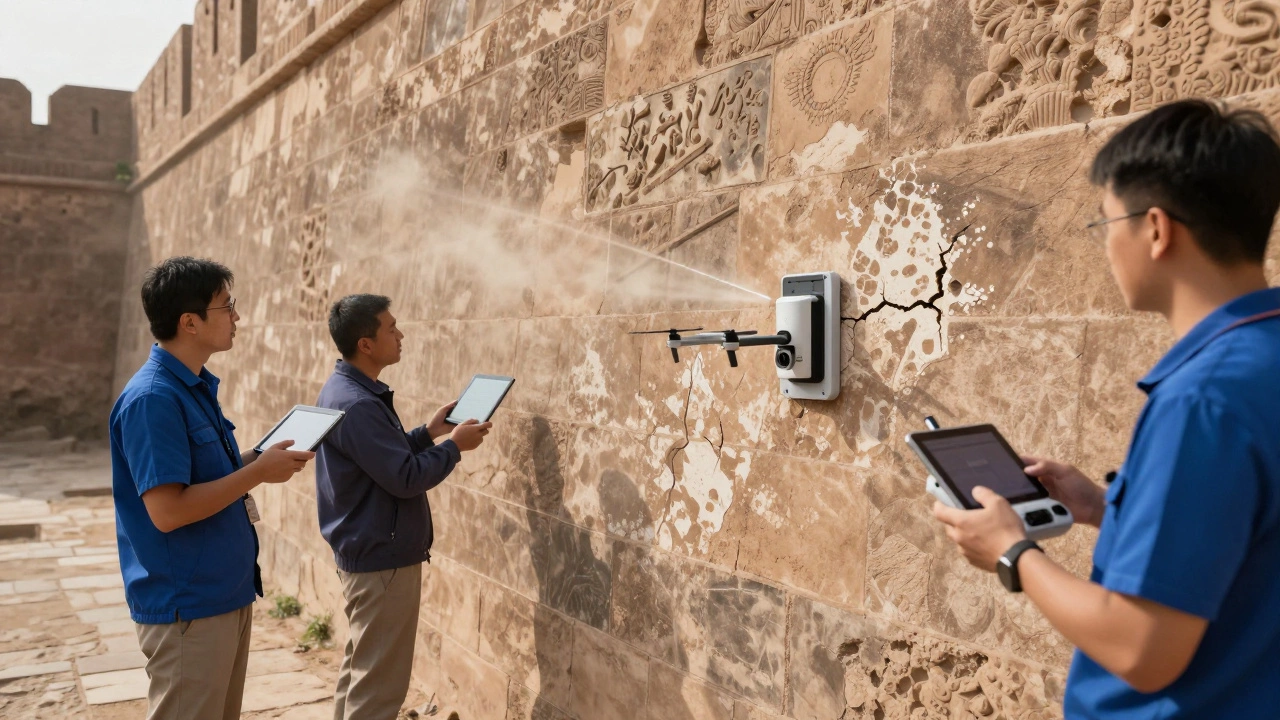
As we move deeper into the mid-2020s, the challenge shifts from discovery to sustainability. Overcrowding threatens fragile sites. Recent limits on daily entries at popular forts aim to prevent structural stress. The use of drones for monitoring cracks has become standard practice. Technology now aids in digitizing these products, creating virtual twins before physical decay sets in.
Future visitors may interact with sites via augmented reality apps overlaid on ruins. But the core remains the same: a man-made structure stands as a testament to human creativity. Whether it is a stepwell in Patan or a palace in Jaipur, these products define the cultural narrative of the region. They are tangible links to the past that require present-day investment to endure.
Frequently Asked Questions
Is a temple considered a man-made tourism product?
Yes. Even if it functions actively for religious ceremonies, if tourists visit for architectural appreciation and pay fees for entry or parking, it acts as a tourism product. Most large temples in India fall into this mixed-use category.
Can a modern building be a tourism product?
Absolutely. Modern landmarks like the Lotus Temple or newer observation towers are man-made attractions designed for public viewing. Longevity determines if they remain significant, but intent creates the product initially.
How do man-made sites handle environmental damage?
Man-made sites often suffer from acid rain or urban pollution. Management committees implement restrictions like banning cars near the site (as seen in Agra Fort) and using chemical treatments to clean surfaces without damaging the stone.
What is the ROI for government heritage sites?
Return on Investment includes ticket sales, employment generation, and boosted regional spending in hotels and restaurants. Popular heritage corridors can double local GDP growth rates significantly.
Are replicas considered man-made tourism products?
Yes, though purists distinguish them. Replicas, such as those found in mini-parks, are purely man-made constructs designed for entertainment. They lack historical provenance but still fit the structural definition of a built attraction.
In the end, every brick of a historic fort tells us who built it and why. As you plan your cultural tours, recognize that the experience is crafted. It involves engineers, historians, and marketers working to keep these stones standing for you. That effort is the very essence of the man-made tourism product.