Most Beautiful Peaks in India: A Trekker's Guide to the Himalayas
 Aug, 25 2026
Find Your Perfect Himalayan Peak
Answer three simple questions to discover which peak will give you the most memorable experience.
Ask ten different trekkers who have spent months climbing in the Indian Himalayas which peak is the most beautiful, and you will likely get ten different answers. Beauty in the mountains is subjective, deeply personal, and often tied to the specific moment you stood on a ridge or looked up at a summit glowing in the sunrise. However, if we look at geological scale, visual impact, and the sheer awe they inspire, a few names consistently rise to the top of the conversation.
This article breaks down the contenders for the title of India's most beautiful peak, looking at them through the lens of a traveler seeking both aesthetic wonder and accessible adventure. We are not just listing heights; we are discussing the experience of seeing these giants from below and standing near their slopes.
The Undisputed King: Mount Kanchenjunga
If you ask mountaineers about the most majestic mountain in the region, Mount Kanchenjunga is the highest peak in India and the third-highest in the world, located on the border between Sikkim and Nepal. Standing at 8,586 meters (28,169 feet), it dominates the eastern Himalayas. But why do people call it the most beautiful? It isn't just the height. It is the shape. Unlike the sharp, jagged spires of some other peaks, Kanchenjunga presents a massive, broad face that looks like a frozen wave crashing against the sky.
The name itself comes from Tibetan, meaning "The Five Treasures of Snow." This refers to its five distinct summits: South, Central, North, West, and East. When you view it from the Dzongri Pass or the lower camps in Sikkim, the play of light on the ice fields creates a visual spectacle that feels almost surreal. The mountain is sacred to the local Lepcha people, who believe that to climb to the very top is to anger the spirits, so many expeditions stop just short of the summit. This spiritual aura adds a layer of mystery to its physical beauty.
- Elevation: 8,586 meters
- Location: Sikkim-Nepal Border
- Best Viewpoint: Dzongri Pass (4,300m) or Phedang Valley
- Trek Difficulty: Challenging (High Altitude)
The Iconic Profile: Nanda Devi
While Kanchenjunga wins on raw scale, Nanda Devi is a remote and sacred peak in the Garhwal Himalayas, known for its perfect pyramidal shape and deep glacial valleys. Located in Uttarakhand, this 7,816-meter giant is often described as the most symmetrical mountain in the world. From a distance, it looks like a perfect pyramid carved out of white marble.
The beauty of Nanda Devi lies in its isolation. It sits within the Nanda Devi National Park, a UNESCO World Heritage site. To see it clearly, you usually need to be on the challenging Nanda Devi Base Camp trek or the even more difficult Nanda Devi Parbat expedition route. The valley floor is filled with glaciers, including the Rishi Glacier, which flows down toward the Alaknanda River. The contrast between the dark, rugged rocks of the surrounding ridges and the pure white of Nanda Devi’s face is striking. For photographers, this peak offers the classic "Himalayan" image: pristine, untouched, and incredibly serene.
| Peak Name | Height (Meters) | Region | Key Visual Feature | Accessibility |
|---|---|---|---|---|
| Kanchenjunga | 8,586 | Sikkim/Nepal | Broad, multi-summit face | Difficult High-Altitude Trek |
| Nanda Devi | 7,816 | Uttarakhand | Perfect Pyramidal Shape | Remote Permits Required |
| Kedarkantha | 3,810 | Uttarakhand | Snow-covered Ridge Views | Moderate/Beginner Friendly |
| Himachal Peaks (Kullu) | Varies | Himachal Pradesh | Green Valleys + Snow Caps | Easy/Moderate |
The Accessible Gem: Kedarkantha
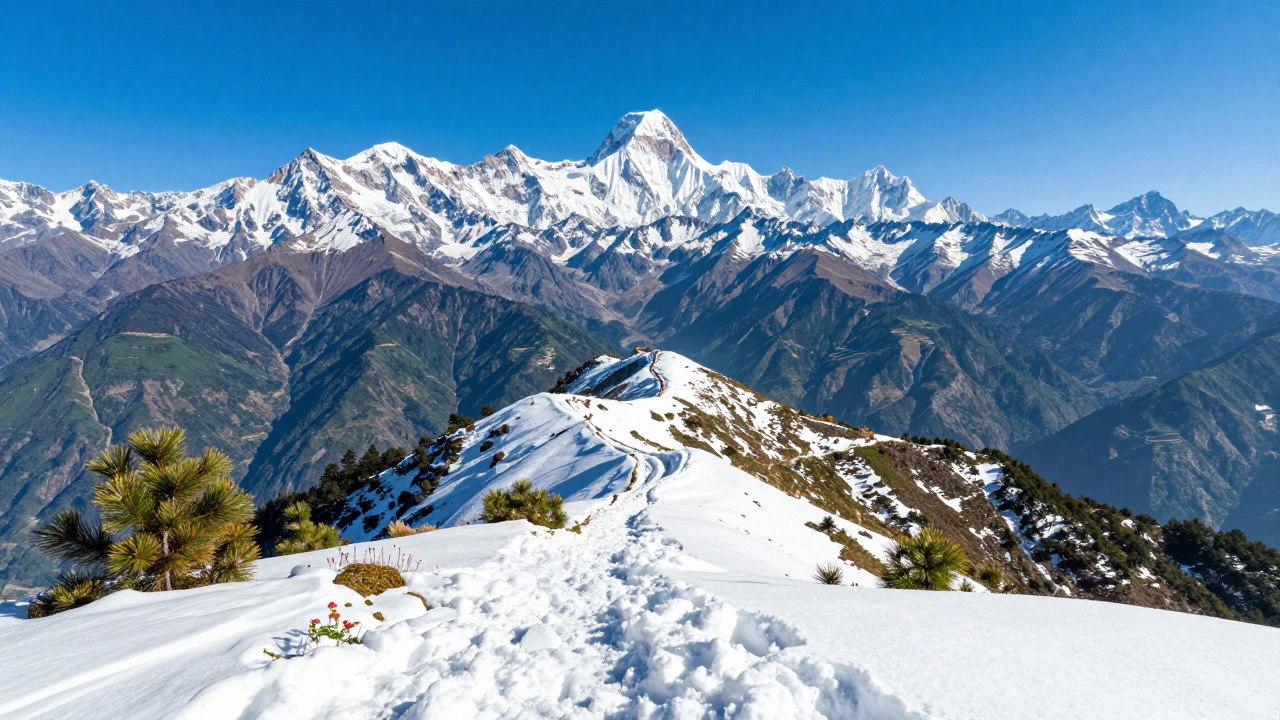
Not everyone can handle the grueling weeks required for high-altitude expeditions. For the average trekker, Kedarkantha is a popular winter trek in Uttarakhand offering panoramic views of multiple snow-capped peaks from a manageable altitude. At 3,810 meters, it might not win any height records, but it wins hearts. Why? Because it gives you the full Himalayan experience without the extreme danger or logistical nightmare.
From the summit of Kedarkantha, you don't just see one mountain. You see a panorama. To your left, you might spot Swargarohini. To your right, the black rock formations of Har Ki Dun. In the distance, the mighty Trishul range. The trail itself is beautiful, winding through pine forests and crossing meadows dotted with wildflowers in spring or covered in thick snow in winter. The village of Sankri, where the trek begins, adds a cultural warmth to the cold landscape. For many first-time trekkers, this is the peak that makes them fall in love with the mountains because it is achievable yet breathtaking.
The Green-and-White Contrast: Himachal Pradesh
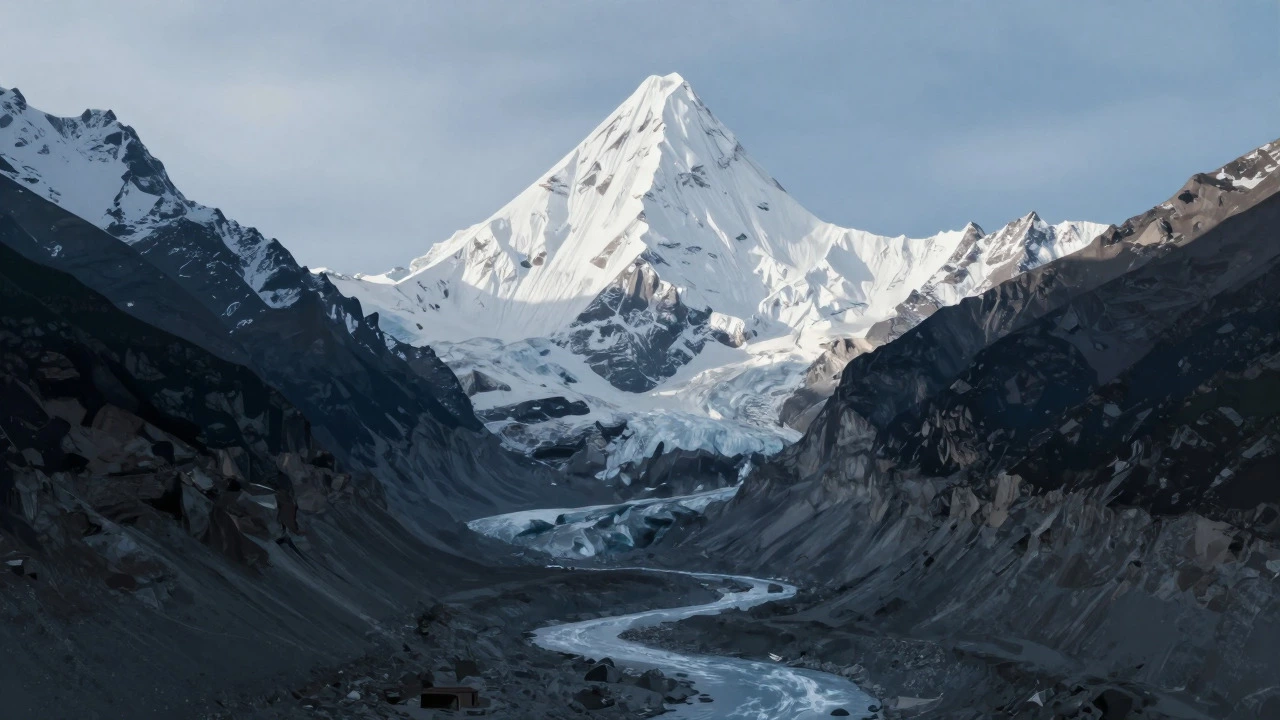
While the Garhwal and Kumaon regions in Uttarakhand offer stark, dramatic white-on-black visuals, Himachal Pradesh is a northern Indian state known for its lush green valleys juxtaposed with snow-capped Himalayan peaks. The beauty here is different. It is softer, greener, and more integrated with human habitation. Peaks like those visible from Manali, Kullu, or Spiti offer a view where snow-capped giants stand guard over vibrant green apple orchards and terraced fields.
If you define "beautiful" as a harmonious blend of nature and life, then the peaks of Himachal take the crown. The Hampta Pass trek, for example, takes you from the green side of the Dhauladhar range to the arid, rocky side of the Pir Panjal range. The transition is visually stunning. You go from lush pastures to barren, moon-like landscapes in a single day. The peaks here, such as those around Triund or the higher ranges seen from Chandratal, are framed by deodar trees and flowing rivers, creating a postcard-perfect scene that feels alive rather than just majestic.
Why "Most Beautiful" is Subjective
It is easy to pick a winner based on height or symmetry, but beauty is emotional. Do you find beauty in the terrifying, icy walls of Kanchenjunga? Or in the gentle, flower-filled slopes of Kedarkantha? Do you prefer the isolated, silent grandeur of Nanda Devi or the bustling, colorful backdrop of Himachal’s peaks?
Your answer depends on what you value in your travel experience:
- Scale and Awe: Choose Kanchenjunga. It makes you feel small in the best way possible.
- Purity and Symmetry: Choose Nanda Devi. It is the idealized mountain form.
- Accessibility and Panorama: Choose Kedarkantha. It puts you in the middle of the action.
- Harmony and Color: Choose the peaks of Himachal Pradesh. They blend into the landscape beautifully.
Practical Tips for Viewing These Peaks
If you plan to visit any of these locations, timing is everything. The weather in the Himalayas can change rapidly, often obscuring the very peaks you traveled thousands of miles to see.
- Post-Monsoon (September-November): This is the golden window. The skies are clear after the rains, and the air is crisp. Visibility is at its peak. This is the best time for Kanchenjunga and Nanda Devi viewpoints.
- Winter (December-February): Essential for Kedarkantha. The snow cover enhances the white appearance of the peaks and the trails are safe for beginners. However, higher passes may be closed.
- Spring (March-May): Great for Himachal. The flowers are blooming, and the snow is melting, revealing the green valleys. Good for moderate treks.
Frequently Asked Questions
Is Mount Kanchenjunga the highest peak in India?
Yes, Mount Kanchenjunga is the highest peak in India, standing at 8,586 meters. It is also the third-highest peak in the world, after Everest and K2.
Which is the easiest peak to see in India for beginners?
Kedarkantha in Uttarakhand is widely considered one of the best beginner-friendly treks. It offers stunning views of multiple peaks at a manageable altitude of 3,810 meters without requiring technical climbing skills.
What is the best time of year to view Himalayan peaks in India?
The period from September to November is generally considered the best. The monsoon rains have cleared the dust from the air, providing crystal-clear visibility of the snow-capped summits.
Do I need special permits to trek near Kanchenjunga?
Yes, because Sikkim is a border state, all foreign nationals and Indian citizens need an Inner Line Permit (ILP) to enter the state. Additionally, specific trekking permits are required for the Kanchenjunga region.
Which peak has the most scenic base camp views?
Nanda Devi Base Camp is renowned for its isolated, glacier-filled valley views. However, for a mix of greenery and snow, the base camps in Himachal Pradesh, such as those near Manali, offer equally stunning but more accessible scenery.