Kerala vs Tamil Nadu: Which South Indian State is Better for Tourism in 2026?
 Jul, 7 2026
South India Travel Personality Quiz
Answer these 5 quick questions to find out which state matches your travel vibe.
Your Perfect Match Is...
Standing at the border between Kerala and a southwestern Indian state known as 'God's Own Country' for its backwaters, lush hills, and serene beaches and Tamil Nadu and a southeastern Indian state famous for its ancient Dravidian temples, vibrant culture, and historic cities like Chennai and Madurai, you face a choice that trips up even seasoned travelers. Both states offer incredible experiences, but they cater to very different vibes. Are you looking for relaxation in nature or immersion in deep history? The answer depends entirely on what kind of traveler you are.
This isn't just about picking a pretty postcard location. It’s about matching your energy, budget, and interests with the right landscape. One state offers misty mountains and houseboats; the other gives you thousand-year-old stone temples and bustling urban centers. Let’s break down exactly where each shines so you can decide without the guesswork.
The Vibe Check: Serenity vs. Soul
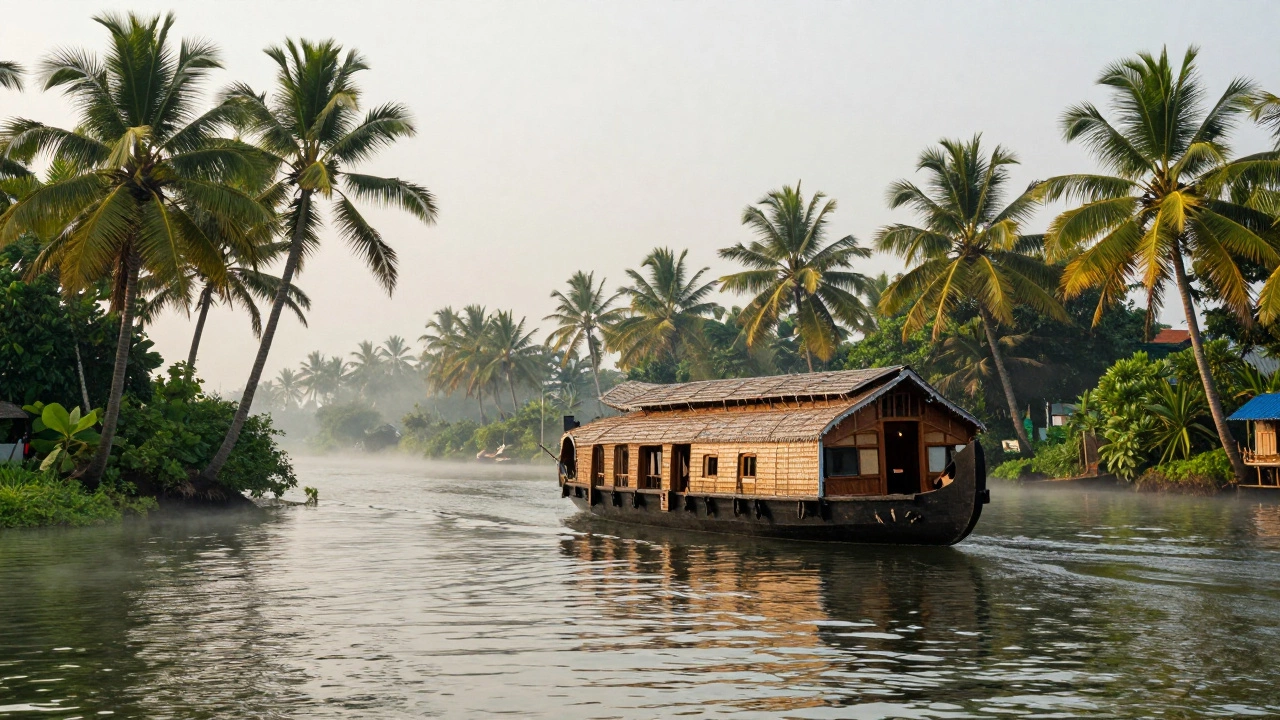
Kerala sells itself on tranquility. When people think of Kerala, they picture slow-moving boats through narrow waterways, coconut palms swaying in the breeze, and Ayurvedic massages in open-air cottages. It is designed for slowing down. If your goal is to disconnect from the noise of daily life, breathe fresh air, and watch the sunset over calm waters, Kerala hits that mark perfectly. The pace here is gentle. Even the traffic moves with a relaxed rhythm compared to the rest of India.
In contrast, Tamil Nadu pulses with energy. This is the heartland of the Chola, Pandya, and Chera dynasties. The air feels heavier with history. You walk into a temple in Madurai and an ancient city in Tamil Nadu known for the Meenakshi Amman Temple, one of the largest functioning temple complexes in India and feel the weight of centuries of devotion. The streets are louder, the colors are brighter, and the interactions are more intense. It’s not always peaceful, but it is deeply authentic. You don’t just observe Tamil Nadu; you participate in it.
If you want to read a book by the pool, choose Kerala. If you want to debate philosophy with a local priest or get lost in a labyrinthine market, pick Tamil Nadu.
Nature and Landscapes: Backwaters vs. Hills
Nature lovers have strong arguments for both sides, but the types of nature differ significantly. Kerala’s crown jewel is undoubtedly its Backwaters and a unique network of brackish lagoons and lakes lying parallel to the Arabian Sea coast. Staying on a traditional kettuvallam (houseboat) in Alleppey and a town in Kerala famous for its extensive network of backwaters and houseboat tours is an experience you cannot replicate anywhere else. The greenery is dense, tropical, and overwhelming in the best way possible. Add in the tea plantations of Munnar and a hill station in Kerala known for its vast tea gardens and cool climate, and you have a paradise for those who love soft landscapes and mild weather.
Tamil Nadu’s natural beauty is rugged and dramatic. While it has coastal stretches like Pondicherry and a union territory and former French colony on the Coromandel Coast, known for its colonial architecture and serene beaches, the real draw is the Western Ghats and a mountain range along the western edge of India, recognized as a UNESCO World Heritage Site for its biodiversity sections within the state. Places like Ooty and a popular hill station in Tamil Nadu located in the Nilgiri Mountains, often called the 'Queen of Hill Stations' and Kodaikanal and a hill station in Tamil Nadu known for its star-shaped lake and scenic viewpoints offer cooler climates and trekking opportunities. However, the wildlife sanctuaries in Tamil Nadu, such as Mudumalai National Park and a national park in Tamil Nadu part of the Nilgiri Biosphere Reserve, home to tigers, elephants, and leopards, provide better chances for spotting large mammals compared to Kerala’s more forest-focused reserves.
Heritage and Culture: Temples vs. Traditions
This is where the gap widens. If history is your primary driver, Tamil Nadu wins decisively. It holds some of the oldest continuously inhabited cities and architectural marvels in the world. The Brihadeeswarar Temple and a 11th-century Hindu temple in Thanjavur, built by Raja Raja Chola I, and a UNESCO World Heritage Site in Thanjavur stands as a testament to engineering genius. The Meenakshi Amman Temple and a historic Hindu temple in Madurai dedicated to goddess Meenakshi, an avatar of Parvati in Madurai is not just a religious site but a living cultural hub with daily rituals, dance performances, and festivals that date back millennia. The Gangaikonda Cholapuram and the ruins of the capital city of the Chola dynasty, featuring the Brihadeeswarar Temple ruins offer a glimpse into imperial grandeur that few places on earth can match.
Kerala has heritage too, but it is subtler. You find it in the Fort Kochi and a neighborhood in Ernakulam district of Kerala, known for its colonial-era buildings, Chinese fishing nets, and artistic community area, where Portuguese, Dutch, and British influences blend with local traditions. The Jewish Synagogue and a historic synagogue in Fort Kochi, built in 1568, one of the oldest active synagogues in the Commonwealth of Nations tells a story of ancient trade routes. Kerala’s culture is also rich in performing arts like Kathakali and a classical dance form from Kerala characterized by elaborate costumes, makeup, and facial expressions and Kalaripayattu and an ancient martial art form originating in Kerala, considered one of the oldest fighting systems still practiced today, which are mesmerizing to watch. But if you want to stand before structures that define Indian civilization’s architectural peak, Tamil Nadu is the undisputed champion.
Food: Spice Levels and Street Eats
Let’s talk about your stomach. Both states serve food that will challenge and delight you, but the profiles are distinct. Kerala cuisine balances spice with sweetness and coconut milk. Dishes like Appam with Egg Curry or Fish Molee are comforting yet flavorful. The use of coconut is ubiquitous. You’ll eat bananas, jackfruit, and rice in various forms. The street food scene is growing, especially in Kochi and Thiruvananthapuram, but it remains relatively tame compared to its neighbor.
Tamil Nadu food is bold, tangy, and fiery. Idli, Dosa, and Vada originated here, and no one makes them better. The chutneys and sambar are complex layers of spices. Try the Chettinad Chicken from the Srivilliputhur and a town in Tamil Nadu known for its spicy Chettinad cuisine and historical significance region, and prepare for heat. The street food culture in Chennai and the capital city of Tamil Nadu, known for its filter coffee, temples, and vibrant street food scene is legendary. From Meen Kuzhambu (fish curry) to Payasam (dessert), every bite is an event. If you have a sensitive stomach, Kerala might be easier. If you crave intensity, go to Tamil Nadu.
Budget and Accessibility
Cost is often the deciding factor. Generally, Tamil Nadu is slightly cheaper than Kerala, especially regarding accommodation and intra-state transport. Kerala has branded itself as a premium tourist destination, which means prices for homestays, houseboats, and guided tours are higher. You pay for the curated experience.
Accessibility favors Tamil Nadu for long-haul travelers. Chennai has a major international airport with direct flights from many global hubs. Its rail connectivity is excellent, linking directly to Delhi, Mumbai, and Kolkata. Kerala’s main airports are in Kochi and Thiruvananthapuram, which also have good international links, but getting around within Kerala can take longer due to narrower roads and more winding routes through the ghats. Tamil Nadu’s highway network is robust, making road trips between cities smoother.
| Feature | Kerala | Tamil Nadu |
|---|---|---|
| Best For | Relaxation, Nature, Honeymoons | History, Culture, Foodies |
| Avg. Daily Budget (USD) | $40 - $70 | $30 - $50 |
| Top Attraction | Alleppey Backwaters | Meenakshi Amman Temple |
| Cuisine Style | Coconut-based, Mildly Spicy | Tangy, Very Spicy, Rice-heavy |
| Infrastructure | Good, but slower roads | Excellent highways and transit |
Who Should Choose Which?
Stop trying to find the "best" state. Find the right one for your trip type.
- Choose Kerala if: You are on a honeymoon, traveling with young children who need calm environments, seeking medical tourism (Ayurveda), or simply exhausted and need to recharge. It is also ideal if you love photography of lush greens and water.
- Choose Tamil Nadu if: You are a history buff, a solo backpacker wanting to interact with locals, a food adventurer, or interested in classical arts like Bharatanatyam. It suits those who want to understand the roots of Indian civilization.
Can you do both? Absolutely. A combined circuit starting in Chennai, moving to Madurai, then crossing into Kerala via Coimbatore to reach Munnar and Alleppey is a classic route. It takes time, but it gives you the full spectrum of South India.
Is Kerala safer for tourists than Tamil Nadu?
Both states are generally very safe for tourists. Kerala has a high literacy rate and a reputation for being welcoming to foreigners. Tamil Nadu is equally safe, though larger cities like Chennai and Madurai can be crowded and require standard vigilance against petty theft. Neither state poses significant security threats to travelers.
Which state has better beaches?
Kerala has more pristine, quiet beaches like Varkala and Marari, ideal for sunbathing and relaxation. Tamil Nadu has iconic beaches like Marina Beach in Chennai (the second-longest urban beach in the world) and the French-influenced Promenade in Pondicherry. If you prefer solitude, pick Kerala. If you like lively beach towns with cafes and nightlife, Pondicherry in Tamil Nadu is superior.
What is the best time to visit both states?
The ideal window is October to March. During these months, the weather is pleasant across both regions. Avoid July and August, as this is the monsoon season. While Kerala’s monsoon is beautiful for nature lovers, it can disrupt travel plans. Tamil Nadu’s east coast receives rain during this period, while the west coast gets heavy showers.
Can I visit both Kerala and Tamil Nadu in one week?
It is tight but possible if you focus on specific areas. For example, spend three days in Chennai and Mahabalipuram (Tamil Nadu) and four days in Munnar and Alleppey (Kerala). Trying to cover major cities in both states will result in too much time spent traveling rather than experiencing the destinations.
Is Tamil Nadu more expensive than Kerala?
No, typically Tamil Nadu is more budget-friendly. Accommodation, food, and local transport tend to cost less in Tamil Nadu compared to Kerala, where tourism infrastructure is priced at a premium due to high demand and branding as a luxury destination.