Is Maldives More Expensive Than India? A Real Cost Breakdown for 2026
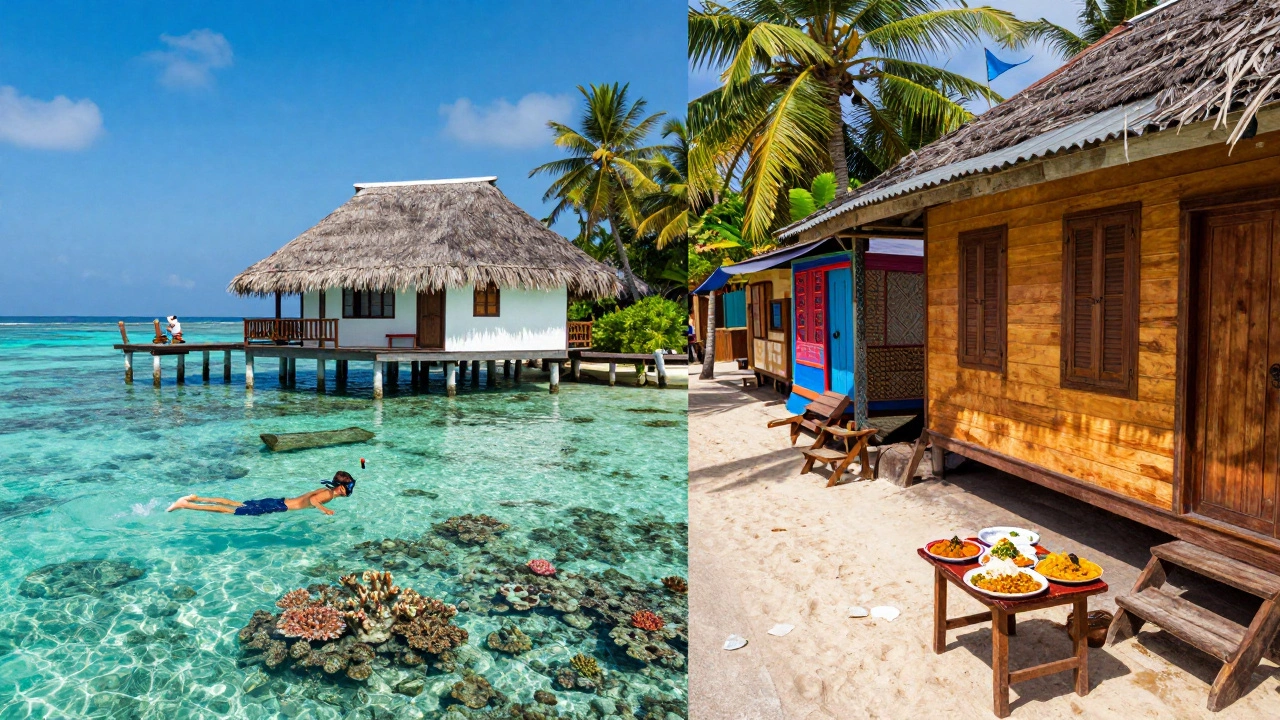 May, 12 2026
Maldives vs India Trip Cost Estimator
Trip Details
Select Travel Styles
There is a persistent myth that you need to be a millionaire to visit the Maldives, a tropical archipelago in the Indian Ocean known for its luxury resorts and pristine coral reefs. Meanwhile, India, a vast South Asian country with diverse landscapes ranging from Himalayan mountains to tropical beaches is often labeled as the ultimate budget destination. But does this mean one is always expensive and the other always cheap? Not quite. The reality is more nuanced. You can spend a fortune in India, and you can actually visit the Maldives on a moderate budget if you know where to look.
The core difference lies in how you structure your trip. In India, costs are spread out across transport, food, and accommodation, giving you flexibility. In the Maldives, the biggest expense is getting there and staying there, but once you’re on an island, daily costs can be surprisingly manageable. Let’s break down exactly where your money goes in both destinations so you can decide which fits your wallet better.
The Accommodation Gap: Resorts vs. Guesthouses
The single biggest factor driving up the price of a Maldives trip is accommodation. For decades, the only option was private island resorts. These places offer overwater villas, private butlers, and exclusive beaches. A night at a mid-range resort can easily run you $300 to $600 per person. Luxury options like Soneva Jani, a luxury eco-resort in the Maldives known for innovative sustainable design and overwater villas or Gili Lankanfushi, a boutique luxury resort in the Maldives featuring rustic-chic overwater villas and exceptional service can charge thousands of dollars a night. If you book these, yes, the Maldives is significantly more expensive than India.
However, the game changed in 2009 when the Maldivian government allowed local guesthouses on inhabited islands. Today, you can stay in a clean, comfortable guesthouse in places like Maafushi, a popular inhabited island in the Maldives known for water sports and local guesthouses or Thulusdhoo, an inhabited island in the Maldives famous for manta ray point diving for just $40 to $80 per night. This includes breakfast and sometimes dinner. It’s not five-star luxury, but it’s safe, clean, and authentic.
In India, accommodation varies wildly. In cities like Mumbai or Delhi, a decent three-star hotel might cost $50 to $100. But in tourist hubs like Goa or Kerala, you can find charming beach huts or boutique stays for $20 to $40. On the flip side, luxury palaces in Rajasthan or backwater houseboats in Kerala can cost upwards of $500 a night. So, while the *average* cost in India is lower, the ceiling for spending is also higher if you choose luxury.
Getting Around: Speedboats vs. Trains
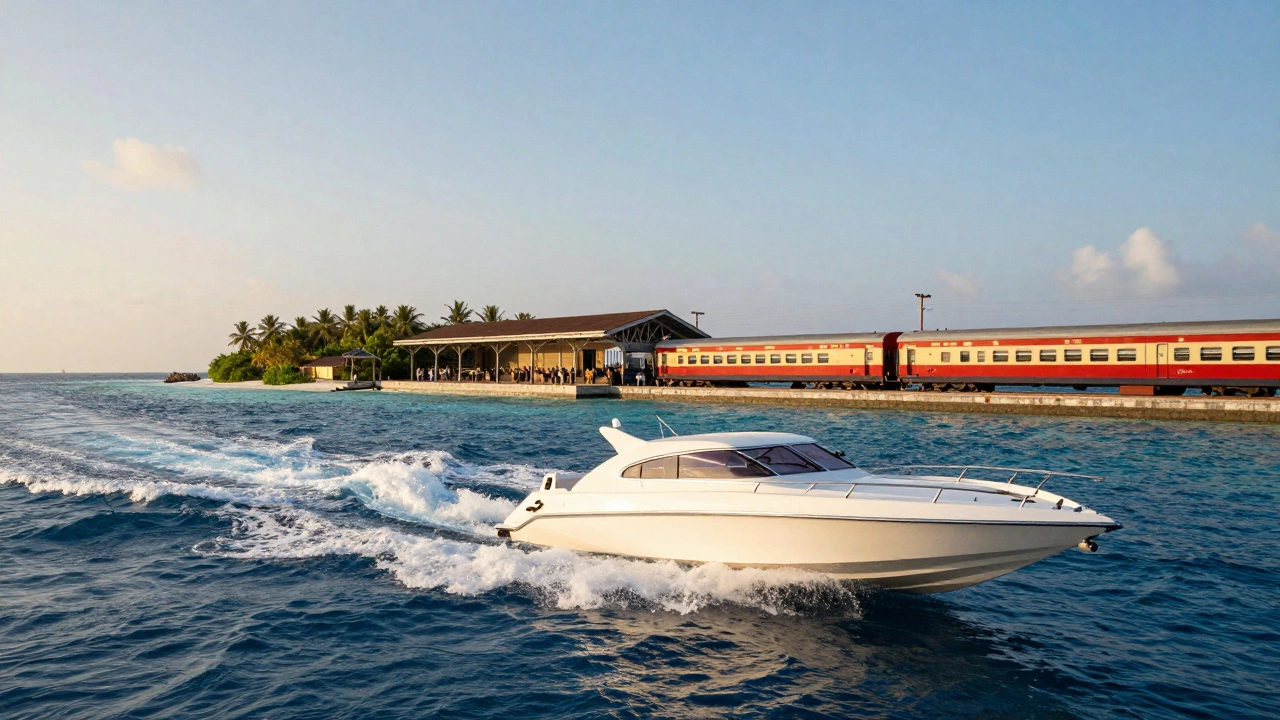
Transport is another major cost driver. In the Maldives, distance is measured in speedboat rides or seaplane flights. Getting from the capital, Malé, the capital city of the Maldives located on its own small island, to a resort or even a local island can cost $50 to $200 per person one way via speedboat. Seaplanes are even pricier, often exceeding $300 per person. However, if you stick to local islands near Malé, public ferries are incredibly cheap-often under $5 per ride.
In India, domestic travel is a different beast entirely. The Indian Railways, the national railway system of India, one of the largest in the world is a marvel of affordability. You can travel hundreds of miles in AC sleeper class for $10 to $20. Budget airlines like IndiGo, a low-cost carrier airline based in India offering affordable domestic and international flights or SpiceJet, an Indian low-cost airline providing domestic and regional flight services offer domestic flights for $30 to $60 if booked in advance. Road trips are also cheap, with auto-rickshaws and buses costing mere dollars.
If your itinerary involves hopping between multiple locations, India wins on cost. If you plan to stay put in one Maldivian atoll for a week, the initial transfer cost becomes negligible.
Eating Out: Street Food vs. All-Inclusive
Food costs highlight the cultural differences between the two destinations. In India, street food is legendary and inexpensive. A plate of Chaat, a category of savory snacks originating from the Indian subcontinent or a bowl of biryani might cost $1 to $3. Even dining in mid-range restaurants rarely exceeds $10 per meal. Alcohol, however, is heavily taxed and can be pricey, especially in states with strict liquor laws.
In the Maldives, alcohol is banned on local islands due to Islamic law. You can only drink at resorts or on liveaboards. This means if you want cocktails by the pool, you must pay resort prices, which can be $15 to $20 per drink. However, eating is affordable on local islands. Fresh fish curries, rice, and local snacks cost $5 to $10 per meal. Many guesthouses offer half-board or full-board packages, which locks in your food costs and prevents surprise bills.
If you enjoy culinary exploration and street food culture, India is unbeatable for value. If you prefer simple, fresh seafood and don’t mind skipping alcohol, the Maldives won’t break the bank.
Activities: Diving, Snorkeling, and Sightseeing
What do you do with your time? In the Maldives, the main attractions are underwater. Snorkeling gear is usually provided by guesthouses free of charge. Scuba diving courses and tank fills are competitive globally, costing around $40 to $60 per dive. Boat trips for snorkeling or fishing are also reasonably priced at $20 to $40 per person. The beauty here is that the activities are included in the environment-you don’t need to pay entry fees to see the ocean.
In India, activities range from free to expensive. Walking through historic forts, visiting temples, and exploring markets is free. Guided tours, jeep safaris in national parks like Ranthambore National Park, a wildlife sanctuary in India known for Bengal tigers and diverse flora and fauna, or paragliding in Manali will cost money. A tiger safari can run $50 to $100 per person. Adventure sports like scuba diving in Andaman & Nicobar Islands are similarly priced to the Maldives.
If your goal is relaxation and water-based activities, the Maldives offers great value for the experience. If you want cultural immersion, history, and adventure variety, India provides more bang for your buck.
| Expense Category | Budget Maldives (Local Island) | Luxury Maldives (Resort) | Budget India | Mid-Range India |
|---|---|---|---|---|
| Accommodation | $40 - $80 | $300 - $600+ | $15 - $30 | $50 - $100 |
| Food & Drink | $15 - $25 | $100 - $200+ | $5 - $10 | $20 - $40 |
| Local Transport | $5 - $10 (Ferry) | $50 - $200 (Transfer) | $2 - $5 | $10 - $20 |
| Activities | $20 - $40 | $100 - $300 | $5 - $15 | $30 - $60 |
| Total Daily Estimate | $80 - $155 | $550 - $1300+ | $25 - $50 | $110 - $220 |
Hidden Costs and Money-Saving Tips
Both destinations have hidden costs that can catch travelers off guard. In the Maldives, visa-free entry is granted for 30 days, but you must show proof of onward travel and sufficient funds. Some guesthouses charge extra for Wi-Fi or specific excursions. Always confirm what’s included in your rate.
In India, bargaining is expected in markets and with auto-rickshaw drivers. Tipping is customary but not mandatory; $1 to $2 for good service is appreciated. Also, consider health precautions. Buying bottled water and being cautious with street food hygiene can prevent costly medical issues.
To save money in the Maldives, travel during the shoulder season (May to October). While there’s a higher chance of rain, the skies often clear, and prices drop by 30% to 50%. Book guesthouses directly rather than through third-party sites to avoid fees.
In India, use train booking apps like IRCTC to secure tickets early. Traveling by overnight trains saves on accommodation costs. Stick to local eateries away from tourist traps for authentic and affordable meals.
Which Destination Fits Your Budget?
So, is the Maldives more expensive than India? Generally, yes. But it depends on your style. If you want a pure beach escape with minimal hassle, the Maldives on a local island budget is comparable to a mid-range trip in India. If you seek luxury, the Maldives is far more expensive. If you want cultural depth, adventure, and extreme affordability, India is unmatched.
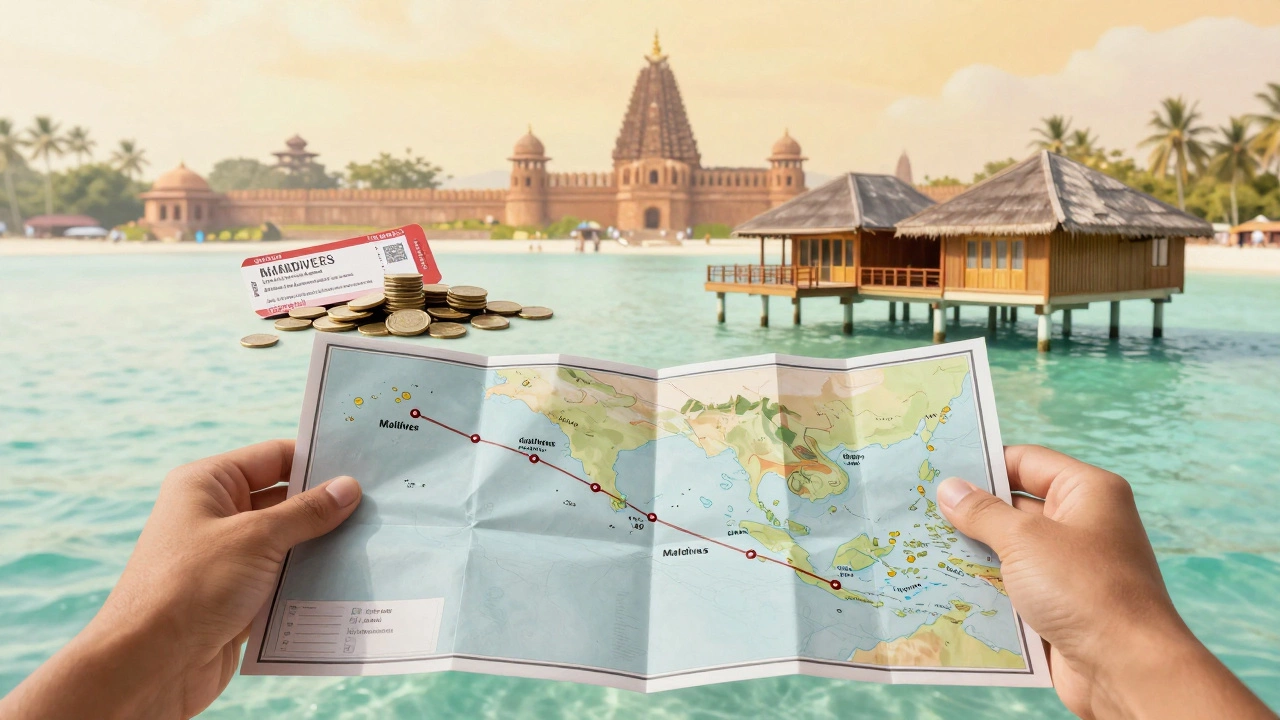
For couples seeking romance on a budget, consider combining both. Start with a few nights in a Maldivian guesthouse for the marine beauty, then fly to Goa or Kerala for vibrant culture and nightlife. This hybrid approach gives you the best of both worlds without emptying your savings account.
Can I visit the Maldives on a $1000 budget?
Yes, if you stay on local islands like Maafushi or Thulusdhoo. With careful planning, including budget flights and guesthouse stays, you can cover 5-7 days within this limit. Exclude luxury resort transfers and alcohol.
Is India safer for solo female travelers than the Maldives?
Both are generally safe. The Maldives has a conservative culture, requiring modest dress on local islands. India requires more vigilance regarding harassment and scams, but millions of women travel safely each year by taking standard precautions.
When is the cheapest time to travel to the Maldives?
The monsoon season, from May to October, offers the lowest prices. While rainfall increases, it often comes in short bursts, leaving plenty of sunshine for swimming and snorkeling.
Do I need a visa for India or the Maldives?
Most tourists get visa-free entry to the Maldives for 30 days. India requires an e-Visa for most nationalities, which can be applied for online before travel. Always check current regulations as they change.
Where can I drink alcohol in the Maldives?
Alcohol is prohibited on all local inhabited islands. It is only available at licensed resort islands and on liveaboard boats. Guesthouses cannot serve alcohol.
Is scuba diving cheaper in India or the Maldives?
Prices are similar. The Andaman & Nicobar Islands in India offer competitive rates for PADI courses and dives, comparable to the Maldives. Both destinations provide excellent visibility and marine life.
Can I combine a trip to India and the Maldives?
Yes, many travelers fly into Male, take a domestic flight to India (e.g., Kochi or Goa), and return via Male. This allows you to experience both cultures and landscapes efficiently.
What is the best way to get around in India?
Trains are the backbone of Indian travel, offering comfort and affordability. For shorter distances, auto-rickshaws and app-based cabs like Uber or Ola are convenient and cheap.