India's Most Beautiful Historical Places: A Guide to Taj Mahal, Amber Fort & More
 Jul, 31 2026
India Heritage Explorer
Select a destination below to explore its unique aesthetic, best times to visit, and insider tips.
Taj Mahal
Iconic EleganceHampi
Rugged GrandeurAmber Fort
Royal OpulenceKhajuraho
Spiritual ArtClick on any location card to view detailed insights, photography tips, and visiting hours.
Beauty is subjective, but when it comes to historical places in India, ancient monuments and structures that reflect the country's rich architectural heritage and cultural history, some sites command universal awe. You might be asking yourself which single location deserves the title of "most beautiful." The honest answer? There isn't just one. India’s landscape is dotted with masterpieces from different eras, each offering a unique visual feast.
If you are looking for the iconic symbol of love, the Taj Mahal in Agra stands unrivaled. For raw, rugged grandeur, the ruins of Hampi take the crown. If you prefer vibrant colors and royal opulence, Amber Fort in Jaipur is your destination. This guide breaks down these top contenders so you can decide which aesthetic speaks to you.
The Iconic Elegance: Taj Mahal, Agra
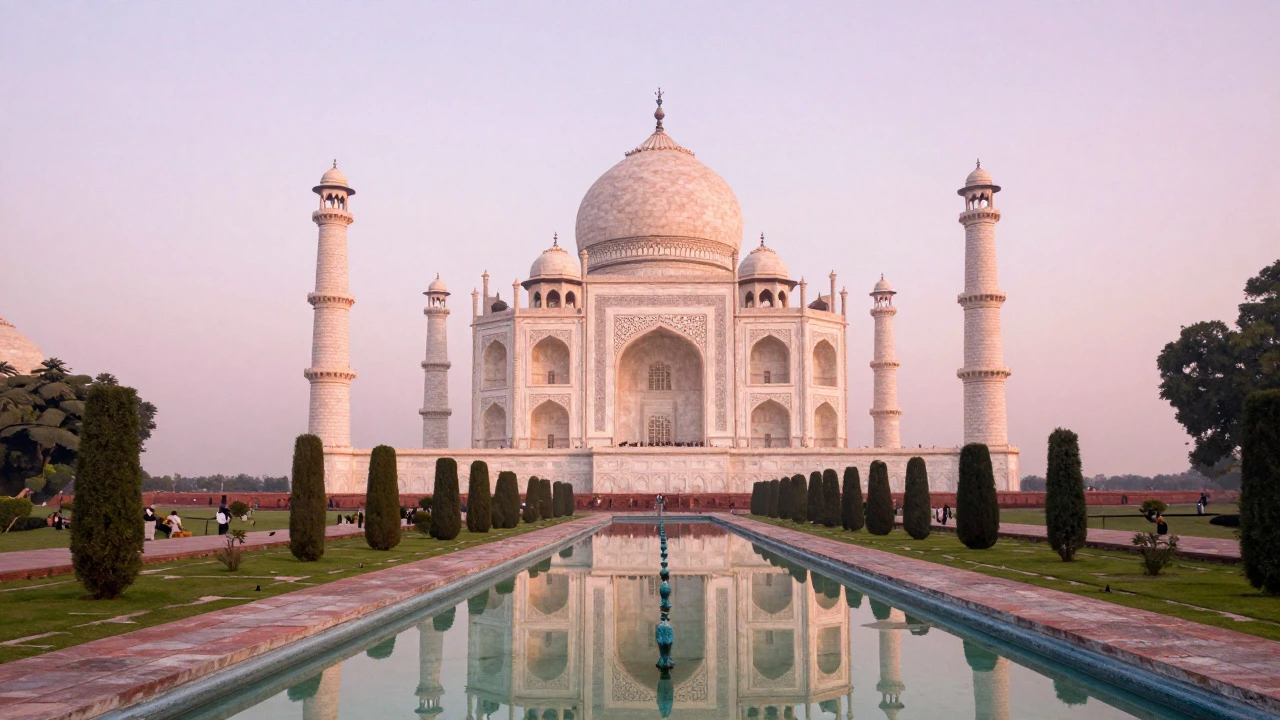
When people talk about beauty in India, they almost always start here. The Taj Mahal is not just a building; it is a mood. Built by Mughal Emperor Shah Jahan in memory of his wife Mumtaz Mahal, this white marble mausoleum sits on the banks of the Yamuna River. Its symmetry is mathematically perfect, yet it feels organic and flowing.
What makes it truly stunning is how the stone changes color. At dawn, it glows pinkish-white. Under the bright midday sun, it turns stark white. During a full moon night, it takes on an ethereal, ghostly silver hue. The gardens surrounding it follow the Persian charbagh style, dividing the space into four equal parts with water channels that reflect the main dome.
- Best time to visit: Early morning (6:00 AM - 8:00 AM) or during a full moon night (except Ramadan).
- Key feature: The intricate pietra dura inlay work using semi-precious stones like lapis lazuli and jade.
- Photography tip: Use a wide-angle lens to capture the reflection in the central pool without getting too close to the crowd.
Rugged Grandeur: Hampi Ruins, Karnataka
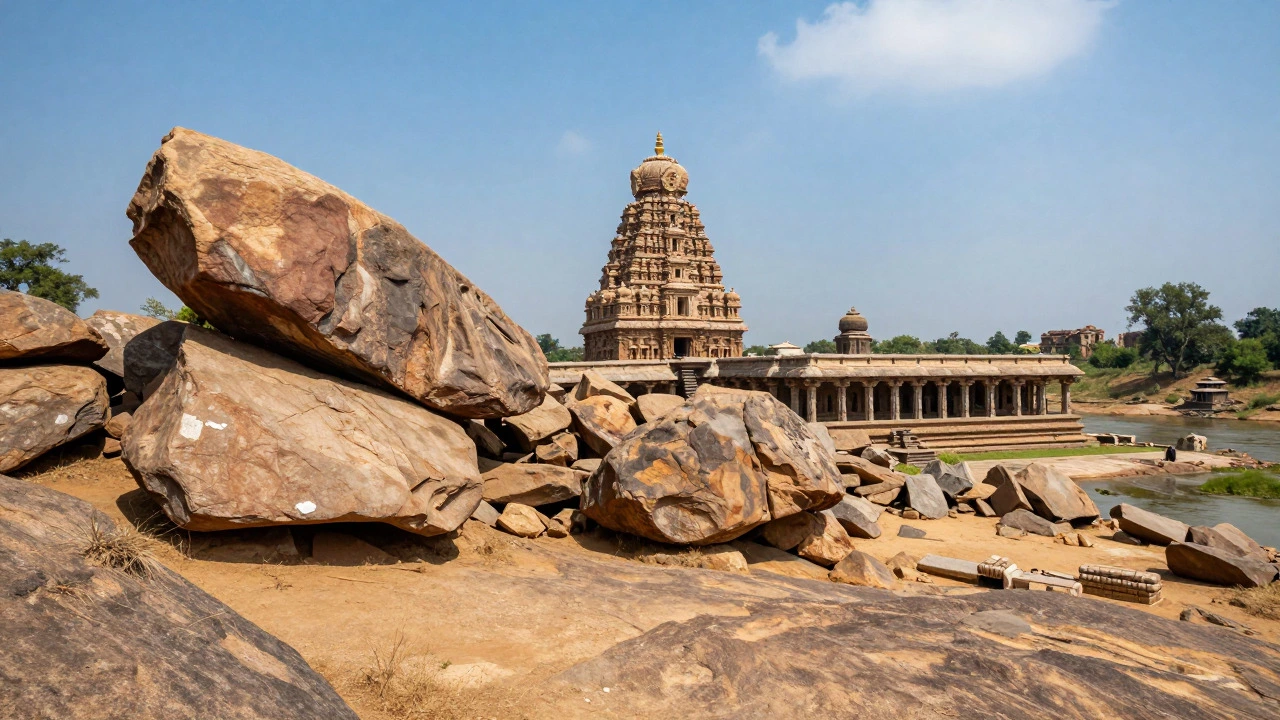
If the Taj Mahal is polished perfection, Hampi is wild, untamed beauty. Once the capital of the Vijayanagara Empire, this UNESCO World Heritage site covers 4,100 hectares of boulder-strewn landscape. It looks less like a city and more like a sci-fi movie set. Massive granite boulders are scattered everywhere, intertwined with ancient temple ruins, palace foundations, and stepwells.
The Virupaksha Temple stands tall amidst the chaos, its towering gopuram (gateway tower) decorated with thousands of sculptures. Nearby, the Vittala Temple features musical pillars that actually produce distinct notes when tapped. The contrast between the dry, rocky terrain and the lush greenery along the Tungabhadra River creates a dramatic visual palette. It is a place where nature has reclaimed history, making it feel ancient and mysterious.
- Best time to visit: October to February to avoid the scorching summer heat.
- Key feature: The Stone Chariot at the Vittala Temple complex.
- Activity: Rent a bicycle or hire a local guide to explore the remote monasteries and queen’s bath.
Royal Opulence: Amber Fort, Jaipur
Located in Rajasthan, Amber Fort (also known as Amer Fort) is a masterpiece of Rajput architecture blended with Mughal influences. Perched on a hilltop overlooking Maota Lake, the fort appears majestic against the backdrop of the Aravalli Hills. The approach to the fort involves climbing through narrow, winding passages lined with murals and carvings.
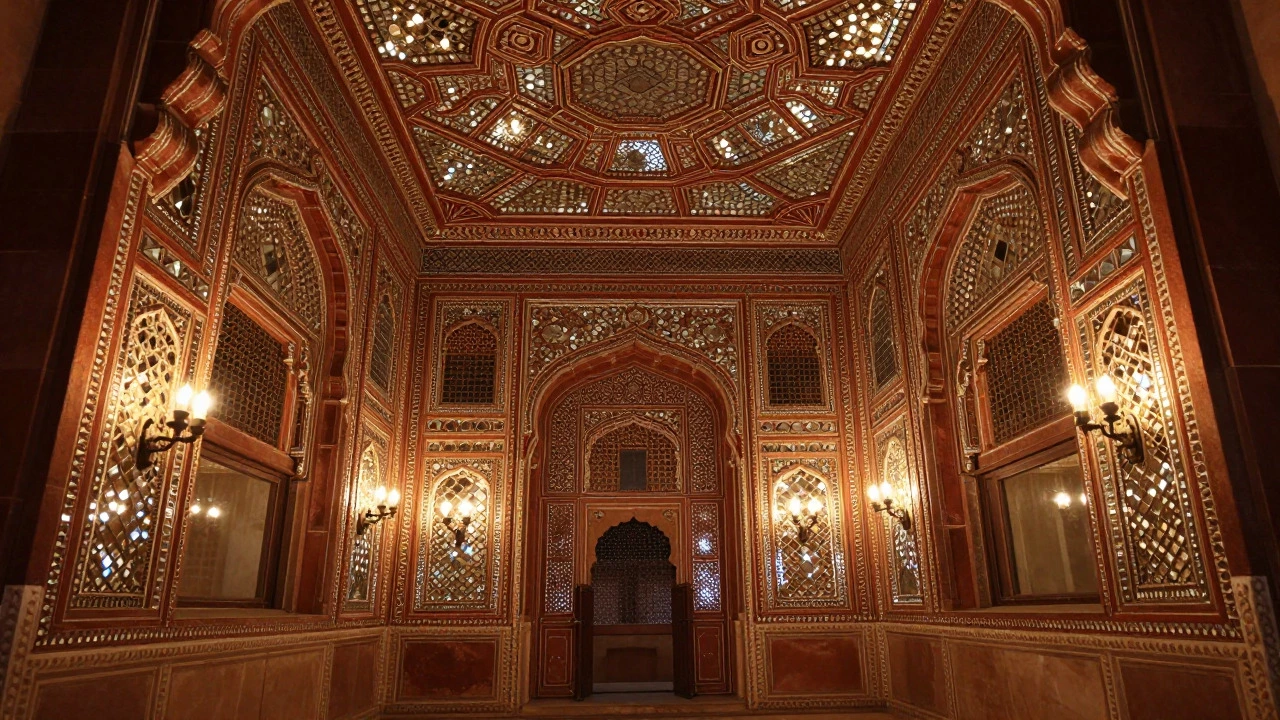
The Sheesh Mahal (Palace of Mirrors) inside the fort is particularly breathtaking. Every inch of the ceiling and walls is covered with tiny mirror pieces set into red sandstone. When lit by candles or soft lights, the room sparkles intensely, creating a dazzling effect that was designed to impress visiting dignitaries. In the early mornings, you can still see royal elephants dressed in colorful caparisons carrying tourists up the steep path, adding a living element to the historical scene.
- Best time to visit: November to March for pleasant weather.
- Key feature: The Panch Mahal, a five-story pavilion with decreasing floor sizes.
- Tip: Visit at sunset to see the fort illuminated against the darkening sky.
Spiritual Symmetry: Khajuraho Temples, Madhya Pradesh
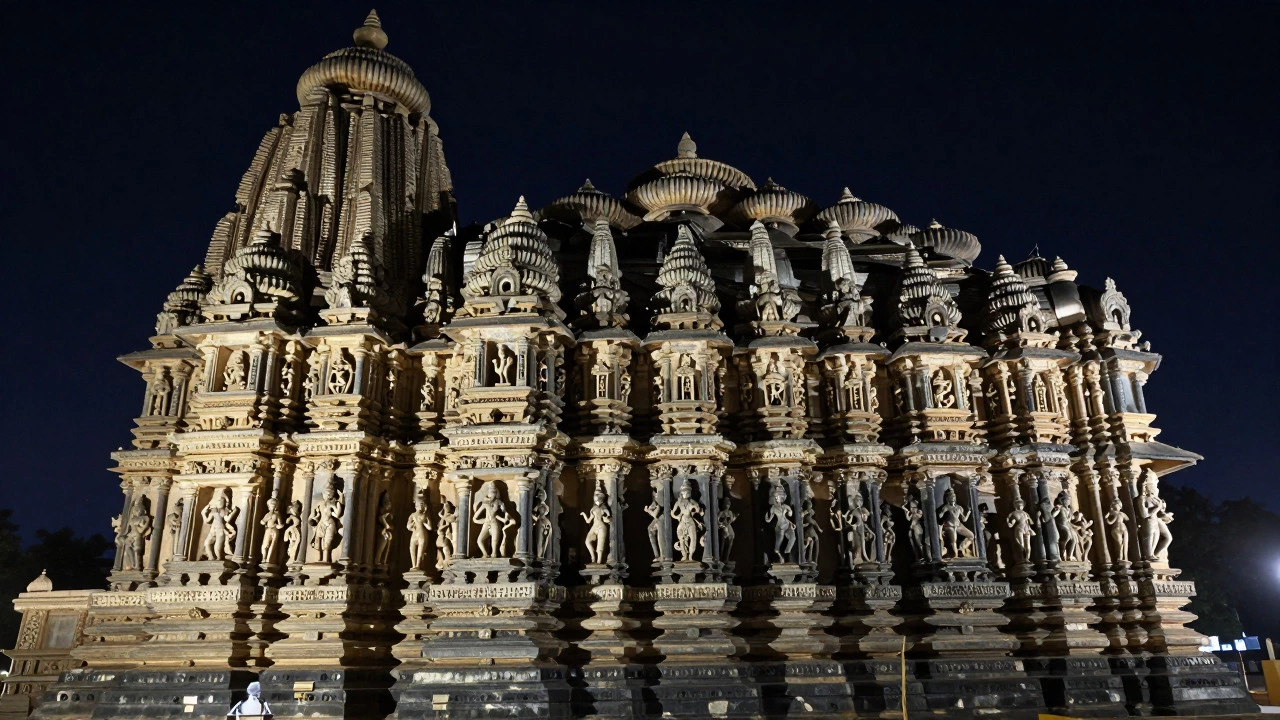
Often misunderstood solely for their erotic sculptures, the Khajuraho Group of Monuments are architectural marvels of the Chandela dynasty. These temples are built in the Nagara style, characterized by curvilinear shikharas (spires) that rise dramatically towards the sky. The black stone used in construction gives them a imposing, monolithic presence.
The beauty lies in the intricacy. Every surface is carved with figures of gods, goddesses, musicians, dancers, and everyday life scenes. The craftsmanship is so detailed that even after nearly a thousand years, the expressions on the faces remain vivid. The Kandariya Mahadeva Temple is the largest and most ornate, showcasing the pinnacle of medieval Indian sculpture. At night, when the temples are floodlit, the shadows accentuate the carvings, creating a surreal atmosphere.
Comparing India's Top Historical Beauties
| Site | Location | Architectural Style | Vibe/Aesthetic | Best For |
|---|---|---|---|---|
| Taj Mahal | Agra, Uttar Pradesh | Mughal | Elegant, Serene, Romantic | First-time visitors, couples |
| Hampi | Karnataka | Vijayanagara | Rugged, Mystical, Adventurous | History buffs, photographers |
| Amber Fort | Jaipur, Rajasthan | Rajput-Mughal Fusion | Opulent, Colorful, Royal | Families, culture enthusiasts |
| Khajuraho Temples | Madhya Pradesh | Nagara (Chandela) | Intricate, Spiritual, Artistic | Art lovers, architecture students |
Planning Your Visit: Practical Tips
Visiting these sites requires more than just buying a ticket. India’s climate varies drastically, and crowds can impact your experience. Here is how to make the most of your trip.
Timing is everything. Summer months (April-June) can be brutally hot, especially in northern sites like Agra and Jaipur. Winter (October-March) is the peak tourist season because the weather is cool and comfortable. However, this means larger crowds. If you hate crowds, consider visiting in late September or early April, accepting the higher temperatures for fewer people.
Book in advance. For the Taj Mahal, online tickets allow you to skip the long entry lines. For Hampi, since it is an open-air museum, you don’t need tickets for general access, but guided tours should be booked ahead. Always carry valid ID proof, as foreign nationals and Indian citizens have different ticket counters and requirements.
Hire local guides. These sites are dense with history. A good guide doesn’t just tell dates; they explain the symbolism behind the carvings, the engineering feats, and the legends associated with each structure. In places like Khajuraho and Hampi, a knowledgeable local can lead you to hidden spots that most tourists miss.
Which is the most beautiful historical place in India for first-time visitors?
For first-time visitors, the Taj Mahal in Agra is the most iconic choice. It is easily accessible from Delhi, well-maintained, and represents the quintessential image of India for many travelers. Combined with a visit to Agra Fort, it offers a complete introduction to Mughal history.
Is Hampi safe for solo female travelers?
Yes, Hampi is generally considered safe for solo female travelers. It is a popular backpacker destination with a friendly community. However, as with any travel, stick to well-lit areas at night, use reputable transport, and stay aware of your surroundings.
How many days do I need to explore Khajuraho?
Two days are sufficient to explore the Western, Eastern, and Southern groups of temples thoroughly. This allows time for a detailed tour of the main temples and attending the nightly light and sound show, which provides historical context in an engaging format.
Can I visit Amber Fort without riding an elephant?
Absolutely. While elephant rides are a traditional option, many visitors prefer walking up the steps or taking a jeep service available at the base. Walking offers better views of the fort's exterior and the surrounding hills.
What is the best way to travel between these historical sites?
Domestic flights connect major hubs like Delhi, Jaipur, Bangalore, and Varanasi efficiently. For closer sites, such as Agra and Delhi, trains like the Gatimaan Express offer fast and comfortable travel. Hiring a private car with a driver is often the most flexible option for exploring regions like Rajasthan or Madhya Pradesh.