Delhi vs Mumbai: Which City Has More Beauty?
 Mar, 17 2026
People ask which city is more beautiful - Delhi or Mumbai - like they’re choosing between two flavors of ice cream. But cities aren’t desserts. They don’t taste good or bad. They live, breathe, and change with every street vendor, monsoon rain, and rush-hour honk. So instead of picking a winner, let’s look at what makes each one unforgettable.
Delhi: A City That Wears Its History on Its Sleeve
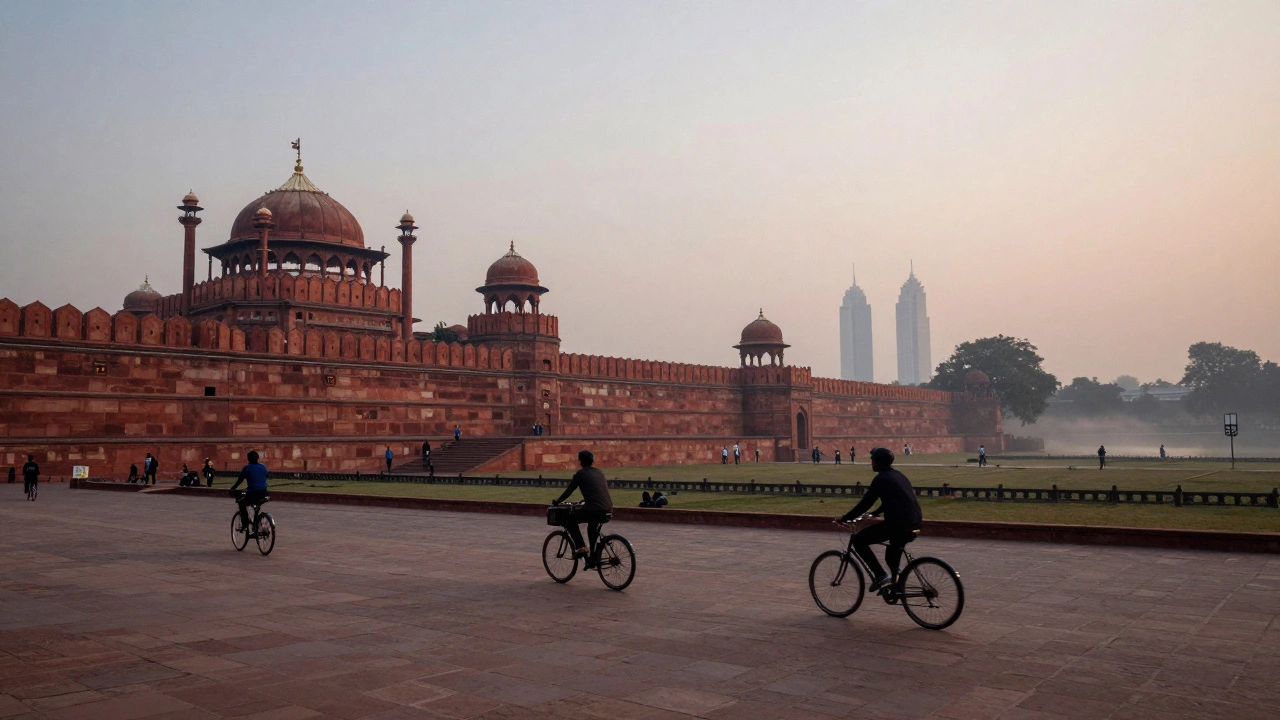
Walk into Delhi and you’re stepping into layers. One moment you’re near the red sandstone walls of the Red Fort, built in 1648 by Shah Jahan. The next, you’re dodging scooters outside a 2020s tech startup in Cyber City. Delhi doesn’t hide its past. It leans into it. The Qutub Minar stands 73 meters tall, untouched by time. The Humayun’s Tomb, a precursor to the Taj Mahal, feels like a silent poem in marble. These aren’t tourist traps. They’re living monuments.
But beauty here isn’t just in monuments. It’s in the chaos of Chandni Chowk, where the smell of jalebis mixes with diesel fumes. It’s in the quiet corners of Lodhi Garden, where families nap under banyan trees and old men play chess under umbrellas. Delhi’s beauty is stubborn. It doesn’t try to impress. It just is.
And then there’s the food. Butter chicken from Moti Mahal. Parathas from Paranthe Wali Gali. Nihari at Karim’s. You don’t eat in Delhi - you experience it. Each bite carries centuries of trade, invasion, and adaptation. The city doesn’t serve meals. It serves stories.
Mumbai: Where the Sky Meets the Sea
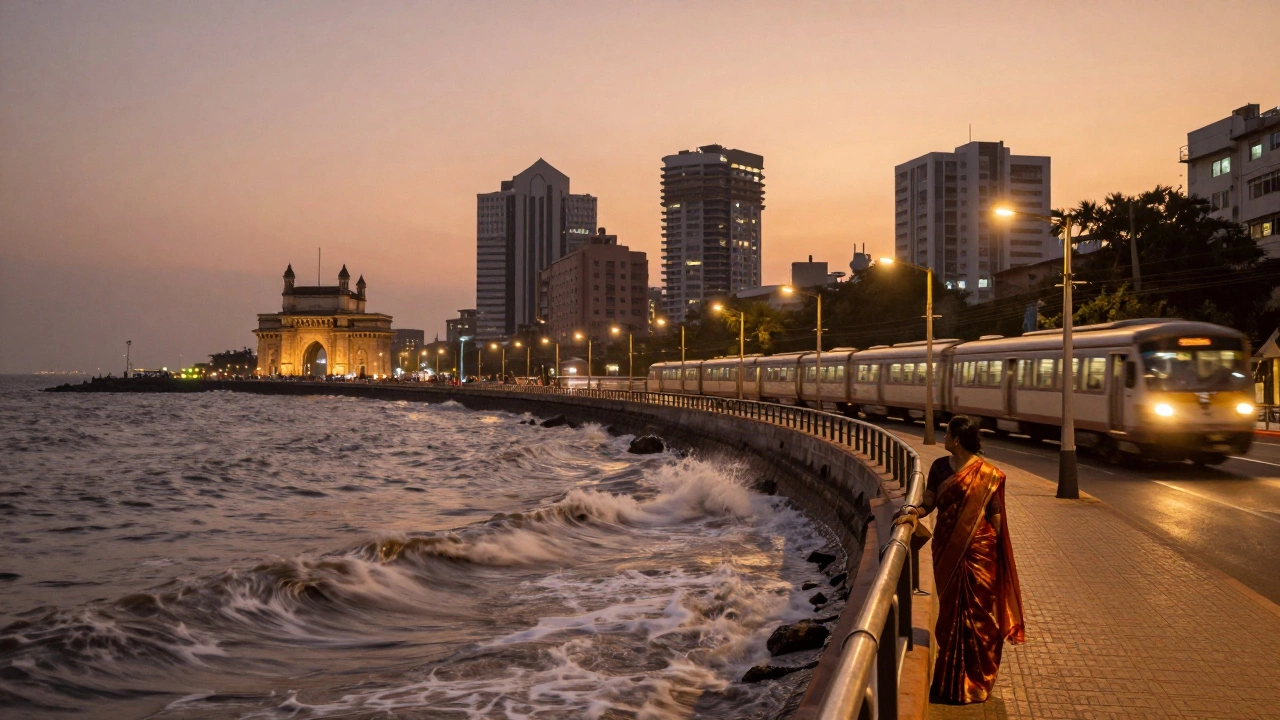
Mumbai doesn’t wait for you to arrive. It pulls you in. The first thing you notice? The sea. The Arabian Sea doesn’t sit quietly beside the city - it crashes into it. Marine Drive curves like a necklace along the coast, lit up at night with thousands of lights. You can stand there at sunset and watch the sky turn gold while the waves break against the Gateway of India.
And then there’s the energy. Mumbai runs on a different rhythm. It’s the city where a chai wallah hands you tea at 5 a.m. and a stockbroker closes a deal at 8 p.m. You’ll see a woman in a silk sari boarding a local train next to a construction worker covered in dust. No one blinks. That’s normal here.
The architecture tells its own story. Art Deco buildings from the 1930s sit beside modern glass towers in Nariman Point. The Hanging Gardens overlook the city like a green crown. And then there’s Dharavi - often called Asia’s largest slum - where a million people live, work, and build businesses in a space smaller than Central Park. It’s not pretty in the postcard sense. But it’s real. And real is beautiful.
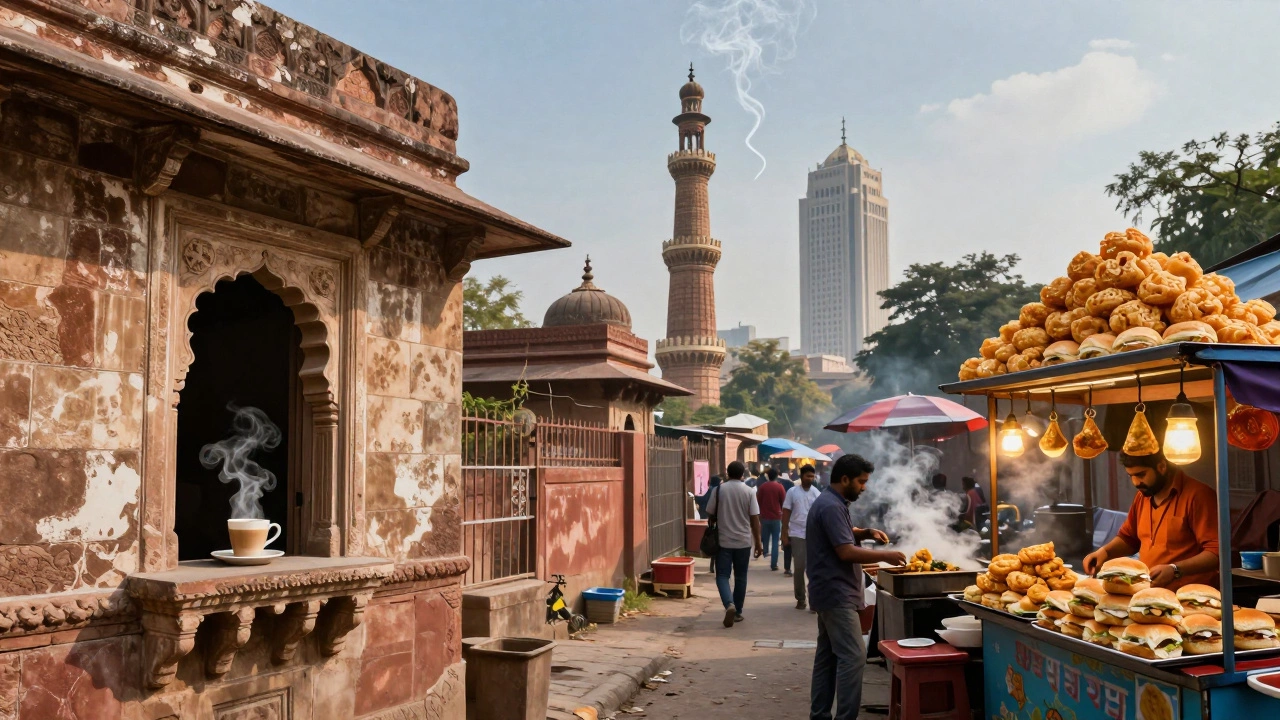
Food here? Mumbai’s street food is legendary. Vada pav, the poor man’s burger, is crisp, spicy, and cheap. Pav bhaji sizzles on open grills. Sev puri, pani puri, bhel puri - each bite bursts with flavor. You don’t find this in restaurants. You find it on sidewalks, under plastic tarps, with plastic spoons.
Beauty Isn’t One Thing
Delhi feels like a museum with a heartbeat. Mumbai feels like a live concert that never stops. One is layered, historical, and rooted. The other is loud, fast, and constantly remaking itself.
Delhi’s beauty is in its depth. You can spend weeks walking its lanes and still find something new - a forgotten mosque, a hidden haveli, a century-old bookshop. Mumbai’s beauty is in its motion. You can’t stay still here. The city moves around you, and you move with it.
Neither city is more beautiful. They’re just different kinds of beautiful. Delhi asks you to slow down. Mumbai pushes you to keep going.
What Kind of Beauty Are You Looking For?
If you want quiet corners, ancient walls, and the weight of history in your footsteps - choose Delhi. If you want relentless energy, ocean breezes, and a city that never sleeps - choose Mumbai.
Here’s what you’ll actually experience:
- Delhi: 3,000+ years of layered history, fewer crowds at heritage sites outside peak season, cooler winters, and food that tastes like tradition.
- Mumbai: 24/7 pulse, monsoon rains that turn streets into rivers, the world’s busiest railway system, and food that tastes like survival and creativity.
Delhi’s beauty is written in stone. Mumbai’s is written in motion.
Real Stories From Real Travelers
A woman from Toronto told me she cried in Delhi’s Jama Masjid courtyard because the call to prayer echoed like nothing she’d ever heard. She said it felt like time had stopped.
A man from Berlin said Mumbai scared him at first. The noise, the crowds, the chaos. But then he sat on a beach in Juhu at midnight and watched a group of teenagers play cricket with a tennis ball and a bamboo bat. He said, "That’s when I knew - this city doesn’t need to be perfect. It just needs to be alive."
Those aren’t travel brochure lines. Those are real moments. And they happen in both places.
Final Thought: Don’t Choose. Experience Both
There’s no right answer. Not because the question is hard - but because it’s the wrong question. Beauty isn’t a scorecard. It’s a feeling. And every traveler feels it differently.
Delhi and Mumbai don’t compete. They complement. One holds the past. The other builds the future. You don’t have to pick one. You can visit both. And when you do, you’ll realize: India’s beauty isn’t in one city. It’s in the contrast.
Is Delhi or Mumbai safer for solo travelers?
Both cities are generally safe for solo travelers, but they have different vibes. Delhi has more structured tourist zones and better public transport options for women, especially on the metro. Mumbai is more crowded and chaotic, which can feel overwhelming at first. But locals are often helpful, and the city runs on a 24/7 rhythm - so you’re rarely alone. Always avoid isolated areas at night, carry a local SIM card, and use trusted apps like Ola or Uber.
Which city has better public transportation?
Delhi’s metro is cleaner, air-conditioned, and easier to navigate with English signage. It covers major tourist spots. Mumbai’s local trains are the lifeline of the city - they carry over 7 million people daily. But they’re packed, especially during rush hour. If you’re not used to crowds, stick to taxis or apps. For sightseeing, Delhi’s metro wins. For authentic local experience, Mumbai’s trains are unbeatable.
When is the best time to visit each city?
For Delhi, visit between October and March. Summers hit 45°C (113°F), and the air gets thick with pollution. Mumbai’s best months are November to February. Monsoon season (June-September) brings heavy rains - beautiful for photographers, but tricky for walking around. Both cities are crowded during holidays like Diwali and Eid, so plan ahead.
Can I see both cities in one trip?
Absolutely. The train between Delhi and Mumbai takes about 15 hours. Flights are under 2 hours. Many travelers spend 3-4 days in Delhi, then fly to Mumbai for another 3-4 days. You’ll get the full contrast: history and hustle, silence and noise, tradition and transformation. It’s not a detour - it’s the point.
Which city is better for food lovers?
Both are food meccas - just different styles. Delhi offers rich, slow-cooked Mughlai dishes like kebabs, nihari, and butter chicken. Mumbai is street food heaven: vada pav, pav bhaji, sev puri, and fresh seafood along the coast. If you love spice and depth, Delhi wins. If you want fast, bold, and diverse bites, Mumbai takes it. Try both - you won’t regret it.