Which South Indian State Has the Best Food? A Local’s Guide to Real Flavors
 Dec, 1 2025
Ask anyone who’s eaten their way across South India, and they’ll tell you: food here isn’t just a meal. It’s a rhythm, a ritual, a story told in spices and rice. But when it comes to picking the best South Indian state for food, there’s no single answer-just different kinds of delicious.
Kerala: Coconut, Curry Leaves, and Seafood That Hits Different
Kerala’s food doesn’t shout. It whispers-through the rich aroma of roasted coconut, the tang of tamarind, and the slow-cooked warmth of curry leaves. If you’ve never had appam with stew, you haven’t tasted Kerala. The thin, lacy rice pancakes soak up a mild, creamy coconut milk broth with chicken or vegetables, and every bite feels like comfort wrapped in spice.
Seafood here isn’t an afterthought-it’s the star. Fresh catch from the Arabian Sea gets tossed in mustard seeds, dried red chilies, and tamarind to make meen curry. You’ll find it in home kitchens and roadside shacks alike. The state’s Muslim community adds its own twist with biryanis that use local spices, not just garam masala. The Kozhikode biryani? It’s lighter, fragrant with star anise, and served with a side of spicy onion salad.
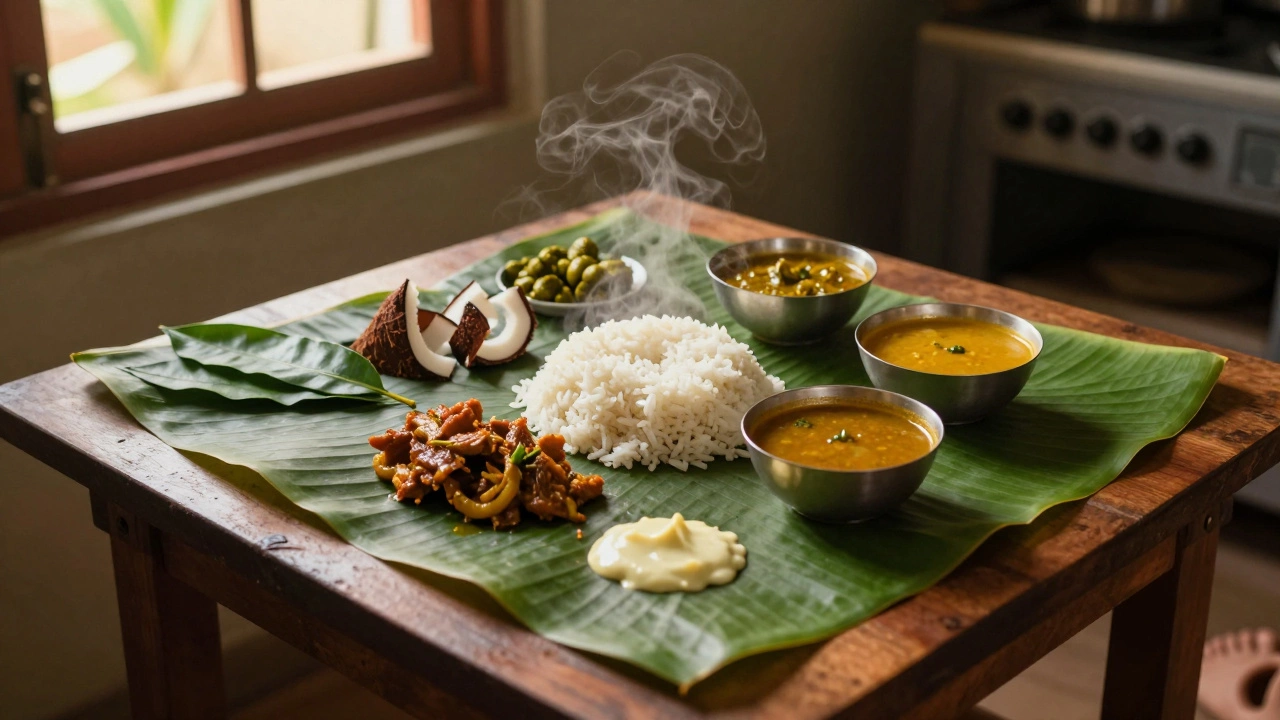
Don’t skip the banana leaf meals. Served on actual leaves, they come with rice, sambar, rasam, pickles, and a dollop of ghee. Eat with your hands. It’s not just tradition-it’s how the flavors connect.
Tamil Nadu: The Heart of Sambar, Filter Coffee, and Street Food
Tamil Nadu is where South Indian food gets its backbone. Sambar here isn’t a side dish-it’s the soul of every meal. Made with toor dal, tamarind, drumsticks, and a special spice blend called sambar powder, it’s cooked differently in every household. In Madurai, it’s thicker and spicier. In Chennai, it’s lighter, with more vegetables.
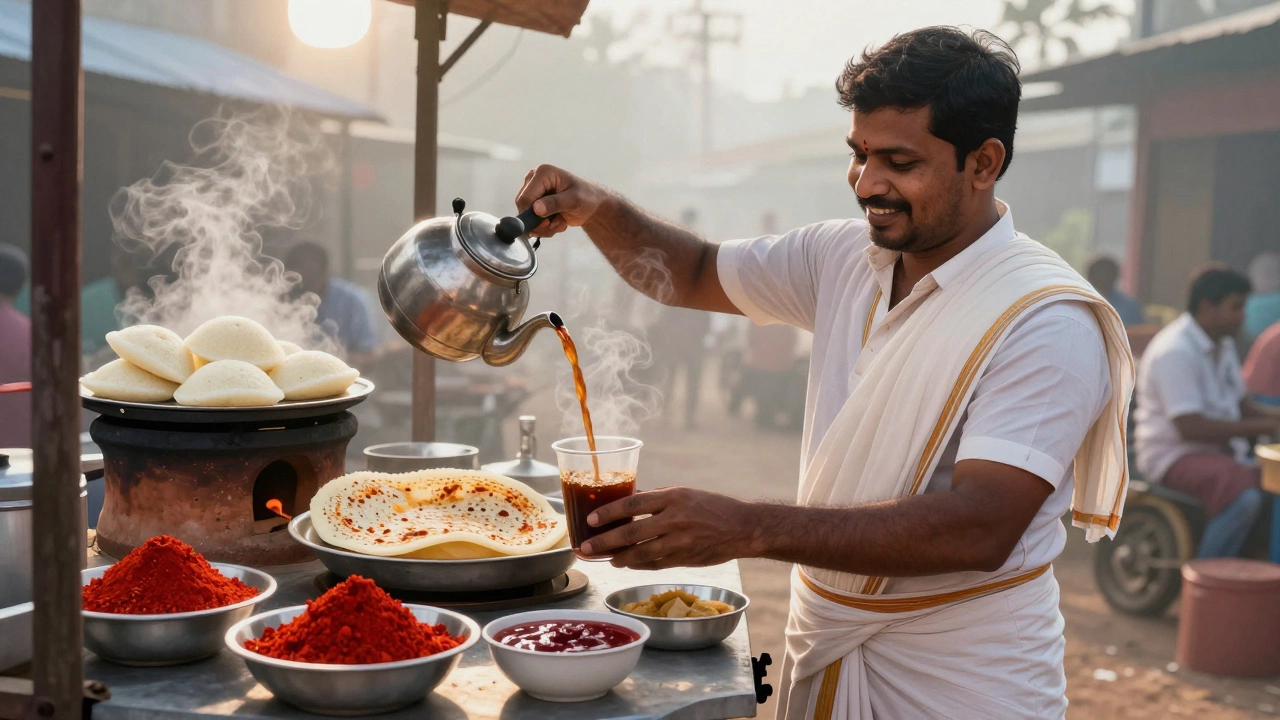
Then there’s filter coffee. Not the instant kind. Real Tamil Nadu filter coffee uses dark roast chicory blend, brewed slowly in a metal device, then mixed with hot milk and sugar. You drink it from a tumbler and davara, pouring it back and forth to cool it. It’s not just caffeine-it’s a daily ritual.
Street food? Unmatched. Idli-dosa chains like Murugan Idli in Madurai serve 10,000 idlis a day. The batter ferments for 12 hours, steamed to pillowy softness. Dosa? Crispy at the edges, tender inside, stuffed with potato masala or served plain with coconut chutney. Add a side of tomato chutney with a hint of garlic, and you’ve got breakfast perfection.
Karnataka: Where Udupi Meets Mysore and Everything in Between
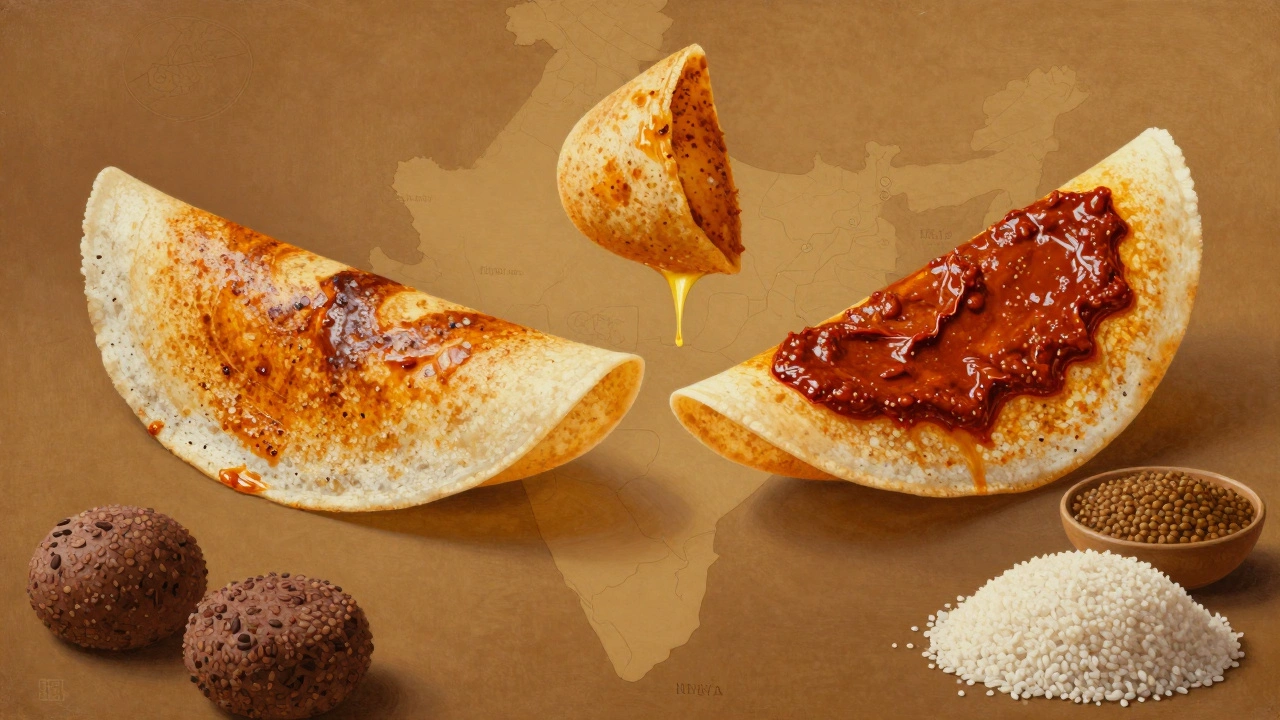
Karnataka’s food scene is a quiet rebel. It doesn’t rely on seafood like Kerala or bold chilies like Andhra. Instead, it’s about balance. Udupi cuisine-originally temple food-gives you dosas, vadas, and sambar that are mild, clean, and deeply satisfying. The masala dosa here is thinner, crispier, and often served with three chutneys: coconut, tomato, and peanut.
Move to Mysore, and the spice level rises. Mysore masala dosa is slathered in a red chili paste that gives it a bright, tangy kick. It’s not just heat-it’s flavor. And don’t miss the Mysore pak, a dense, buttery sweet made from gram flour, sugar, and ghee. It melts in your mouth like a dessert from another century.
Karnataka also has unique dishes you won’t find elsewhere: ragi mudde (finger millet balls) served with spicy saaru, or holige (sweet flatbreads) stuffed with jaggery and coconut. These aren’t tourist tricks-they’re daily meals in rural homes.
Andhra Pradesh and Telangana: Spice That Makes You Sweat
If you think you like spicy food, try Andhra cuisine. This is where chili peppers aren’t an accent-they’re the main character. The state uses dried red chilies, especially the famous Guntur variety, in almost everything. Chicken 65? It’s not just fried-it’s coated in a fiery masala that lingers for minutes.
Hyderabadi biryani is world-famous, but don’t confuse it with North Indian versions. Here, it’s layered with saffron, fried onions, and marinated meat cooked in dum style. The rice is fragrant, the meat tender, and the spice builds slowly-like a slow-burning fire.
Don’t miss the pesarattu, a green gram dosa that’s crispy and packed with protein. Or the gutti vankaya, baby eggplants stuffed with peanut and chili paste, then cooked in tamarind gravy. And if you’re brave, try the Andhra-style fish curry-so hot, you’ll need a glass of buttermilk after every bite.
The Real Winner? It Depends on What You Crave
So which South Indian state has the best food? The truth is, it’s not about ranking. It’s about matching your taste to the region’s soul.
If you want gentle, coconut-rich meals with seafood that tastes like the ocean, go to Kerala. If you need the comfort of sambar, the ritual of filter coffee, and dosas that make you forget you ever ate anything else, Tamil Nadu is your home. Karnataka offers balance-mild, elegant, and deeply rooted in temple traditions. And if you want heat that makes your eyes water and your nose run, Andhra and Telangana won’t hold back.
Here’s the thing: you don’t have to pick one. A food trip across South India means eating appam in Kochi one day, filter coffee in Chennai the next, Mysore pak in Bangalore, and biryani in Hyderabad by the weekend. Each state tells a different story through its food. And the best part? You don’t need a passport. Just an empty stomach.
What to Try First (A Simple Food Itinerary)
- Day 1: Kerala - Start with appam and stew for breakfast, then try meen curry for lunch. End the day with banana leaf meal.
- Day 2: Tamil Nadu - Eat idli-dosa with coconut chutney, then sip filter coffee at a local stall. Try rasam with rice for dinner.
- Day 3: Karnataka - Have a masala dosa in Udupi, then treat yourself to Mysore pak in the afternoon.
- Day 4: Andhra/Telangana - Dive into Hyderabadi biryani for lunch, then challenge yourself with chicken 65 for dinner.
Each bite connects you to a place, a history, a family recipe passed down for generations. That’s the real flavor.
Common Misconceptions About South Indian Food
Many think South Indian food is just rice, dosas, and sambar. That’s like saying Italian food is just pasta. It ignores the depth.
One myth: All South Indian food is vegetarian. False. Coastal areas rely on fish. Even in Tamil Nadu, non-veg dishes like chicken sukka and mutton kuzhambu are common.
Another: It’s always spicy. Not true. Kerala’s curries can be mild. Karnataka’s Udupi food is deliberately gentle. Spices are used for flavor, not just heat.
And no, you don’t need to be a foodie to enjoy it. You just need to be curious. Sit on a plastic stool. Eat with your hands. Say yes to the extra spoon of chutney.
Is South Indian food always spicy?
No. While Andhra and Telangana food is famously hot, Kerala and Karnataka serve many mild dishes. Udupi cuisine, for example, is designed to be gentle and digestible. Spices are used for depth, not just heat. Many restaurants offer "mild" versions of curries if you ask.
What’s the difference between Udupi and Mysore dosa?
Udupi dosa is thin, crispy, and served plain or with minimal potato filling. It’s light and meant to be eaten with coconut chutney. Mysore dosa is thicker, spread with a red chili paste before frying, giving it a bold, tangy kick. The Mysore version is often served with sambar and extra chutney.
Can you find good South Indian food outside of India?
Yes, but authenticity varies. Look for restaurants run by people from the region-especially those who use fresh coconut, tamarind, and whole spices instead of pre-made powders. Cities like Toronto, London, and Dubai have strong South Indian communities with excellent eateries. Avoid places that serve only dosa and sambar without any regional specialties.
What’s the best time of year to eat in South India?
October to March is ideal. The weather is cooler, and festivals like Pongal in Tamil Nadu or Onam in Kerala bring special dishes. During monsoon, some seafood is harder to find, but the rains bring fresh vegetables and new flavors like jackfruit curry. Avoid peak summer (April-June) if you’re sensitive to heat.
Do I need to eat with my hands to get the full experience?
Not required, but highly recommended. Eating with your hands lets you feel the texture of the food-how the rice clumps, how the chutney sticks, how the dosa cracks. It’s how most locals eat, and it changes how you taste. Wash your hands before and after. No one will judge you if you’re new to it.
Final Tip: Follow the Locals, Not the Tourist Signs
Don’t go to the restaurant with the neon sign and English menu. Walk down the alley where the old man is flipping dosas on a flat griddle. Sit where the construction workers eat. Ask for "the house special"-they’ll bring you something they make every day, not something on the menu.
South Indian food isn’t about luxury. It’s about honesty. A perfect idli. A bowl of hot rasam. A cup of coffee that wakes you up without a jolt. It’s food that doesn’t try to impress-it just feeds you, deeply and truly.