Which Is the No. 1 Beautiful City in India? The Real Answer Based on Culture, History, and Beauty
 Feb, 3 2026
City Beauty Comparison Tool
Rate Your Travel Priorities
How important are these factors when choosing a city to visit?
Tranquility
Peaceful atmosphere, minimal crowds
Cultural Depth
Authentic traditions, local experiences
Natural Beauty
Lakes, gardens, scenic landscapes
Historical Authenticity
Unchanged heritage, genuine experiences
Architecture Grandeur
Imposing monuments, grand structures
Ask ten people which city in India is the most beautiful, and you’ll get ten different answers. Some will say Jaipur with its pink walls and royal palaces. Others will name Udaipur, floating on lakes like a dream. Agra’s Taj Mahal draws crowds from every corner of the world. But when you strip away the postcards and the viral reels, there’s one city that doesn’t just look beautiful-it feels alive in a way no other does. And that city is Udaipur.
Why Udaipur Stands Out
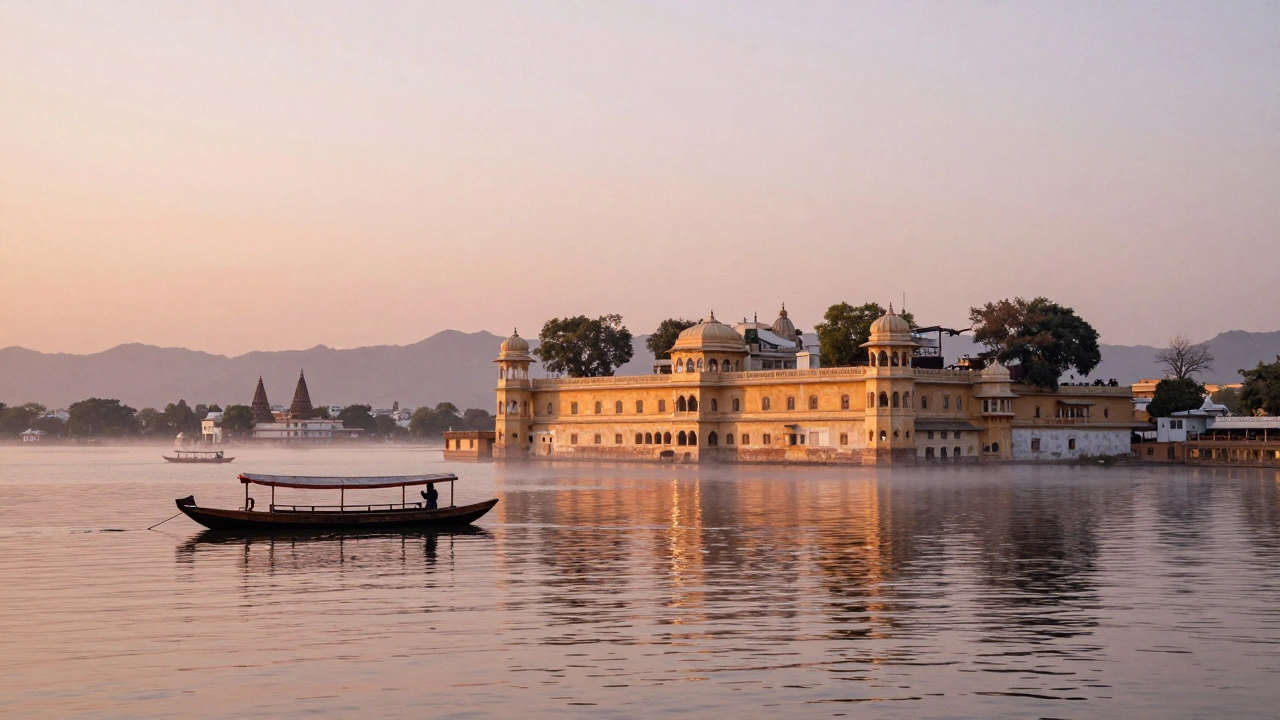
Udaipur isn’t just a city with pretty views. It’s a place where water, stone, and sky come together in perfect balance. The City of Lakes isn’t a marketing slogan-it’s a geological truth. Lake Pichola, Fateh Sagar, Udai Sagar-they’re not man-made attractions. They’re natural basins that shaped the city’s soul. The palaces didn’t just sit on the shore; they grew out of it. The City Palace, built over centuries, rises from the edge of Lake Pichola like a mirage made of marble and sandstone. At sunset, the reflection turns the whole lake into a mirror of gold.
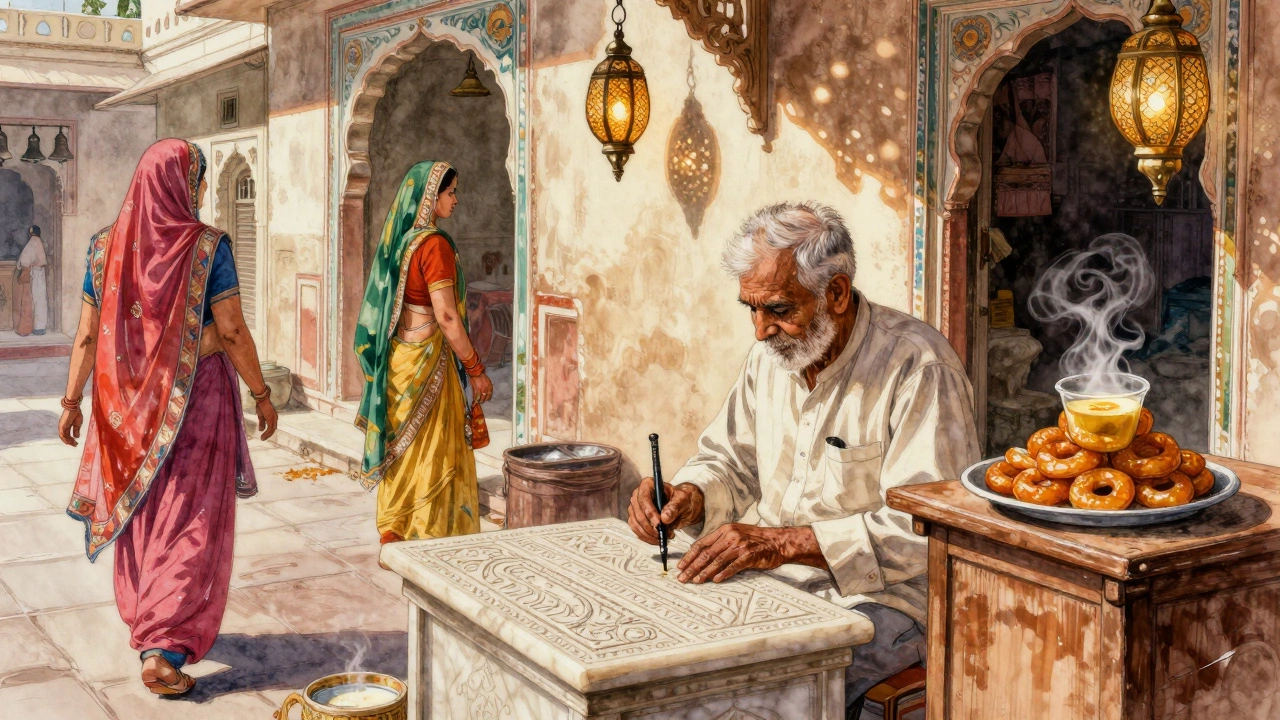
Walk through the narrow lanes of the old city, and you won’t find plastic signs or fast-food chains. You’ll find artisans carving marble in tiny workshops, women in colorful ghagras selling fresh jalebis, and temple bells ringing from hidden courtyards. There’s no forced charm here. The beauty is earned-through history, through patience, through people who still live like their ancestors did.
How It Compares to Jaipur and Agra
Jaipur is grand. The Amber Fort, the Hawa Mahal, the bustling bazaars-they’re all impressive. But Jaipur feels like a museum you can shop in. It’s designed for visitors. The pink walls were painted in 1876 to welcome the Prince of Wales, and they’ve been repainted ever since. It’s beautiful, yes, but it’s curated.
Agra? The Taj Mahal is one of the Seven Wonders of the World. No argument there. But the city around it? It’s crowded, noisy, and often overwhelming. Tourists swarm the monument before sunrise, and the rest of the city feels like a waiting room for the main event. You don’t live in Agra-you pass through it.
Udaipur is different. You don’t just visit. You stay. You sit on a rooftop café overlooking the lake and watch the boats glide past. You take a boat ride at dawn, when the mist rolls off the water and the city wakes up slowly. You eat dal baati churma at a family-run restaurant where the chef remembers your name. There’s no rush. No pressure. Just peace.
The Hidden Details That Make It Special
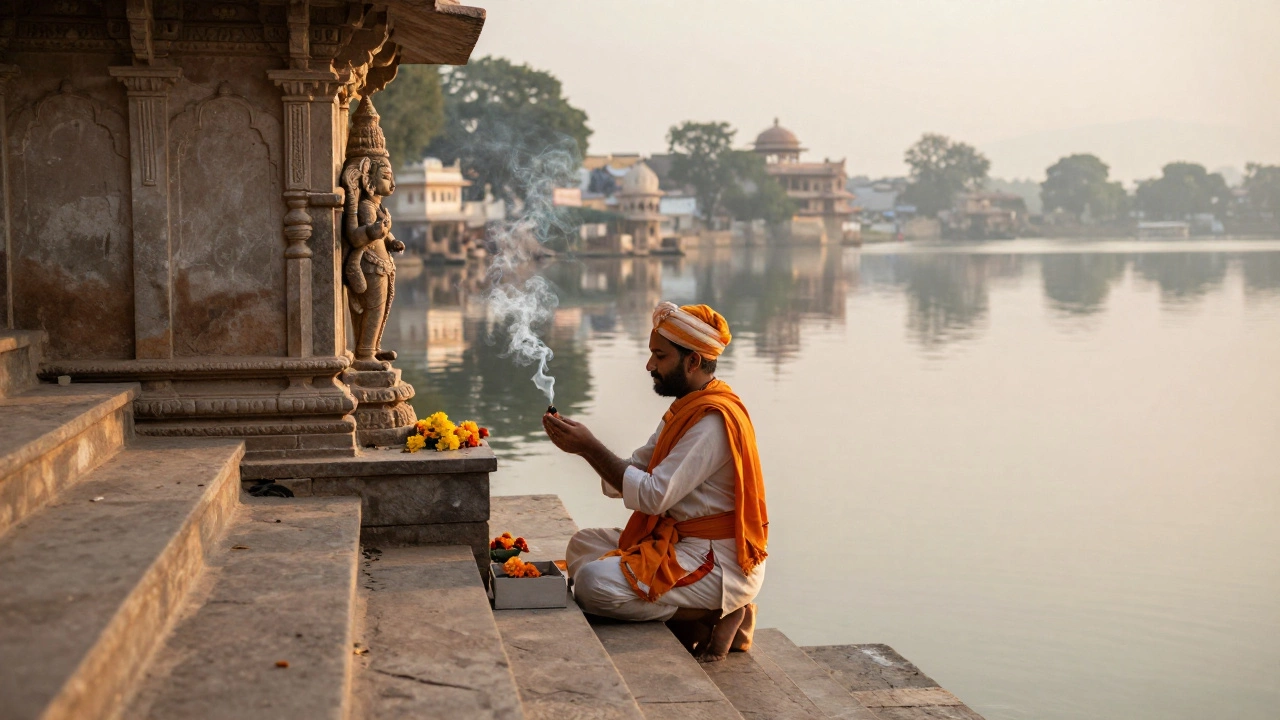
Most tourists miss the real magic of Udaipur because they stick to the big sights. But walk down to the ghats near Jag Mandir, and you’ll see elderly men playing chess under banyan trees. You’ll hear the echo of a classical raga drifting from a hidden courtyard. You’ll find a small temple, untouched by crowds, where a priest offers flowers to a stone deity carved in the 16th century.
The Saheliyon-ki-Bari garden isn’t just a garden-it’s a story. Built for the queen’s maids, it has fountains shaped like elephants, marble pavilions, and lotus pools. It’s not grand like Versailles. It’s intimate. It’s personal. That’s the difference.
Even the local food tells a story. Mawa kachori, ghewar, dal baati churma-they’re not just snacks. They’re heirloom recipes passed down through generations. You won’t find them in a hotel buffet. You find them in small shops where the owner’s grandmother taught him how to make the dough.
When to Go and How to Experience It Right
The best time to visit Udaipur is between October and March. The weather is cool, the skies are clear, and the lakes glow. Avoid monsoon season-while the city looks lush, the roads get muddy, and boat rides are limited.
Here’s how to experience it like a local:
- Stay in a heritage haveli, not a chain hotel. The Oberoi Udaivilas is luxurious, but a smaller guesthouse like Shiv Niwas Palace gives you real history.
- Take a boat ride on Lake Pichola at sunset. Don’t rush. Stay until the last light fades.
- Visit the Jagdish Temple early in the morning. The priests will let you ring the bell if you ask politely.
- Walk through the Badi Chaupar market. Buy a hand-painted miniature painting-not a mass-produced souvenir.
- Have dinner at Rajputana on the rooftop of the City Palace. Order the laal maas and watch the city lights come on.
What Others Say About Udaipur
In 2023, Travel + Leisure ranked Udaipur as the #1 city in India for beauty and atmosphere. Lonely Planet called it “India’s most romantic city,” not because of the Taj, but because of how quietly it holds your heart. Even Indian tourists, who often flock to Goa or Shimla, are choosing Udaipur for weekend escapes. Why? Because it doesn’t shout. It whispers.
One traveler from Mumbai wrote in a blog: “I went to Jaipur for the palaces. I went to Agra for the Taj. I went to Udaipur because I was tired. And I didn’t leave for three weeks.”
Why It’s Not Just About Looks
Beauty isn’t just about symmetry or color. It’s about how a place makes you feel. Udaipur doesn’t impress you with scale. It invites you in. It lets you breathe. It doesn’t ask you to take a photo. It asks you to sit down, sip chai, and watch the clouds move.
Other cities in North India are stunning. But they’re monuments. Udaipur is a living poem.
Final Thought: The Real No. 1
If you’re looking for the most beautiful city in India, don’t look for the most photographed. Look for the one that stays with you after you leave. The one you dream about months later. The one where you forget to check your phone.
That’s Udaipur.
Is Udaipur really the most beautiful city in India?
Yes, if you measure beauty by atmosphere, history, and emotional impact-not just visuals. While Jaipur and Agra are iconic, Udaipur offers a quieter, deeper kind of beauty. It’s not about grandeur; it’s about harmony. Locals, travelers, and international publications like Travel + Leisure consistently rank it at the top for its serene lakes, preserved heritage, and authentic vibe.
How does Udaipur compare to Jaipur in terms of beauty?
Jaipur is bold and colorful, with grand forts and bustling markets. It’s designed to impress. Udaipur is calm and reflective, with lakes that mirror the sky and palaces that blend into the landscape. Jaipur feels like a stage. Udaipur feels like a home. One is for photos. The other is for memory.
Is Udaipur worth visiting if I’ve already seen the Taj Mahal?
Absolutely. The Taj Mahal is a single monument. Udaipur is an entire experience. You can see the Taj in a day. Udaipur needs time-time to sit by the lake, to wander the old streets, to taste the food, to listen to the temple bells. It’s not a stop on your itinerary. It’s a pause in your life.
What’s the best way to get to Udaipur?
Udaipur has its own airport with direct flights from Delhi, Mumbai, and Jaipur. If you prefer trains, the Udaipur City Railway Station is well-connected to major cities. Many travelers drive from Jaipur (about 5 hours) or Jodhpur (3.5 hours) for a scenic route through the Aravalli Hills. Once you’re there, walking and auto-rickshaws are the best ways to explore.
Are there budget-friendly options in Udaipur?
Yes. While Udaipur has luxury resorts, you can find clean, charming guesthouses in the old city for under ₹1,500 a night. Street food like kachori and ghewar costs less than ₹50. Boat rides on Lake Pichola are ₹300 per person. The city is expensive only if you want it to be. You can experience its soul on a modest budget.
What’s the one thing most tourists miss in Udaipur?
The early morning at the Gangaur Ghat. No crowds. Just the sound of water lapping against stone, the smell of incense from a small temple, and the first light hitting the City Palace. It’s quiet. It’s sacred. And it’s the moment Udaipur reveals its true self.