Which is the holiest temple in India? The truth behind the most sacred Hindu shrine
 Feb, 13 2026
When people ask which temple is the holiest in India, they’re not just looking for a name. They want to understand why one place carries more weight than another in the hearts of millions. The answer isn’t simple. There’s no official ranking. No government decree. No single scripture that names a #1. But if you talk to pilgrims, priests, and scholars across India, one name comes up again and again: Kashi Vishwanath.
Why Kashi Vishwanath stands above the rest
Kashi Vishwanath in Varanasi isn’t just a temple. It’s the spiritual axis of Hinduism. Located on the banks of the Ganges, it’s believed that dying in Varanasi and being cremated here frees a soul from the cycle of rebirth. This isn’t metaphor. It’s a core belief held by over 900 million Hindus. The temple houses one of the twelve Jyotirlingas-sacred lingams said to be self-manifested forms of Lord Shiva. Unlike other temples built by kings or dynasties, the Jyotirlinga at Kashi is thought to have appeared naturally, making it uniquely divine.
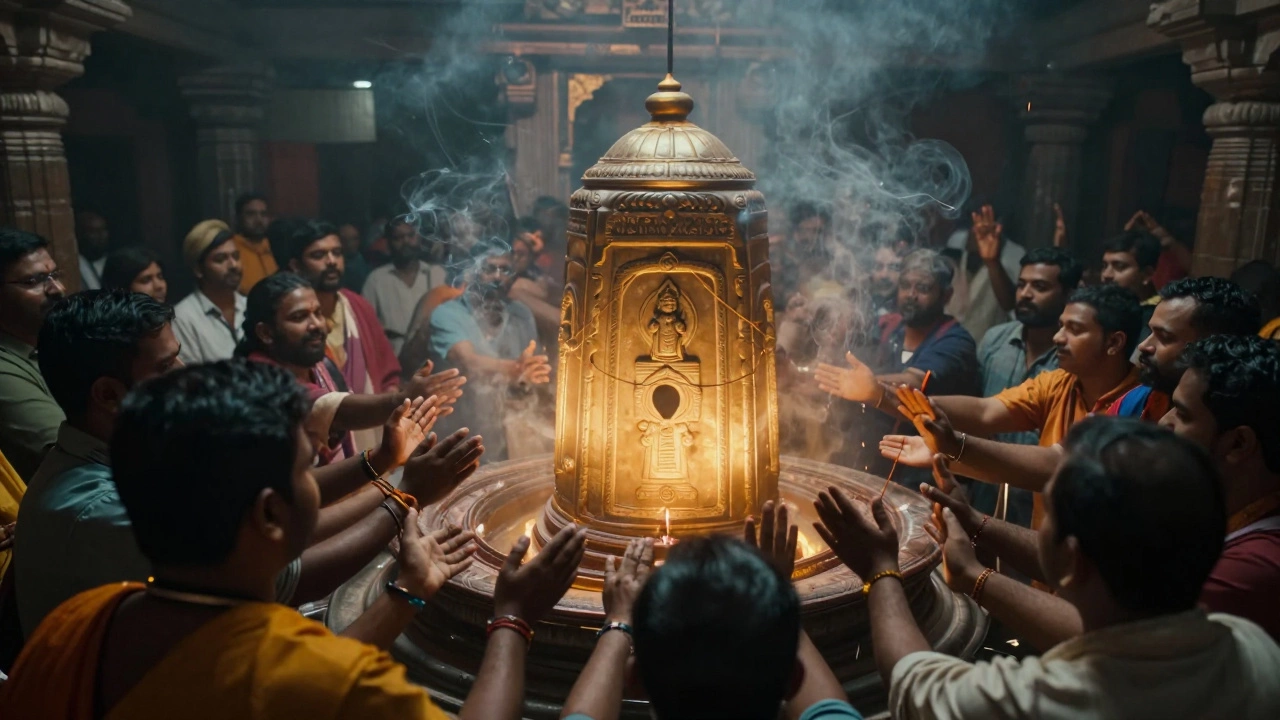
Millions visit every year. During Maha Shivaratri, over 2 million people gather in the narrow lanes around the temple. The air fills with chants of "Har Har Mahadev." The scent of incense, marigolds, and burning ghee never fades. Even non-Hindus who visit describe a stillness here unlike anywhere else. It’s not about architecture. It’s about presence. The temple has been destroyed and rebuilt six times since the 11th century. Each time, devotees rebuilt it faster than rulers could tear it down. That persistence speaks louder than any stone.
The other contenders-and why they don’t quite match up
People often bring up Tirumala Tirupati. And for good reason. The Venkateswara Temple in Andhra Pradesh draws over 50,000 visitors daily. It’s the richest temple in the world, with offerings totaling over $1 billion annually. But wealth doesn’t equal holiness. Tirupati is powerful, yes. Devotees believe darshan here removes sin. But its significance is more about divine grace and fulfillment of wishes. It’s a temple you go to for help. Kashi Vishwanath is where you go when you’re ready to let go.
Padmanabhaswamy Temple in Kerala is another name that comes up. Its vaults contain gold, jewels, and ancient artifacts worth tens of billions. The deity here is Vishnu in a reclining pose, and the temple is protected by royal families and ancient rituals. But its holiness is tied to lineage and secrecy. Only a few Brahmins can enter the inner sanctum. That exclusivity makes it revered, but not universally accessible as a pilgrimage site.
Then there’s Somnath. One of the original twelve Jyotirlingas. It was destroyed eleven times by invaders. Its reconstruction in 1951 was a symbol of Hindu resilience. But its story is one of survival, not daily spiritual practice. Fewer pilgrims make the journey here compared to Varanasi. The energy of Kashi is alive every hour of every day. Somnath’s power is historical. Kashi’s is ongoing.
What makes a temple truly holy?
Holiness isn’t measured in gold, size, or even ancient lineage. It’s measured in continuity. In the unbroken chain of prayer. In the fact that people have walked the same path, chanted the same mantras, and touched the same stones for over 2,000 years.
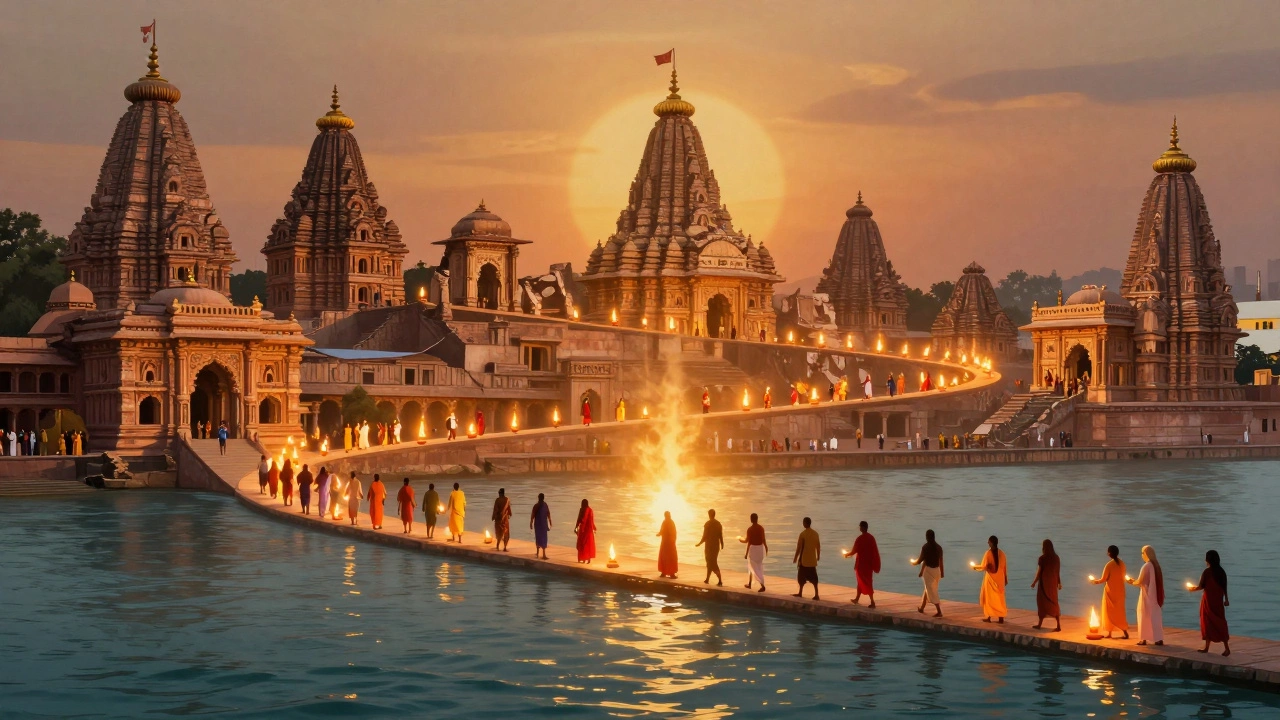
Kashi Vishwanath has never stopped being a center of worship. Even during Mughal rule, when the temple was demolished and a mosque built over it, people still came. They prayed outside. They whispered mantras in alleyways. They lit lamps on the ghats. The faith didn’t die. It adapted. It survived. And when the temple was restored in 1780, the same energy returned.
Compare that to temples that are beautiful but quiet. Or ones that are crowded because they’re tourist attractions, not spiritual destinations. Holiness requires participation. It needs the sound of bells, the rhythm of aarti, the smell of raw rice offered to Shiva, the touch of a priest’s hand as he places vibhuti on your forehead. Kashi gives you all of that-not as a show, but as a living tradition.
The pilgrimage experience: what to expect
If you plan to visit, don’t expect calm. Varanasi is loud, chaotic, overwhelming. The ghats are packed. The alleys are narrow. Motorcycles weave between ox carts. But that’s part of the point. This isn’t a museum. It’s a living, breathing spiritual ecosystem.
Here’s how most pilgrims experience it:
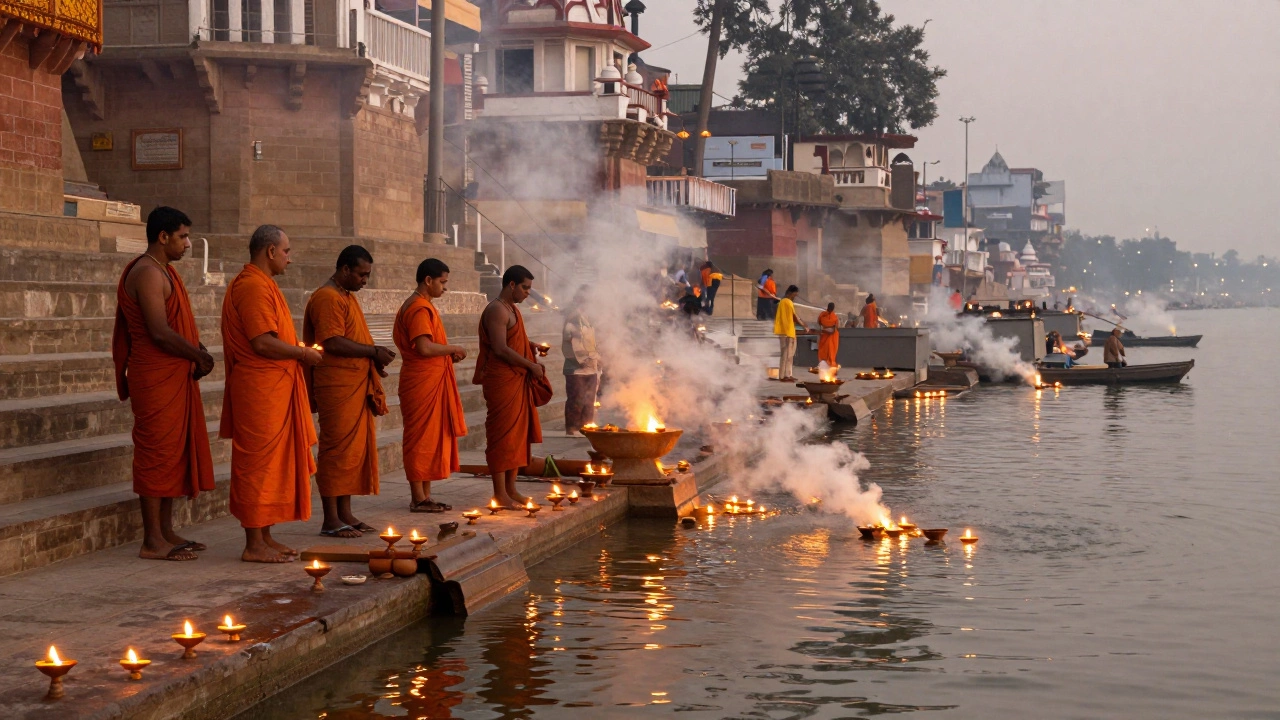
- Take a boat at dawn along the Ganges. Watch the sun rise over the ghats as hundreds light oil lamps and offer flowers.
- Walk to Kashi Vishwanath through the bustling market lanes. Don’t rush. The path itself is part of the ritual.
- Wait in line. The queue can be 2-3 hours long. Use the time to chant, pray, or simply breathe.
- Once inside, don’t look for grandeur. The inner sanctum is small. The Jyotirlinga is modest. But the feeling? It’s overwhelming.
- Afterward, visit the nearby Durga Kund or try a traditional kheer at a local shop.
Many leave with a simple piece of cloth tied around their wrist-a symbol of having touched the divine. No souvenir. No photo. Just that thread.
Is there a single "holiest" temple? The deeper truth
Technically, no. Hinduism has no single center. There are 12 Jyotirlingas. 18 Shakti Peethas. Hundreds of temples where the divine is believed to dwell. Each has its own power. Each has its own story.
But if you ask a monk from Rishikesh, a priest from Puri, or a grandmother from Tamil Nadu what temple holds the most weight in the soul of India-9 out of 10 will say Kashi. Why? Because it’s not just about Shiva. It’s about death. About liberation. About the belief that some places are so sacred, they change the soul.
The holiest temple isn’t the one with the most gold. It’s the one that reminds you, in the quietest moment, that you’re part of something ancient, unbroken, and eternal.
Is Kashi Vishwanath the only Jyotirlinga in India?
No, there are twelve Jyotirlingas across India, each considered equally divine. But Kashi Vishwanath is the most visited and culturally central. Others include Somnath in Gujarat, Mallikarjuna in Andhra Pradesh, and Mahakaleshwar in Ujjain. Each has its own legends and regional importance.
Can non-Hindus visit Kashi Vishwanath?
Yes. Non-Hindus are welcome to visit the outer courtyard and view the temple from outside. However, only Hindus are allowed inside the main sanctum. This is not discrimination-it’s based on centuries-old ritual purity rules that apply to all inner shrines in Hindu temples, regardless of denomination.
Why is Varanasi considered the city of death?
In Hindu belief, dying in Varanasi and being cremated on its ghats grants moksha-liberation from the cycle of birth and death. The Ganges is thought to wash away sins, and the presence of Shiva in Kashi makes this place uniquely powerful for spiritual release. Thousands come here in their final days, not out of despair, but in hope of ultimate freedom.
How old is the current Kashi Vishwanath Temple?
The current structure was built in 1780 by Queen Ahilyabai Holkar of Indore. But the site has been a place of worship for over 2,000 years. The original temple dates back to at least the 4th century BCE, with references in ancient texts like the Skanda Purana.
What’s the best time to visit Kashi Vishwanath?
The best time is during the winter months (October to February), when the weather is cool and dry. Avoid monsoon season (July-September) due to heavy rains and flooding. For the most spiritual experience, visit early morning between 3 and 5 AM during Shivaratri or during the Kartik Purnima festival, when the entire city lights up with lamps.