What Does a US Citizen Need to Travel to India? Essential Checklist for 2025
 Dec, 4 2025
Passport Validity Checker
Check Your Passport Validity
India requires passports to be valid for at least 6 months beyond your return date. This tool calculates if your passport meets this requirement.
Important: Your passport must also have at least 2 blank visa pages for entry/exit stamps.
Apply for passport renewal immediately if expired or near expiration. Standard processing takes 8-10 weeks.
Planning a trip to India as a US citizen? You’re not alone. Over 1.2 million Americans visited India in 2024, drawn by its temples, tuk-tuks, tea stalls, and trails-from the Himalayas to the beaches of Goa. But getting there isn’t as simple as booking a flight. There are rules, documents, and timing tricks you need to know. Skip the confusion. Here’s exactly what you need, step by step, with nothing extra.
1. Get a Valid US Passport
Your passport is your ticket out the door-and your only legal ID in India. Make sure it’s valid for at least six months beyond your planned return date. India doesn’t accept passports with less than six months of validity. Even if your trip ends in five months and ten days, you’re out of luck. Also, you need at least two blank pages. One for the visa stamp, one for entry/exit stamps. If your passport is running low on space, renew it now. Processing can take 8-10 weeks if you’re not in a rush. Expedited service cuts it to 2-3 weeks, but you’ll pay extra.
2. Apply for an India Tourist Visa
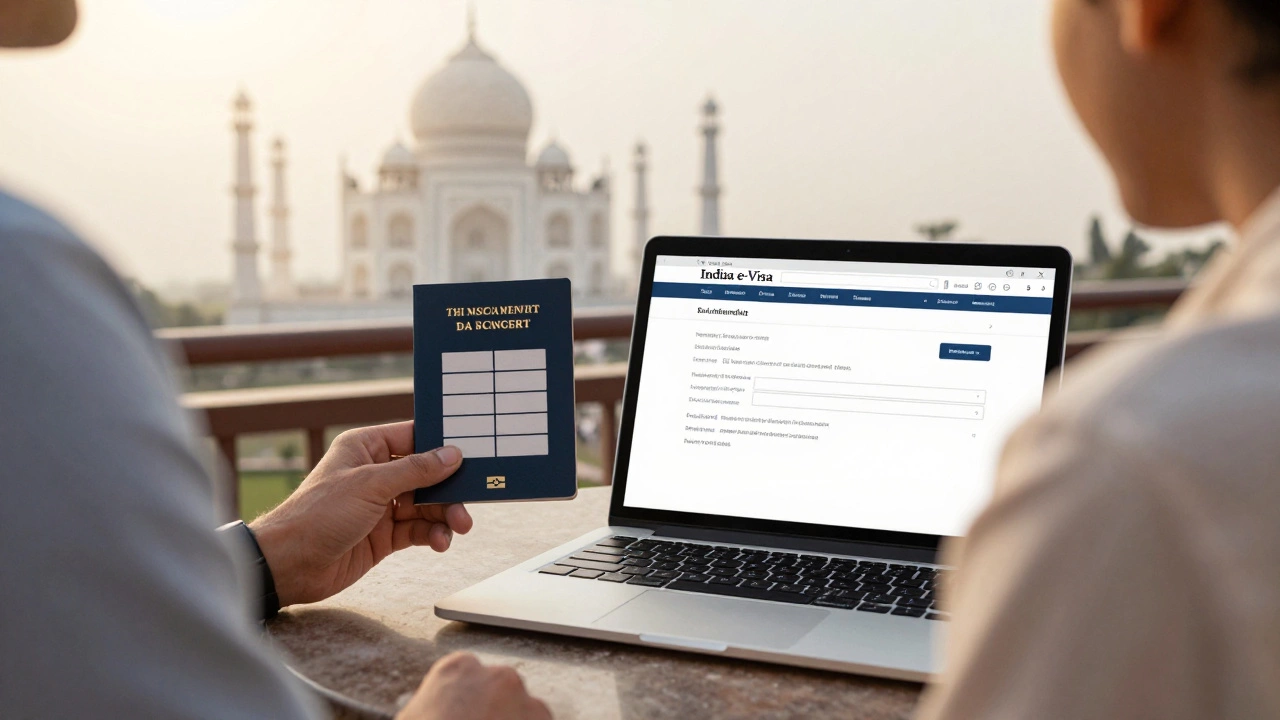
US citizens can’t just walk into India. You need a visa. The easiest option is the India e-Visa. It’s online, fast, and works for tourism, short business trips, or medical visits. You can’t use it for long-term stays, work, or journalism. The e-Visa comes in three types: 30-day, 1-year, and 5-year. For most travelers, the 1-year e-Tourist Visa is the best pick. It lets you stay up to 90 days per visit, and you can enter twice in a calendar year. That’s perfect if you’re hopping between Delhi and Kerala, then coming back later.
You apply at indianvisaonline.gov.in. No agencies needed. The site is official, secure, and costs $10 for the 30-day visa, $40 for the 1-year, and $80 for the 5-year. Pay with a credit card. You’ll get your visa emailed to you in 3-5 business days-sometimes as fast as 24 hours. Print two copies. One for immigration, one for your hotel. Keep a digital backup on your phone.
3. Fill Out the Arrival Form
India now requires all foreign visitors to complete an online Air Suvidha Passenger Declaration Form. You must submit this within 72 hours before your flight. It asks for your passport details, flight number, address in India, and health info. No vaccines are required, but you’ll need to declare if you’ve had symptoms of illness in the last 14 days. It’s a simple form. Takes 5 minutes. Submit it, save the confirmation email, and show it at check-in and immigration.
4. Know the Entry Rules
India has two main international airports that accept e-Visas: Delhi, Mumbai, Bengaluru, Chennai, Kolkata, Hyderabad, and Ahmedabad. If you’re flying into a smaller airport like Jaipur or Kochi, check if they handle e-Visa arrivals. Some don’t. You’ll be turned away if you land at the wrong one.
At immigration, have ready: your printed e-Visa, passport, return ticket, and proof of accommodation. Officers don’t always ask, but they can. If you’re staying with friends, bring a letter from them with their address and phone number. No bank statements or income proof needed for tourist visas. You’re not being screened for financial status.
5. Money Matters: Cash, Cards, and ATMs
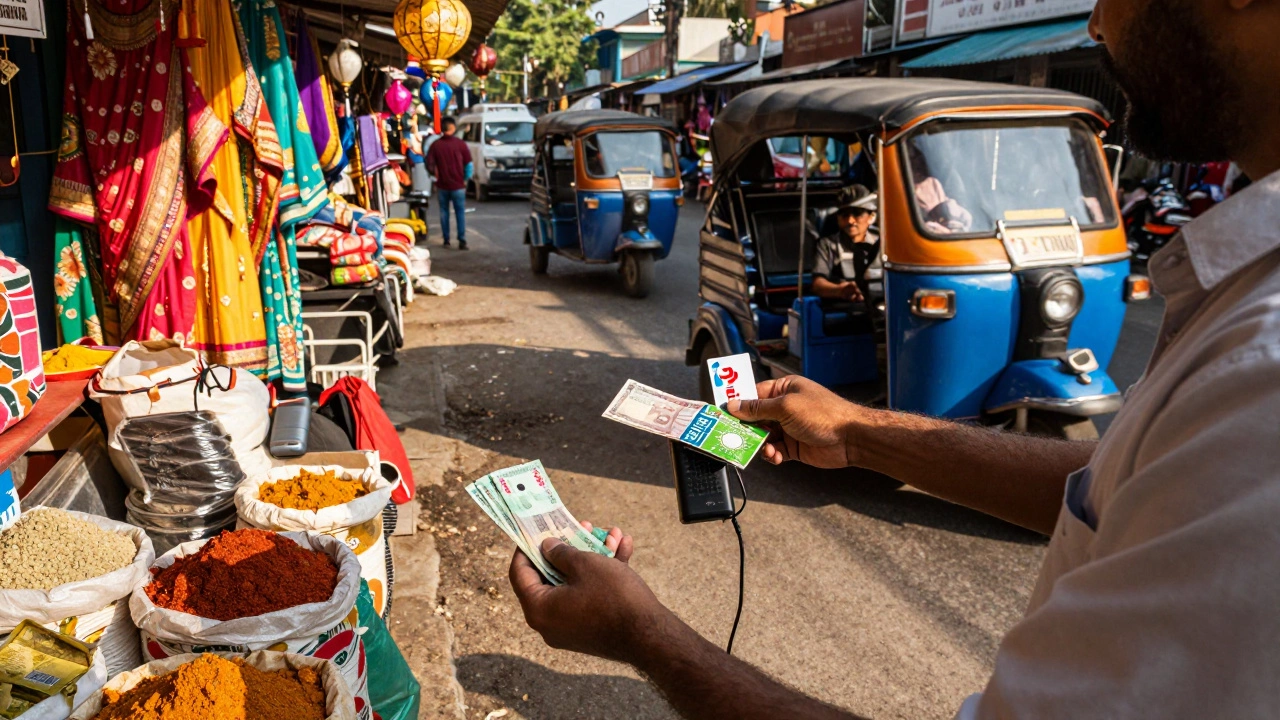
India runs on cash-even in big cities. Credit cards work at hotels, restaurants, and big stores, but small vendors, rickshaw drivers, and temple offerings? Cash only. Carry at least $200 in US dollars. Exchange them at the airport or use ATMs. Most ATMs accept Visa and Mastercard. Look for ones linked to Citibank, HSBC, or HDFC-they’re the most reliable. Avoid using your debit card for withdrawals; some banks charge high foreign fees. Withdraw in 5,000 or 10,000 rupee notes. Smaller denominations are hard to get.
Use Wise or Revolut for better exchange rates than banks. You can load rupees onto a travel card before you leave. Or use a no-foreign-fee credit card like Chase Sapphire Preferred. Just never rely on one payment method. Always have cash backup.
6. Health and Vaccines
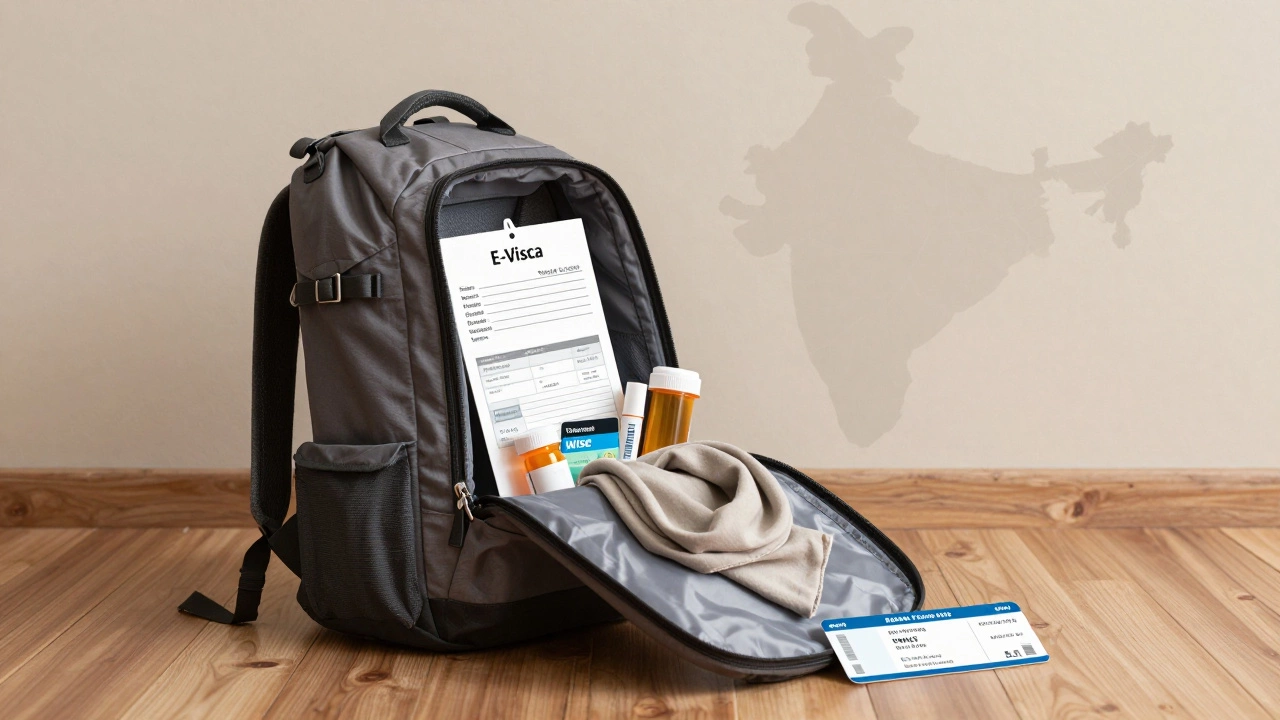
No vaccines are required to enter India. But that doesn’t mean you shouldn’t get them. The CDC recommends Hepatitis A, Typhoid, and routine shots like MMR and tetanus. If you’re heading to rural areas or staying longer than 3 months, get a rabies pre-exposure shot. Malaria isn’t common in cities, but it’s present in parts of central and northeastern India. Pack mosquito repellent with DEET. Sleep under a net if you’re in a basic guesthouse.
Bring a small first-aid kit: painkillers, anti-diarrheal, antiseptic wipes, and any prescription meds. India has great pharmacies, but brand names differ. Carry your prescriptions in original bottles with your name on them.
7. What You Can’t Bring In
India bans certain items. No meat, dairy, or plants without a permit. No pornography. No counterfeit goods. No more than $10,000 in cash without declaring it. You can bring one bottle of alcohol duty-free if you’re over 18. More than that? You’ll pay high taxes. No drones without a special permit. If you plan to fly one for photos, apply ahead. It’s a long process.
8. Internet and SIM Cards
Don’t rely on roaming. US carriers charge $10-$15 per day for India data. Instead, buy a local SIM at the airport. Airtel and Jio are the two best networks. They offer unlimited data for under $10 for 30 days. You’ll need your passport to register. Most kiosks have English-speaking staff. Once you have the SIM, download Google Maps, Ola (for rides), and Paytm (for payments). You’ll use them every day.
9. Cultural Tips That Save You Trouble
India isn’t just a destination. It’s a rhythm. Dress modestly, especially outside tourist zones. Cover shoulders and knees. Remove shoes before entering temples. Don’t touch food with your left hand-it’s considered unclean. Haggling is normal in markets, but be polite. Say ‘thank you’ often. And never point your feet at people or religious objects. It’s rude.
Wi-Fi isn’t always reliable. Download offline maps, translation apps, and PDFs of your visa and tickets. Carry a portable charger. Power outages happen, even in Delhi.
10. Budget Travel India: Real Costs
You don’t need to spend a fortune. A budget traveler can get by on $25-$40 a day. That includes a clean guesthouse ($8-$15), street food ($1-$3 per meal), local transport ($0.50-$2 per ride), and entry fees. A 1-year e-Visa is $40. A flight from New York to Delhi starts at $700 round-trip if booked early. Use Skyscanner or Google Flights and set alerts. Fly mid-week for cheaper fares.
Stay in hostels or homestays. Eat at dhabas (local eateries). Take overnight trains instead of flights. A sleeper train from Delhi to Agra costs $15 and saves you a night’s hotel. Use apps like MakeMyTrip or IRCTC to book trains. Don’t buy tickets at the station-lines are hours long.
Don’t fall for ‘free tours’ that push you to shops. Stick to reviews on TripAdvisor or Hostelworld. Book accommodations with free cancellation. Things change fast in India. Flexibility saves money and stress.
What If You Get Sick or Lose Your Passport?
If you get seriously ill, go to a private hospital. Apollo, Fortis, or Max are reliable. Avoid government hospitals unless it’s an emergency. They’re overcrowded. Keep a list of emergency numbers: 112 (police/medical), your hotel’s front desk, and the US Embassy in Delhi: +91-120-484-5000.
If you lose your passport, go to the embassy immediately. Bring a copy of your visa, a photo ID, and two passport photos. They’ll issue a temporary passport in 1-3 days. It’s not fast, but it’s possible. Don’t wait. Your visa is tied to your passport number. If you get a new one, you’ll need to reapply for the e-Visa.
Can I get a visa on arrival in India as a US citizen?
No. India does not offer visas on arrival for US citizens. You must apply for an e-Visa online before you travel. Arriving without one means you’ll be denied boarding or turned away at immigration.
How long does it take to get an India e-Visa?
Most e-Visas are approved within 3 to 5 business days. Some applicants get them in under 24 hours. Apply at least a week before your flight. Don’t wait until the last minute.
Can I extend my India tourist visa while I’m there?
No. Tourist visas, including the 1-year and 5-year e-Visas, cannot be extended. If you want to stay longer, you must leave India and reapply from outside the country. Overstaying can lead to fines or a travel ban.
Is India safe for solo US travelers?
Yes, if you take basic precautions. Cities like Jaipur, Kochi, and Varanasi are popular with solo travelers. Avoid walking alone at night in unfamiliar areas. Use trusted ride apps like Ola or Uber. Keep valuables hidden. Most locals are helpful and curious-not threatening. Trust your instincts.
Do I need travel insurance for India?
It’s not required, but highly recommended. Medical care in private hospitals can cost $500+ for a simple emergency. Travel insurance covers trip cancellations, lost luggage, and medical evacuation. Look for plans that include adventure activities if you plan to trek or raft.
Next Steps
Start with your passport. Then apply for the e-Visa. Book your flight. Buy a SIM card. Pack light. India rewards flexibility. The more you plan ahead, the more you’ll enjoy the chaos. Don’t stress about missing a detail. Locals are used to tourists. They’ll help you if you’re polite. Just make sure you’ve got the visa, passport, and cash. Everything else? You’ll figure it out on the ground.