Is New Delhi or Mumbai Better for Travelers?
 Dec, 1 2025
Destination Matcher: New Delhi or Mumbai?
Answer a few questions to discover which city matches your travel style. Based on your preferences, we'll tell you whether New Delhi or Mumbai is better for you.
1. What kind of history interests you most?
2. How do you prefer to experience a city?
3. What's your ideal food experience?
4. How do you feel about crowded spaces?
5. What's your priority for safety?
New Delhi is Your Perfect Match!
You'll love New Delhi's blend of history and structure. It's ideal for those who want to explore ancient monuments with clear pathways, enjoy classic North Indian cuisine, and experience the city's quieter moments. The organized metro system and tourist-friendly infrastructure make it perfect for travelers who prefer comfort with cultural depth.
"New Delhi gives you depth. Mumbai gives you velocity." - From the article
Mumbai is Your Perfect Match!
Mumbai's energy and chaos are exactly what you need! You'll thrive in its vibrant streets, spontaneous street food adventures, and living history. The city's raw authenticity is perfect for travelers who want to feel the pulse of modern India, embrace crowds, and experience life at full speed. The local train system will become your favorite way to connect with the city's heart.
"Mumbai is loud, messy, dazzling, and real." - From the article
When you’re planning a trip to India, two cities always come up in the conversation: New Delhi and Mumbai. One’s the political heartbeat of the country, the other its financial and cultural engine. But which one is actually better for you? It’s not about which is bigger, busier, or more famous. It’s about what kind of experience you’re looking for.
New Delhi: Power, History, and Quiet Corners
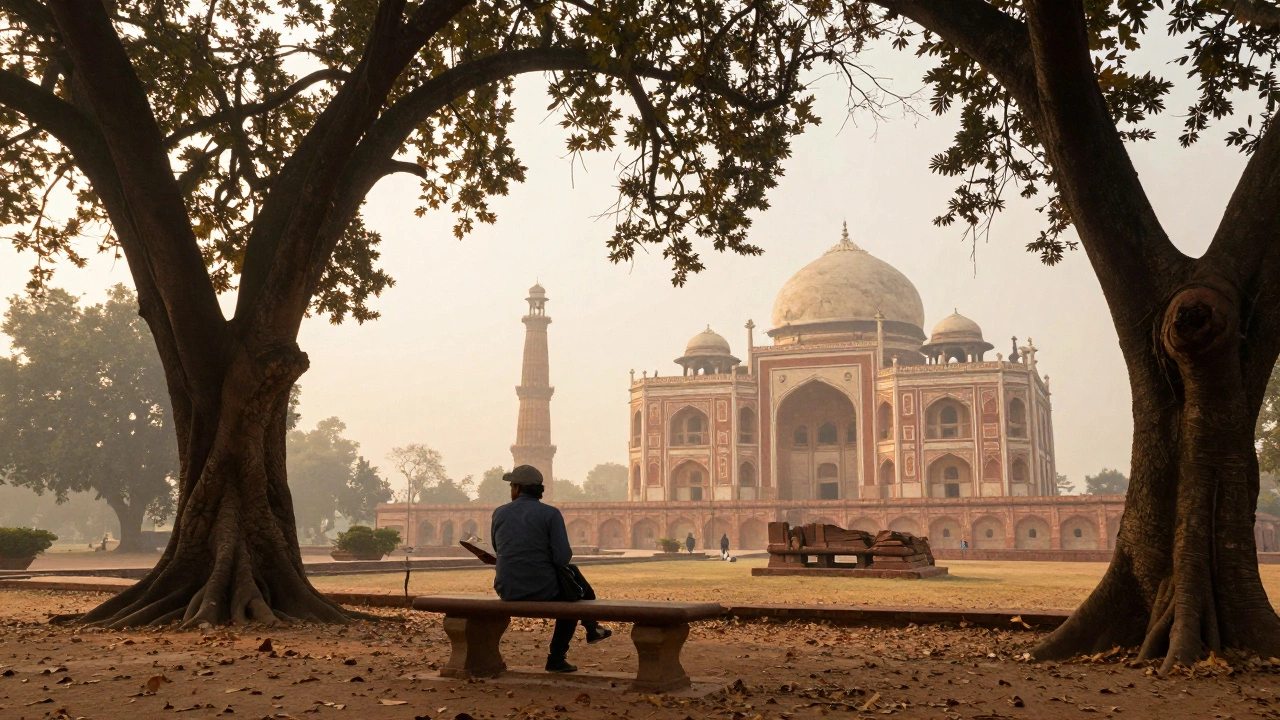
New Delhi isn’t just India’s capital-it’s where the country’s story is written in stone, steel, and centuries of layered rule. Walk through the Red Fort and you’re standing where Mughal emperors once held court. Step into the India Gate memorial and you’re surrounded by silence, even in the middle of a bustling city. The architecture here doesn’t shout; it commands respect.
History isn’t a side attraction here-it’s the main course. The Qutub Minar, built in 1193, still stands taller than most modern buildings. Humayun’s Tomb, a precursor to the Taj Mahal, feels like stepping into a Mughal dream. And if you want to see how India governs itself today, you can walk past Parliament House or the Rashtrapati Bhavan without needing a ticket.
But New Delhi also has quiet escapes. Lodhi Garden is a leafy oasis where locals jog at dawn and couples sit under banyan trees. The Dilli Haat market lets you taste regional crafts and snacks without the tourist traps. Food here leans toward North Indian comfort: butter chicken, parathas, kebabs, and rich curries served with fresh roti. You’ll find street food too-try the jalebi at Karim’s near Jama Masjid, where the syrup is still warm and the crispness lasts just long enough.
Mumbai: Energy, Edge, and Endless Motion
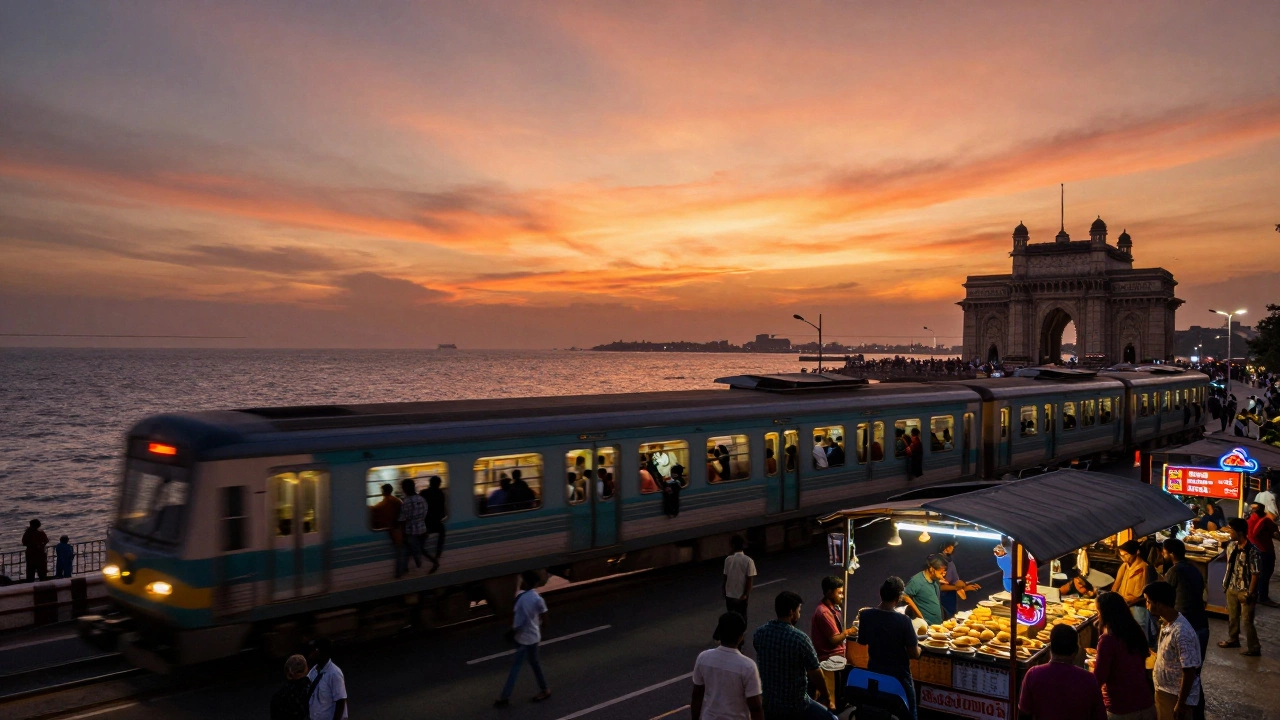
Mumbai doesn’t wait for you. It moves. The city pulses 24/7. Trains packed with 2,000 people every 10 minutes. Street vendors selling chai from carts that double as kitchens. Bollywood studios humming with song-and-dance rehearsals. The ocean crashes against Marine Drive as the sun sets, and the skyline lights up like a movie set.
Here, history is alive, not preserved. The Gateway of India isn’t just a monument-it’s a launchpad for ferries to Elephanta Island, where ancient Hindu carvings hide in caves. The Chhatrapati Shivaji Terminus, a UNESCO site, still handles 8 million passengers a year. And if you want to see how real life works in India, take a local train at 7 a.m. You’ll be shoulder to shoulder with doctors, students, and factory workers-all silent, all moving.
Food in Mumbai is a riot of flavors. Vada pav, the city’s unofficial snack, is a spicy potato fritter in a bun with chutney. You’ll find it on every corner. For something richer, try pav bhaji, a buttery vegetable mash served with soft bread. And then there’s the seafood-fresh from the Arabian Sea. Head to Juhu Beach at night and grab grilled prawns with lime, eaten with your hands.
Mumbai’s energy isn’t just in its food or trains. It’s in the art. The Chhatrapati Shivaji Maharaj Vastu Sangrahalaya holds over 50,000 artifacts. The Kala Ghoda district turns into an open-air gallery every February. And if you’re lucky, you’ll catch a street performance near Colaba Causeway-a dancer, a musician, a magician-all doing their thing for spare change and applause.
What You’ll Spend
Both cities are affordable, but they stretch your budget differently.
In New Delhi, a clean hotel room in Connaught Place or South Delhi costs about ₹2,500-₹4,000 ($30-$50) per night. Meals at local joints run ₹150-₹300 ($2-$4). A metro ride is ₹10-₹50 ($0.10-$0.60). Museums and monuments usually charge ₹20-₹50 ($0.25-$0.60) for locals, and ₹300-₹600 ($4-$7) for foreigners.
Mumbai is pricier. A decent hotel in Bandra or Colaba starts at ₹3,500 ($40), and luxury spots near the sea go well over ₹10,000 ($120). Street food? Still cheap-₹50-₹150 ($0.60-$2). But a single train ticket during rush hour? ₹10-₹30 ($0.10-$0.40). The real cost comes when you want to see the city from above-the view from the Marine Drive promenade is free, but a rooftop bar with a skyline view? That’s ₹1,200 ($15) for a drink.
Neither city will break you. But Mumbai makes you pay for the view. New Delhi lets you save and still feel like you’ve seen everything.
Who Should Go Where?
If you love quiet mornings, deep history, and a sense of order-go to New Delhi. It’s the city for people who want to sit in a garden and read about Akbar, then walk into a government building that still feels like a palace. It’s also easier to navigate. The metro is clean, signs are in English, and the pace is slower.
If you want to feel like you’re in the middle of a movie-go to Mumbai. It’s loud, messy, dazzling, and real. You’ll get lost in the crowds and love it. You’ll eat food you’ve never heard of and find yourself dancing along to a street band. It’s the city for people who want to feel alive, not just informed.
Neither is better. But one fits your mood.
Day Trips and Nearby Gems
New Delhi’s nearby treasures are historical. A 2-hour drive takes you to Agra and the Taj Mahal. Or head to Jaipur, 250 km away, for pink palaces and desert forts. If you’re into nature, the hill station of Mussoorie is a 7-hour drive north-cool air, pine trees, and quiet.
Mumbai’s day trips are coastal. Alibaug, 100 km south, has beaches and seafood shacks. Lonavala and Khandala, 100 km east, are misty hills with waterfalls and colonial bungalows. And if you’re up for a longer trip, the Ajanta and Ellora caves-UNESCO sites with 2,000-year-old Buddhist carvings-are just 3 hours away by train.
Both cities give you a gateway to India’s deeper layers. But New Delhi opens the door to empire. Mumbai opens the door to modern life.
When to Visit
October to March is the sweet spot for both. Winter is cool, dry, and perfect for walking. New Delhi can get dusty in April and May, with temperatures hitting 45°C. Mumbai gets soaked from June to September during monsoon season. Roads flood. Trains slow. But if you don’t mind the rain, you’ll see the city at its most dramatic-green, wet, and full of life.
Plan your trip between November and February. You’ll get clear skies, comfortable temps, and festivals. Diwali in November lights up both cities with fireworks. In December, New Delhi’s Republic Day parade is a spectacle of color and precision. Mumbai’s Ganesh Chaturthi in August is wilder-statues of the elephant god fill streets, and the final immersion turns the sea into a parade of flowers and music.
Final Thought: It’s Not About Better. It’s About What You Need.
New Delhi gives you depth. Mumbai gives you velocity. One teaches you about India’s past. The other shows you its future.
Choose New Delhi if you want to understand how India became what it is. Choose Mumbai if you want to feel how it’s becoming something new.
You don’t have to pick one. Most travelers do both. But if you only have time for one? Ask yourself: Do I want to sit quietly in a garden, or dance in the rain with a thousand strangers?
Is New Delhi safer than Mumbai for solo travelers?
Both cities are generally safe for solo travelers, but they feel different. New Delhi has a more structured, predictable vibe-better lighting, clearer signage, and metro stations with security staff. Mumbai is more chaotic, but that chaos is familiar to locals. Women traveling alone might feel more comfortable in New Delhi’s quieter neighborhoods like Hauz Khas or South Delhi. In Mumbai, areas like Bandra and Colaba are well-lit and crowded, which adds safety. Avoid isolated areas at night in both cities. Use trusted ride apps like Ola or Uber.
Which city has better public transportation?
New Delhi’s metro is newer, cleaner, and easier to use. It covers most tourist spots with English signage and air-conditioned cars. Mumbai’s local trains are the lifeline of the city-carrying over 7 million people daily-but they’re packed, loud, and not always comfortable for tourists. The suburban rail network is essential for reaching places like Elephanta or Juhu, but it’s overwhelming for first-timers. For ease, New Delhi wins. For authenticity, Mumbai’s trains are unforgettable-if you can handle the crush.
Can I visit both cities in one trip?
Absolutely. The train between New Delhi and Mumbai takes about 16 hours on a direct Rajdhani Express. Flights take just 2.5 hours and start at ₹3,500 ($40) if booked in advance. Many travelers spend 3-4 days in Delhi, then fly to Mumbai for another 3-4 days. You’ll get the full contrast: ancient palaces and modern skyline, quiet gardens and buzzing streets. It’s the perfect way to see India’s two soul.
Which city has better food for first-time visitors to India?
Both offer incredible food, but in different ways. New Delhi gives you classic North Indian flavors-rich curries, tandoori meats, and buttery breads. It’s the best place to try authentic butter chicken, dal makhani, and kebabs. Mumbai is where you’ll find street food that’s become legendary: vada pav, pav bhaji, sev puri, and fresh seafood. If you’re new to Indian food, start in Delhi to get used to spices, then head to Mumbai for bold, fast, and messy flavors. Don’t miss the street stalls-they’re where the real taste of India lives.
Is one city more tourist-friendly than the other?
New Delhi is more tourist-friendly in terms of infrastructure. Hotels, signs, and maps are designed with visitors in mind. English is widely spoken in tourist zones. Mumbai feels more local-less polished, more raw. You’ll find fewer English signs, more crowded streets, and a pace that doesn’t slow down for tourists. But that’s also what makes it magical. If you want convenience, choose Delhi. If you want immersion, choose Mumbai. Neither is easier-but Mumbai rewards those who adapt.