Is 500 Rupees a Lot in India? Budget Travel Realities Explained
 Dec, 23 2025
India Daily Budget Calculator
Your Daily Budget
Your Preferences
Your Day in India
With ₹500 daily budget, you can:
- 3 meals at local dhabas
- 2 local bus rides
- Basic guesthouse stay
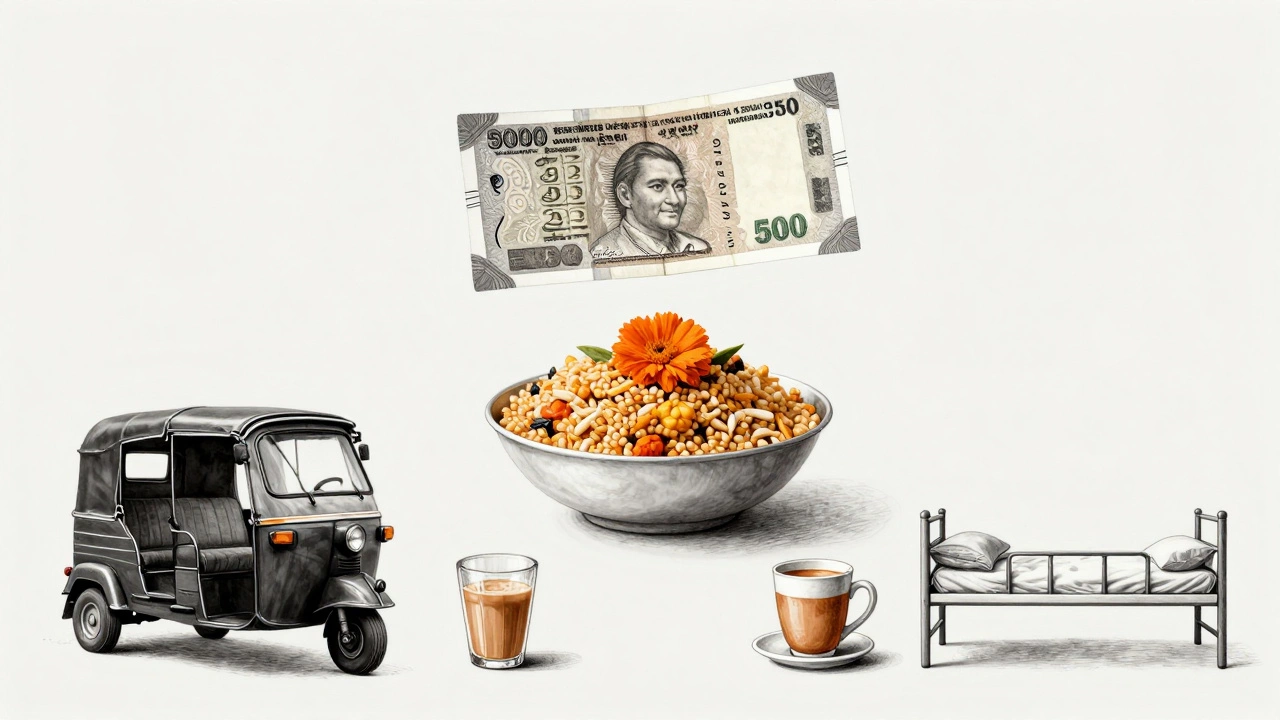
Five hundred rupees doesn’t sound like much when you’re used to dollars or euros. But in India, it’s not about the number-it’s about what you can do with it. On a busy street in Delhi, 500 rupees buys you three meals, a night bus ride across two states, or a full day of sightseeing without spending a rupee more. It’s not a fortune. But it’s not pennies either.
What 500 Rupees Actually Buys in India
Let’s break it down. One Indian rupee is worth about 0.012 USD as of late 2025. So 500 rupees equals roughly $6. That sounds tiny. But in India, $6 goes further than you think.
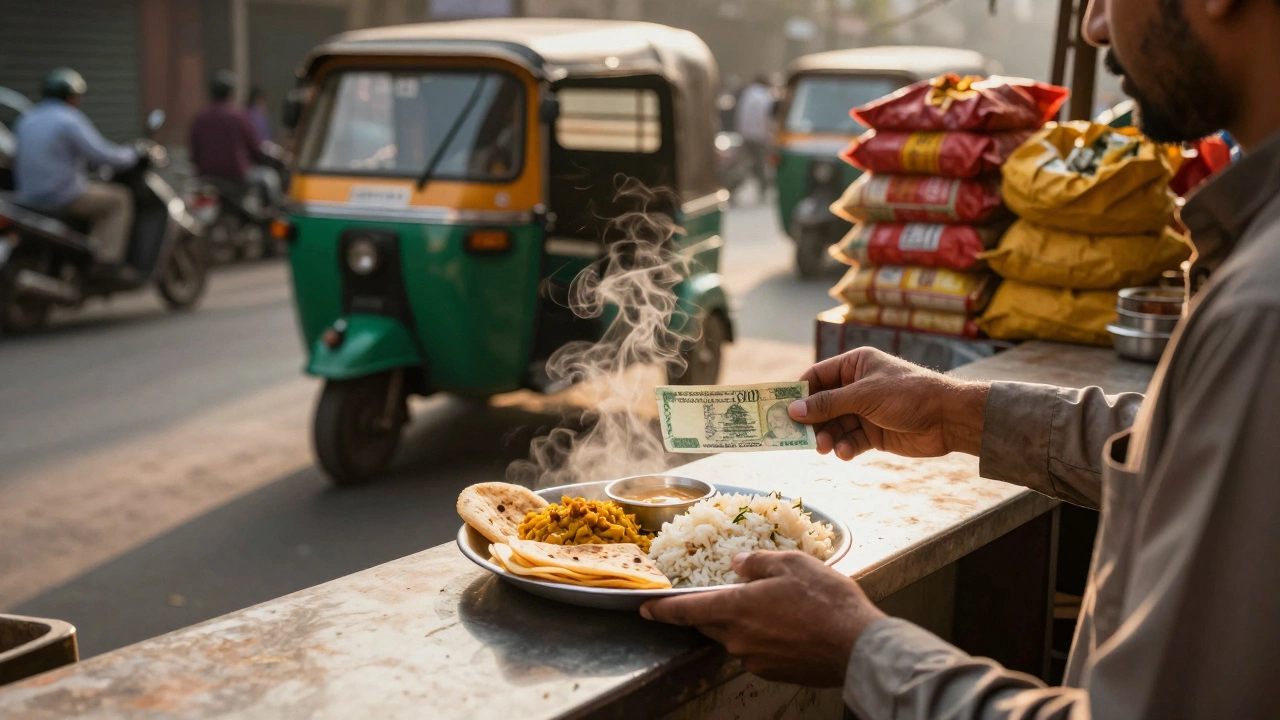
At a local dhaba-a roadside eatery famous for hearty food-you can get a full plate of dal, roti, rice, and curry for 80 to 120 rupees. That’s less than a quarter of your 500. Add a bottle of chilled water (20 rupees) and a chai (15 rupees), and you’ve still got over 300 rupees left. For a solo traveler, that’s a full day of eating without touching a single hotel restaurant.
Public transport? A 10-kilometer auto-rickshaw ride in Jaipur costs 150 rupees. A train ticket from Agra to Delhi in a non-AC chair car? Around 200 rupees. That means with 500 rupees, you could cover a day of local transport and still have change for snacks or a small temple donation.
Even accommodation isn’t out of reach. In smaller towns like Pushkar or Hampi, you can find clean, basic guesthouses for 300 to 400 rupees a night. That leaves you 100 to 200 rupees for breakfast and a local bus ride the next morning. It’s not luxury. But it’s safe, clean, and real.
Where 500 Rupees Doesn’t Go Far
There are places where 500 rupees feels tight. In tourist hotspots like Goa or Udaipur, prices climb. A single ice cream cone at a beachside café? 150 rupees. A guided tour of a palace? 500 rupees, minimum. A night in a decent hotel in Mumbai? Starts at 2,500 rupees.
And then there’s the hidden cost: time. If you’re trying to stretch 500 rupees across a whole week, you’ll need to skip museums, skip guided tours, skip bottled water, and eat only street food. That’s doable-but it’s not the same as traveling comfortably. You’ll trade convenience for savings. And sometimes, that’s worth it.
One traveler in Varanasi told me he spent 500 rupees over three days: 200 on three meals, 150 on a boat ride on the Ganges, and 150 on a local bus to Sarnath. He slept on a hostel floor. He didn’t see the Taj Mahal. But he felt like he’d lived India-not just visited it.
How Locals See 500 Rupees
To understand if 500 rupees is a lot, you need to see it through local eyes. A daily wage for a street vendor in Chennai might be 400 to 600 rupees. For a schoolteacher in rural Rajasthan? Around 800. So 500 rupees is half a day’s pay for many.
That’s why you’ll see people carrying plastic bags of groceries bought with 500 rupees-rice, lentils, spices, vegetables. That’s a week’s food for a family of four in some villages. In cities, it’s a meal for two at a decent restaurant. In tourist zones, it’s a single souvenir.
When you hand over 500 rupees to a temple priest for a flower offering, or to a rickshaw driver for a 30-minute ride, you’re not just paying for service-you’re participating in a system where money moves slowly, but meaningfully.
Traveler Tips: Stretching 500 Rupees Further
If you’re trying to live on a tight budget, here’s how to make 500 rupees last:
- Always carry small bills. Vendors rarely have change for 500-rupee notes.
- Buy snacks from local kirana stores, not tourist stalls. A packet of biscuits costs 15 rupees instead of 50.
- Use apps like Ola or Uber for short rides-sometimes cheaper than auto-rickshaws, especially if you’re in a group.
- Drink tap water only if you’re sure it’s filtered. Otherwise, buy 1-liter bottles for 20 rupees. Don’t pay 50 for the same thing in a hotel lobby.
- Visit temples early. Many don’t charge entry. Those that do usually ask under 50 rupees.
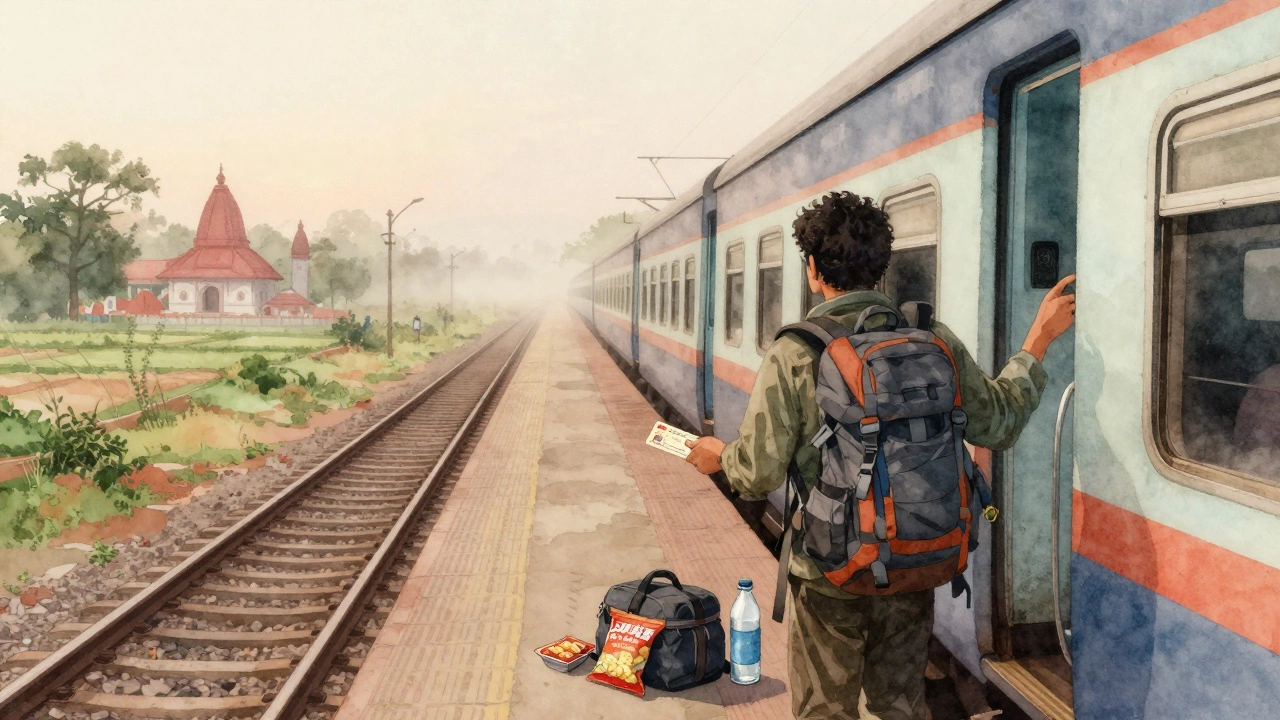
- Travel overnight by train. You save on a night’s lodging and get to your next destination at sunrise.
One backpacker in Khajuraho saved 1,200 rupees over five days by eating only breakfast and dinner at street stalls, skipping lunch entirely. He called it his "hunger strategy." It worked.
Is 500 Rupees a Lot? It Depends
Is 500 rupees a lot? Compared to a $50 dinner in New York? No. Compared to a day’s wage in rural India? Absolutely. For a traveler? It’s a tool.
If you’re backpacking through India, 500 rupees can be your daily allowance. You’ll eat well, move around, and still have enough to buy a hand-painted postcard or pay for a temple lamp. You won’t be rich. But you won’t be broke either.
India doesn’t reward big spending. It rewards smart spending. A 500-rupee note isn’t a fortune. But if you know where to look, it’s enough to taste the country.
What to Do If You Only Have 500 Rupees Left
You’ve been traveling for two weeks. Your wallet is thin. You’ve got 500 rupees and a train ticket to your next stop. What now?
- Don’t panic. India runs on small change.
- Find a temple or gurdwara-they serve free meals (langar) to everyone, no questions asked.
- Use free walking tours. Many cities have local guides who offer free walks in exchange for tips. You can leave 50 rupees if you can, or nothing if you can’t.
- Trade skills. Teach a basic English phrase to a shopkeeper in exchange for a cup of chai.
- Wait for a festival. During Diwali or Holi, many places give away sweets, clothes, or even small cash gifts.
One student in Varanasi survived three days on 500 rupees by sleeping in a temple courtyard, eating langar, and walking everywhere. He said it was the most honest travel experience he’d ever had.
Is 500 rupees enough for one day in India?
Yes, if you’re traveling on a budget. You can eat three meals at street stalls, take local buses, and visit free temples with 500 rupees. But you won’t be staying in hotels or buying souvenirs. It’s tight, but doable.
Can you survive on 500 rupees a day in India?
Absolutely. Thousands of backpackers do it every day. You’ll eat simple food, sleep in hostels or dorms, and skip tourist traps. It’s not glamorous, but it’s real. Many say this is how you truly experience India.
How much should I budget per day in India?
For budget travelers, 800 to 1,200 rupees per day is realistic. That covers food, transport, and basic lodging. If you’re on 500, you’re cutting corners-but you’re still traveling. If you’re spending 2,000+, you’re in mid-range comfort.
Is 500 rupees a lot for a meal in India?
No. A decent meal at a local restaurant costs 100 to 150 rupees. Even a fancy dinner in a city like Bangalore might be 300 to 400. 500 rupees for one meal is only normal if you’re at a tourist restaurant or ordering alcohol.
What’s the best way to carry money in India?
Carry small denominations. 10, 20, 50, and 100-rupee notes are your friends. ATMs are everywhere, but some rural vendors only take cash. Credit cards work in cities, but not at street stalls or temples. Always have cash on hand.
Final Thought: It’s Not About the Number
500 rupees isn’t a lot in the global sense. But in India, it’s a rhythm. It’s the cost of a ride on a crowded train, the price of a bowl of poha at sunrise, the amount you hand to a child selling marigolds outside a temple. It’s not about how much you have-it’s about how you use it.
India doesn’t ask you to spend big. It asks you to pay attention. And with 500 rupees, you can do that better than most.