Travel Safety India: What You Really Need to Know
When you think about travel safety India, the practical steps tourists take to avoid health risks, scams, and unsafe situations while exploring the country, it’s not about fear—it’s about smart choices. India is one of the most welcoming countries for travelers, but like anywhere, knowing what to watch for makes all the difference. You don’t need to avoid street food, skip public transport, or stay locked in your hotel. You just need to know what’s normal, what’s risky, and how to handle it.
safe food in India, how to choose meals that are both delicious and low-risk for travelers, especially those from Western countries is the number one concern for visitors. Americans and Europeans often worry about getting sick, but the truth is, millions of tourists eat Indian street food every year without issues. The key? Hot, freshly cooked food from busy stalls. If locals are lining up, you’re probably safe. Avoid raw salads, unpeeled fruit, and ice in drinks unless you’re sure the water is filtered. Stick to bottled water, and don’t be shy about asking for it without ice. This isn’t guesswork—it’s a simple rule backed by years of traveler experience.
women's safety India, the realities and practical strategies for female travelers navigating public spaces, transport, and crowds in India is another area where myths outweigh facts. While incidents happen, most women travel safely across India every day. Dressing modestly helps in rural areas and religious sites, but it’s not about hiding—it’s about respecting local norms. Use trusted taxi services, avoid isolated areas at night, and trust your gut. Many women find India safer than expected, especially in cities like Pune, Jaipur, and Kochi, where locals go out of their way to help. Punjab, for example, is known for its strong community watch culture and low crime rates for tourists.
Transport safety matters too. Ride-hailing apps like Ola and Uber are reliable in most cities. Avoid unmarked cabs, especially at night. Always confirm the fare before you start, or use the app’s fixed-price option. If you’re taking a long-distance taxi, book through your hotel or a reputable agency. Don’t be pressured into last-minute rides at train stations or airports.
Emergency contacts are easy to remember: dial 112 for police, medical, or fire help anywhere in India. Most hotels and tourist spots have staff who speak English and can assist. Keep a photo of your passport and travel insurance details saved on your phone—no need to carry the original everywhere.
What you’ll find in the posts below isn’t a list of warnings. It’s a collection of real, tested advice from travelers who’ve walked the streets, eaten the food, and taken the trains. You’ll see how Americans navigate North Indian cuisine without getting sick, why Punjab is one of the safest states for tourists, and how to avoid common scams without living in fear. You’ll learn what to pack, what to say, and what to ignore. This isn’t about avoiding India—it’s about enjoying it the right way.
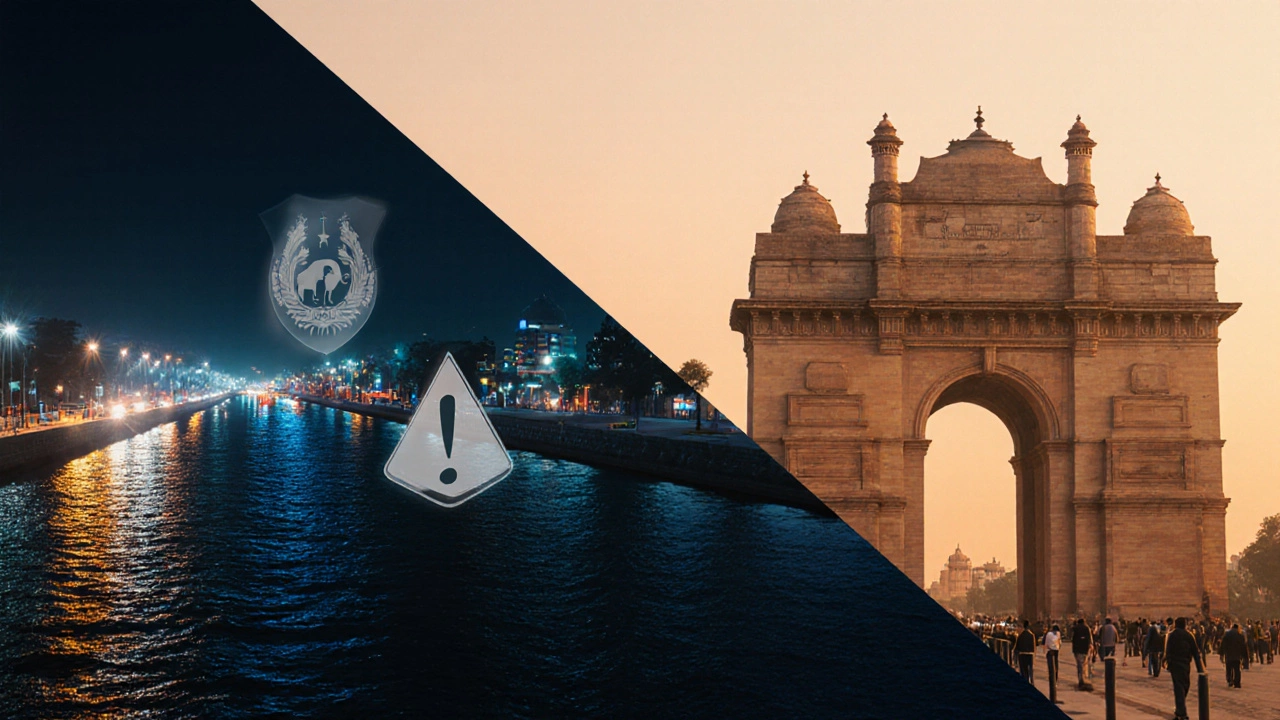
Is Mumbai or Delhi Safer? A Practical Safety Guide for North India Travelers
Compare Mumbai and Delhi safety for travelers. Learn crime stats, police response, transport safety, nightlife risks, health options, and get a practical checklist.
Read more