Southern India Weather: What to Expect and How to Plan Your Trip
When you think of Southern India weather, the climate pattern across Tamil Nadu, Kerala, Karnataka, and Andhra Pradesh characterized by long hot seasons and intense monsoon rains. Also known as South India climate, it's not just about heat—it’s about timing, humidity, and how it shapes everything from temple visits to beach days. Unlike the dry winters of North India, Southern India stays warm even in December, with temperatures rarely dropping below 20°C. The real drama happens when the monsoon rolls in. The southwest monsoon hits Kerala first, usually by early June, and crawls northward over the next month. This isn’t light rain—it’s wall-to-wall downpours that turn roads into rivers and make travel unpredictable. If you’re planning a trip to Munnar or Coorg, you need to know this isn’t a tropical shower. It’s a soaking.
But here’s the twist: the monsoon isn’t all bad. For many travelers, it’s the best time to visit. The hills turn emerald green, waterfalls roar to life, and crowds vanish. You’ll find better deals on hotels, and locals will tell you the air feels cleaner. The problem? Some roads close, ferries stop running, and trekking trails get slippery. That’s why the best time to visit South India, the dry season between October and March when rainfall is low and temperatures are comfortable. Also known as South India tourist season, it’s when most foreign visitors show up—especially in Goa, Pondicherry, and Hampi. The days are sunny, the nights are cool, and you can actually walk around without sweating through your shirt. But don’t assume it’s perfect. Even in January, humidity clings to the coast. And if you’re heading to the Western Ghats, pack a light jacket—mornings can be chilly.
Then there’s the monsoon in South India, the seasonal wind shift that brings 70% of the region’s annual rain, especially between June and September. Also known as southwest monsoon, it’s the force behind everything from rice farming to temple festivals like Onam in Kerala. If you’re traveling during this time, you’ll need to adjust your expectations. Flights get delayed. Taxis won’t show up on time. But if you’re flexible, you’ll get to see a side of India most tourists never do—quiet temples, empty beaches, and locals who smile even when the sky’s falling. The northeast monsoon, which hits Tamil Nadu from October to December, is different. It’s less violent, but still powerful. Chennai gets soaked while Bangalore stays dry. That’s why weather in South India isn’t one-size-fits-all. A beach day in Kovalam might be perfect while a hike in Ooty is muddy.
You’ll find posts here that break down exactly what to pack, which cities are safest in the rain, and how to avoid getting sick from damp food. There’s advice on when to skip the beach and when to book that hill station stay. You’ll see why some travelers swear by the monsoon, while others avoid it like a broken AC. This isn’t a generic weather report—it’s real talk from people who’ve been stuck in the rain, soaked on a train, and still fallen in love with the place.
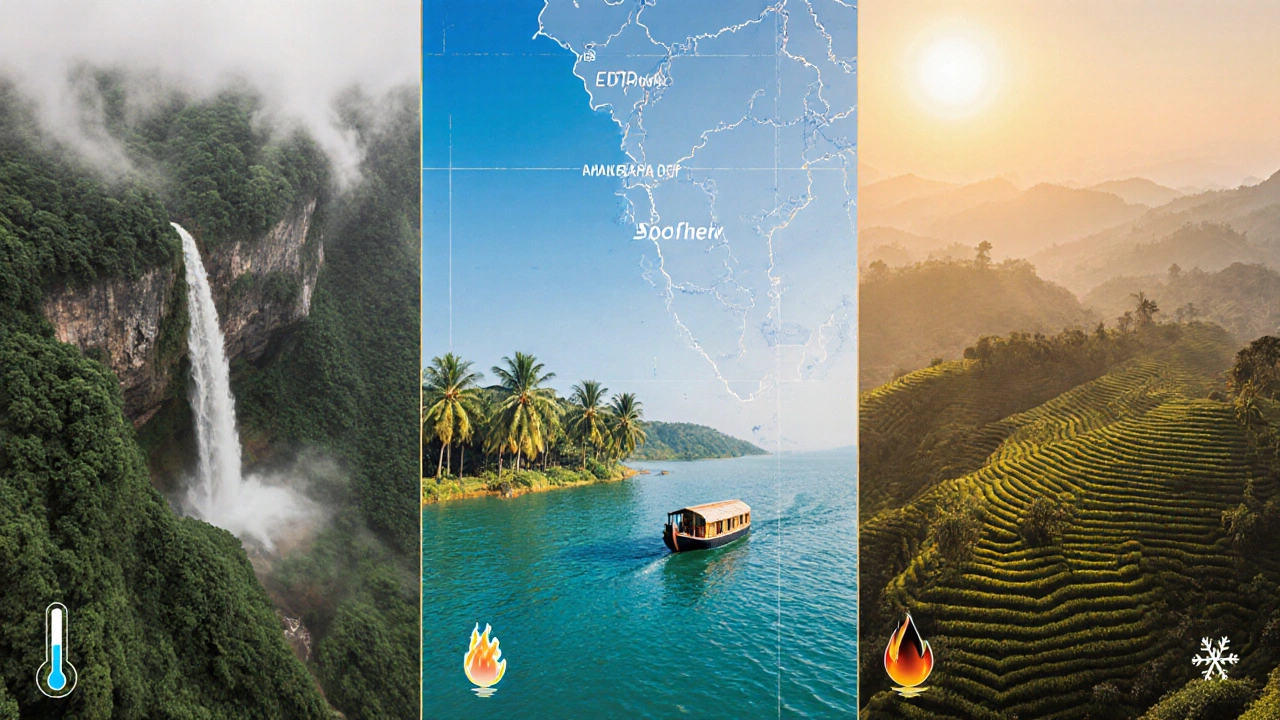
When's the Perfect Time to Explore Southern India?
Find the perfect months to travel Southern India, with climate tips, state‑by‑state guides, festival calendars and practical travel advice.
Read more