Northern India Travel
When you think of Northern India travel, the region that stretches from the Himalayas to the plains of the Ganges, rich in history, food, and spiritual energy. Also known as North India, it’s where ancient empires built temples that still draw millions, and where street food smells like cumin and cardamom long after you’ve left the stall. This isn’t just a region—it’s a cultural heartbeat of the country.
One of the biggest draws is its UNESCO heritage sites India, a collection of 42 globally recognized landmarks, with over half located in the north. Also known as Indian heritage sites, they include the Taj Mahal in Uttar Pradesh, the forts of Rajasthan, and the ancient city of Fatehpur Sikri. These aren’t just photo stops—they’re living history, where guides still tell stories passed down for generations. If you’re planning a trip, you’ll want to prioritize these spots, especially if you’re coming from abroad—foreign tourists make up a huge chunk of visitors here, and for good reason.
Then there’s the food. North India cuisine, a bold mix of tandoori meats, creamy curries, and fresh flatbreads. Also known as North Indian food, it’s what most foreigners think of when they imagine Indian meals. But it’s not just about taste—it’s about safety. Many travelers, especially Americans, worry about stomach issues. The trick? Eat where locals line up. Hot, freshly cooked food from busy stalls is safer than quiet restaurants. Skip raw salads and unboiled water. Stick to parathas, dal makhani, and kebabs. You’ll eat better, feel better, and remember the flavors longer.
Safety matters too. Cities like Delhi and Agra have higher tourist footfall, which means better policing but also pickpockets. Mumbai is safer at night, but Delhi’s metro is clean and well-lit. Punjab is surprisingly secure for solo travelers and women, with friendly locals and strong community watch systems. Don’t assume the whole region is risky—most areas are perfectly safe if you use common sense. Check local advice before heading into remote hill towns or border areas.
And don’t forget the seasons. Winter (October to March) is peak time—cool days, clear skies, perfect for walking through Jaipur’s pink streets or standing in front of the Golden Temple in Amritsar. Summer? Forget it. Temperatures hit 45°C in places like Jodhpur. Monsoon brings greenery but also delays and flooded roads. Plan around October to February if you want comfort and clarity.
What you’ll find in the posts below is everything you need to make this trip real—not just a checklist. You’ll see how to eat safely without missing out on flavor, which heritage sites are worth the extra walk, and how to tell if a temple tour is worth the price. You’ll learn why Punjab is safer than most assume, how Delhi compares to Mumbai, and why the Kumbh Mela draws 100 million people in one month. This isn’t a generic travel blog. It’s a practical guide written by people who’ve been there, eaten the food, ridden the rickshaws, and figured out what actually works.
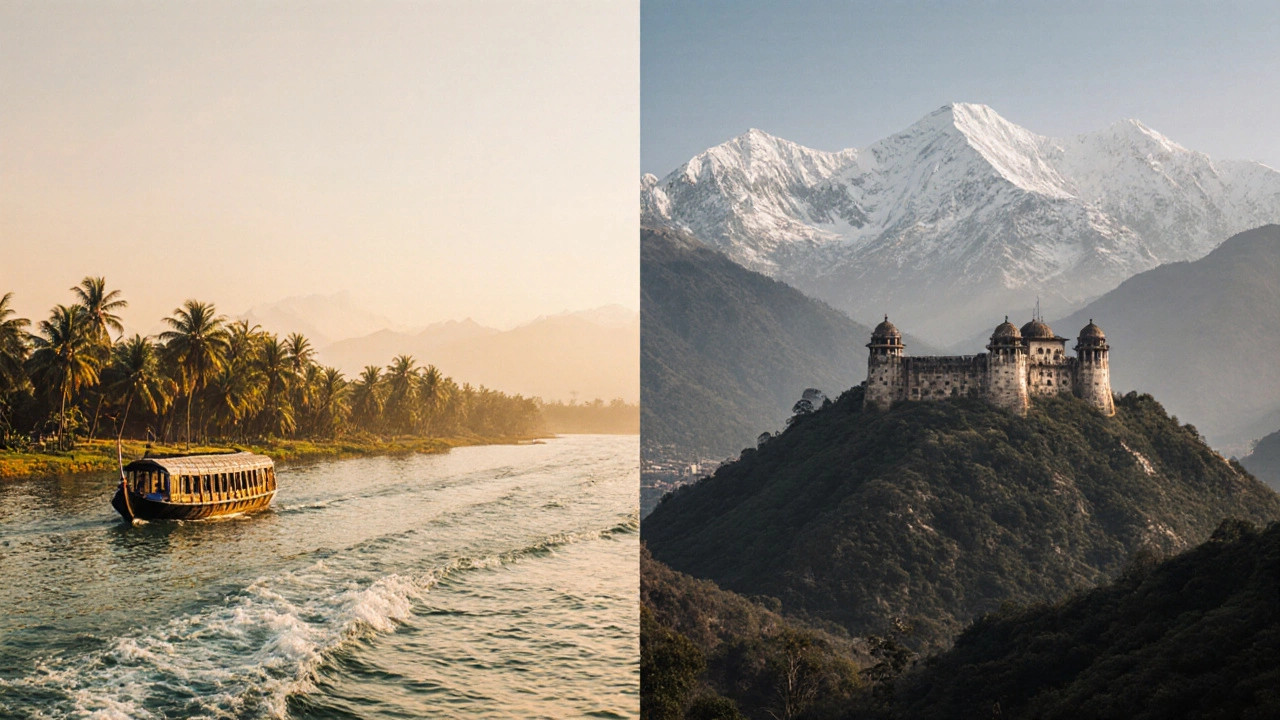
Southern India vs Northern India: Which Travel Experience Wins?
Compare southern and northern India on climate, food, culture, nature, and cost to decide which region fits your travel style best.
Read more