North India Travel Safety: What You Need to Know Before You Go
When you think of North India travel safety, the combination of cultural richness, crowded streets, and unpredictable conditions that affect tourists. Also known as Northern India tourism safety, it’s not about fear—it’s about knowing what to watch for and how to move through the region with calm confidence. Millions visit every year, from the busy markets of Delhi to the quiet temples of Varanasi, and most come home with unforgettable memories—not illness, scams, or stress. The key? Preparation, not panic.
Food safety, a major concern for travelers, especially those from countries with stricter hygiene standards, is often overblown. You don’t need to avoid street food. You just need to pick wisely. Look for stalls with a line of locals, food served steaming hot, and no exposed ingredients sitting out. Avoid raw salads, unpeeled fruit, and ice in drinks unless you’re sure the water was filtered. Americans and Europeans often worry about "Montezuma’s revenge," but it’s not about the spices—it’s about water and handling. Stick to bottled water, even for brushing your teeth, and you’ll avoid 90% of stomach issues.
Transport safety, especially when using taxis or shared vehicles, is another area where common sense beats fear. Book rides through trusted apps like Ola or Uber when you can. If you’re hiring a driver for a multi-day trip, get references or use a reputable agency. Never hop into an unmarked car, even if someone says they’re "with your hotel." In Punjab and Rajasthan, local drivers are often very professional—but always confirm the fare before you start. For trains, book AC classes if you can. They’re safer, cleaner, and less chaotic than general compartments.
Women’s safety, a top concern for solo female travelers, varies by city and context. In cities like Jaipur or Chandigarh, you’ll find plenty of women traveling alone without issue. In smaller towns, dressing modestly and avoiding isolated areas after dark helps. Harassment is rare but can happen—most often verbal. A firm "no," walking away, or calling a local friend usually ends it. Many hotels offer female-only rooms or shuttle services; ask for them.
Scams exist everywhere, but North India has a few classics. The "broken taxi meter" trick? Always agree on a price upfront. The "famous temple is closed, but I know a shortcut"? Walk away. The "free guide who then demands payment"? Say no from the start. Most locals are genuinely helpful. But if someone pushes too hard, they’re not there to help—they’re there to profit.
Health emergencies? Keep a small kit: rehydration salts, antidiarrheal pills, bandages, and painkillers. Pharmacies are everywhere, and pharmacists often speak basic English. Hospitals in major cities like Delhi and Agra are fine for basic care. For serious issues, head to a private hospital—they’re cleaner and faster.
Weather matters too. In summer, heat in Rajasthan or Uttar Pradesh can hit 45°C. Carry water, wear a hat, and plan indoor visits for midday. In winter, nights in Delhi and Himachal drop below freezing. Pack layers. Monsoon season brings flooding in some areas—check forecasts before heading to hill stations.
What you’ll find below are real, practical stories from travelers who’ve been there. How one American avoided food poisoning in Agra. Why a couple skipped a "must-see" temple in Varanasi and still had the best day of their trip. What a solo female traveler learned about local customs in Punjab that kept her safe and respected. These aren’t theory—they’re lived experiences. No sugarcoating. No fearmongering. Just what works.
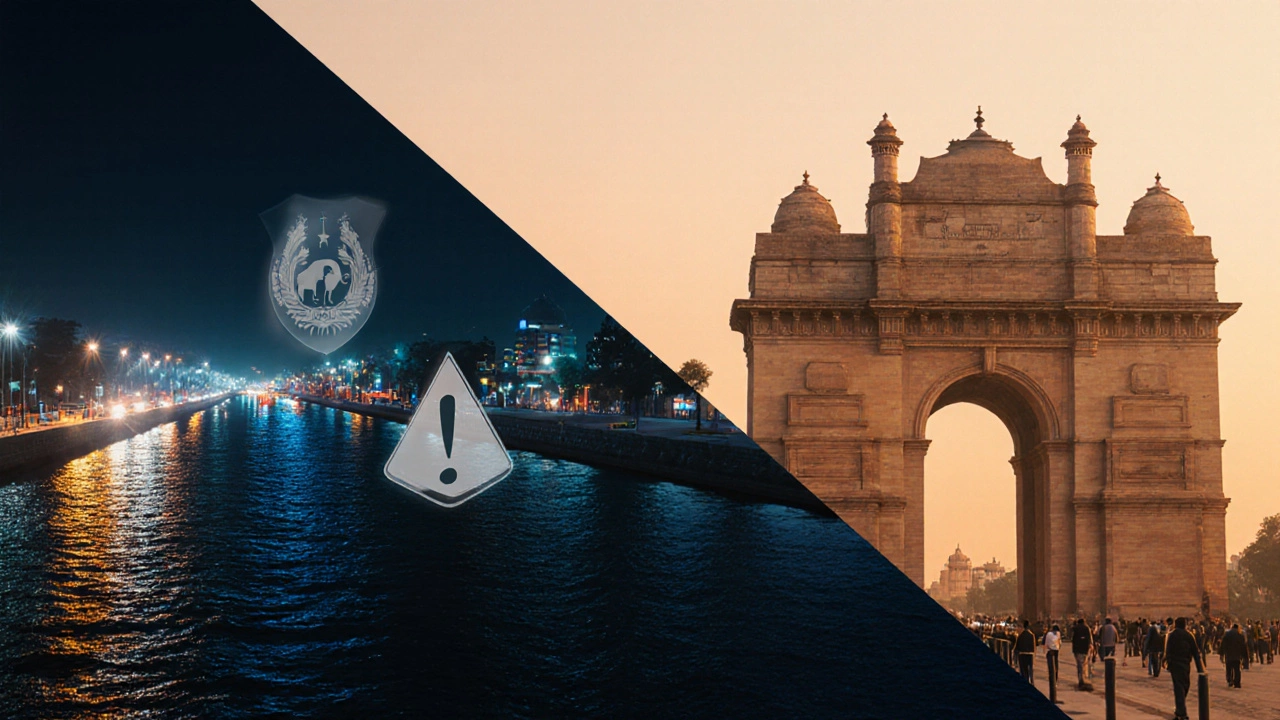
Is Mumbai or Delhi Safer? A Practical Safety Guide for North India Travelers
Compare Mumbai and Delhi safety for travelers. Learn crime stats, police response, transport safety, nightlife risks, health options, and get a practical checklist.
Read more