North India Cuisine: Bold Flavors, Rich Traditions, and Must-Try Dishes
When you think of North India cuisine, a vibrant, spice-driven food culture shaped by centuries of royal kitchens, pastoral traditions, and Mughal influence. Also known as North Indian food, it's the kind of cooking that fills your kitchen with the smell of cumin, ghee, and slow-cooked meats—and makes you want to eat with your hands right away. This isn’t just food. It’s history on a plate. The rich gravies, buttery breads, and hearty stews you find here didn’t just appear overnight. They evolved from the kitchens of emperors, the hearths of Punjabi farmers, and the roadside dhabas that still serve the best parathas in the country.
Mughlai cuisine, a refined style born in the courts of Delhi and Lucknow, where saffron, dried fruits, and slow-simmered meats turned meals into feasts. Also known as Mughal food, it’s the reason you get dishes like biryani with golden raisins and kebabs so tender they fall off the skewer. Then there’s Punjabi food, the hearty, buttery, and deeply satisfying style from India’s breadbasket, where every meal includes fresh makki di roti, sarson ka saag, and a generous dollop of white butter. Also known as Punjab cuisine, it’s what you eat after a long day in the fields—or after a long drive across Rajasthan. These aren’t just regional styles. They’re different languages of flavor, all spoken in the same culinary country.
What sets North India cuisine apart from the South? It’s the bread. It’s the cream. It’s the ghee. While the South leans on rice, coconut, and tamarind, the North lives on wheat, dairy, and slow-roasted spices. You won’t find sambar here—you’ll find dal makhani. Instead of dosa, you’ll get stuffed parathas. And instead of a light curry, you’ll get a gravy so thick you could spoon it onto a napkin and still eat it later. That’s the difference. And that’s why people travel across India just to taste it.
And it’s not just about restaurants. The real magic happens in home kitchens—where grandmas fry onions for an hour just to make the base for a korma, or where street vendors flip fresh naan over open flames while you wait. You’ll find it in Amritsar’s langar halls, in Delhi’s Old City lanes, in the dhabas along the Grand Trunk Road, and in the quiet corners of Varanasi where the scent of cardamom lingers in the morning air.
Whether you’re craving butter chicken after a long drive from Agra, looking for the best kulfi in Jaipur, or trying to figure out why everyone in Punjab eats sarson ka saag with makki di roti every winter, this collection has you covered. You’ll find guides to the dishes you can’t miss, the places you should eat them, and the hidden tricks locals use to make their food taste better than anything you’ve tried before. No fluff. Just real food, real stories, and the routes that lead you straight to the best bites in North India.
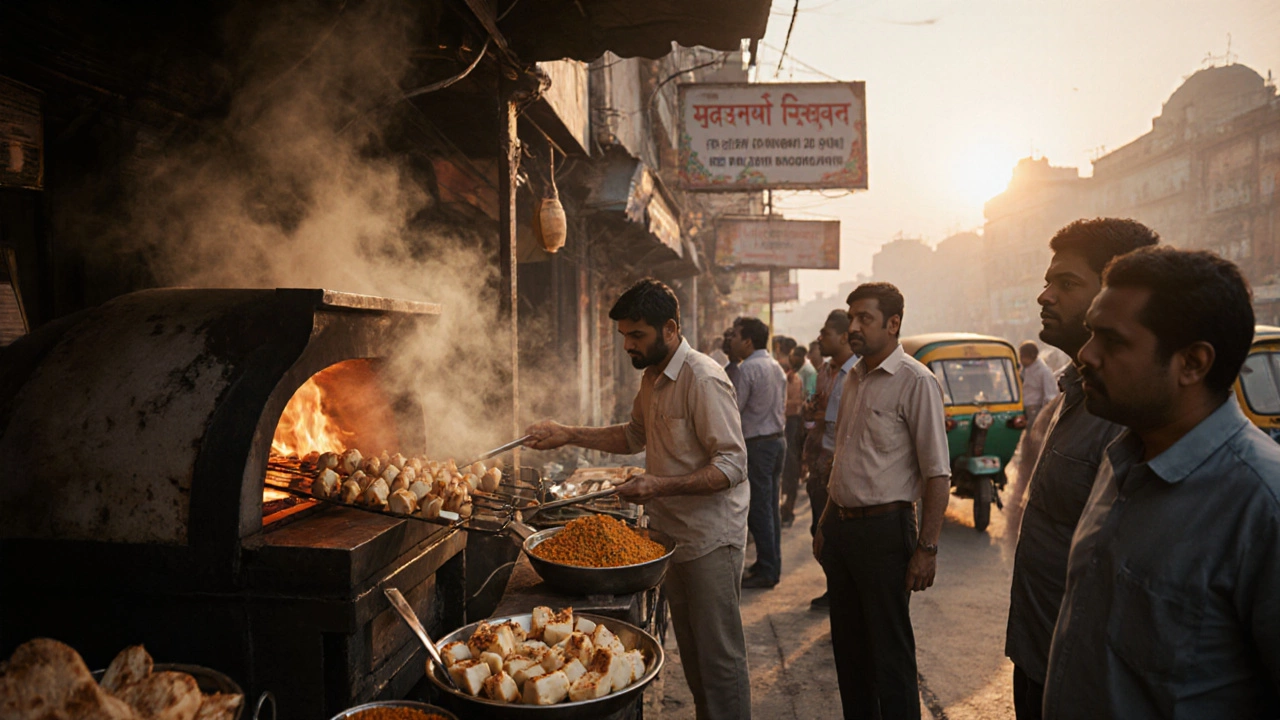
What Americans Can Eat in India: A Practical Guide to Safe, Delicious Food in North India
Americans can enjoy delicious North Indian food safely by choosing hot, freshly cooked dishes from busy stalls. Learn what to eat, what to avoid, and how to navigate street food without getting sick.
Read more