Mumbai Safety: What Tourists Need to Know About Getting Around India's Busiest City
When you think of Mumbai safety, the real-world experience of moving through India’s most crowded metropolis, from trains to tourist spots. Also known as Bombay safety, it’s not about fear—it’s about knowing where to look, when to be alert, and how to blend in without standing out. Mumbai isn’t the dangerous city some blogs make it out to be. It’s loud, fast, and full of life—and millions of locals and visitors get around just fine every day. But like any big city, it has edges you need to understand before you step off the curb.
One of the biggest concerns travelers ask about is women’s safety in Mumbai, how female tourists navigate public spaces, transport, and nightlife without hassle. The answer? It’s better than most places in the world. Women travel alone on local trains, walk in Colaba, and dine out late without incident. The key is dressing modestly, avoiding isolated areas after dark, and using registered cabs or ride apps like Ola and Uber. Don’t rely on unmarked autos. If you’re unsure, ask your hotel to book you a ride. Simple.
Then there’s Mumbai crime rates, the actual numbers behind pickpockets, scams, and petty theft that get blown out of proportion. Pickpockets target crowded spots like Chhatrapati Shivaji Terminus or the Gateway of India. Keep your bag zipped, your phone tucked away, and never flash cash. Street vendors won’t hurt you—but some will try to overcharge you. Smile, say no firmly, and walk away. Most scams are just pressure tactics. You’re not alone in this. Thousands of tourists do this every day.
Public transport is safe, efficient, and cheap—but crowded. The local trains are the heartbeat of Mumbai. If you’re comfortable with crowds, take them. Women have separate compartments. Use them. If you’re nervous, stick to taxis or pre-booked airport transfers. The airport shuttle buses are reliable. Don’t let fear stop you from using the city’s best transit.
Health and food safety are separate issues, but they tie into your overall experience. You don’t need to avoid street food—just choose busy stalls with high turnover. Hot, fresh, and served piping hot? That’s your safest bet. Avoid raw salads and ice in drinks if you’re sensitive. Most travelers who get sick blame water, not food. Stick to bottled water. You’ll be fine.
What about night out? Bandra, Juhu, and Marine Drive are packed with tourists and locals alike. Bars stay open late. You’ll see expats, students, and families. The vibe is relaxed. Just avoid deserted alleys near beaches after midnight. Stick to well-lit areas. Mumbai doesn’t shut down—it just slows down.
Emergency contacts? Save this: 112 for police, 108 for ambulance, and 1313 for tourist helpline. Keep your hotel’s number handy. Most hotels have a 24/7 front desk that can help you with anything—lost items, transport, even a doctor.
Mumbai isn’t perfect. It’s messy, loud, and sometimes overwhelming. But it’s also one of the most welcoming cities in India. Locals will point you to the right train, help you find a restaurant, or even offer chai if you look lost. You don’t need to be an expert to get around. You just need to be aware. And that’s what this collection is for.
Below, you’ll find real guides from travelers who’ve walked these streets, taken these trains, and survived the chaos. They didn’t get robbed. They didn’t get sick. They just learned how to move through Mumbai like someone who belongs. You can too.
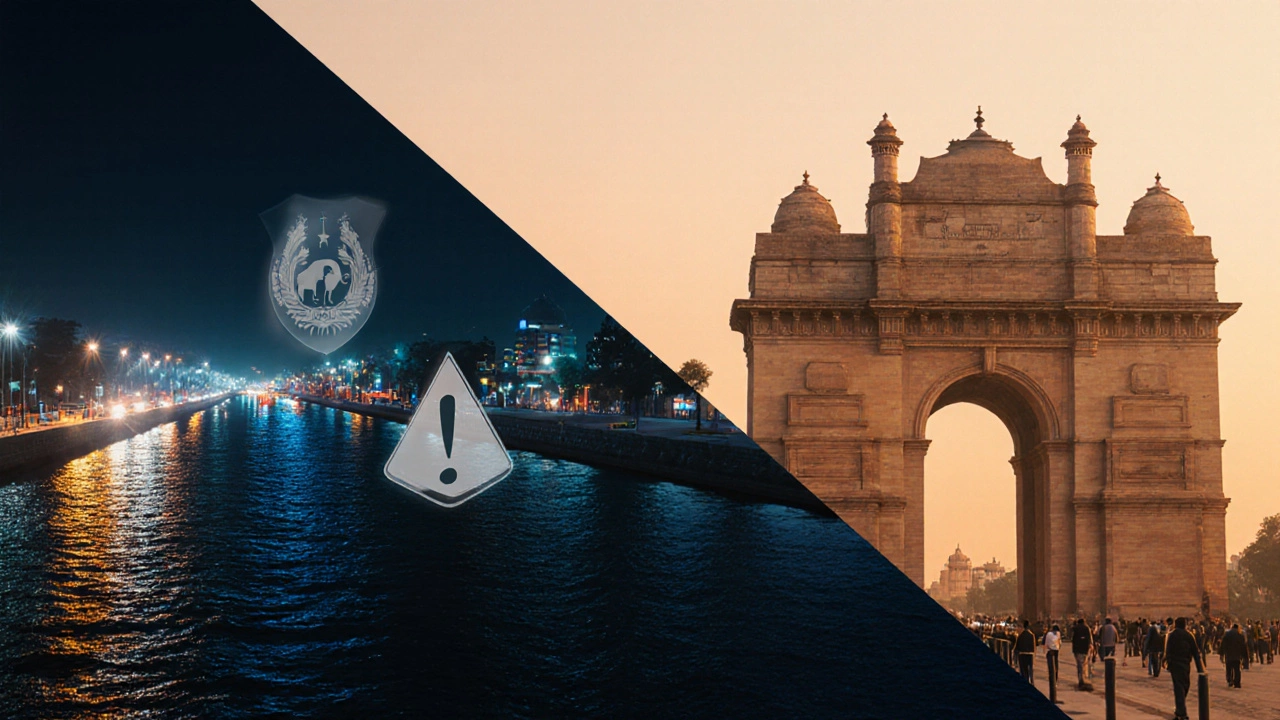
Is Mumbai or Delhi Safer? A Practical Safety Guide for North India Travelers
Compare Mumbai and Delhi safety for travelers. Learn crime stats, police response, transport safety, nightlife risks, health options, and get a practical checklist.
Read more